

PiCK
Layer3: The Final Puzzle in Web3 Mass Adoption [Four Pillars Research]
Summary
- Layer3 has established itself as core infrastructure for Web3 mass adoption through its integrated structure of discovery and education.
- Numerous global companies and projects have leveraged Layer3’s Quests and on-chain credential system to attract authentic users and foster long-term engagement.
- The value-capturing tokenomics of native token $L3, enterprise partnerships, and robust user growth together demonstrate Layer3's sustainability and scalability in the market.

1. Lost in a Flood of Information
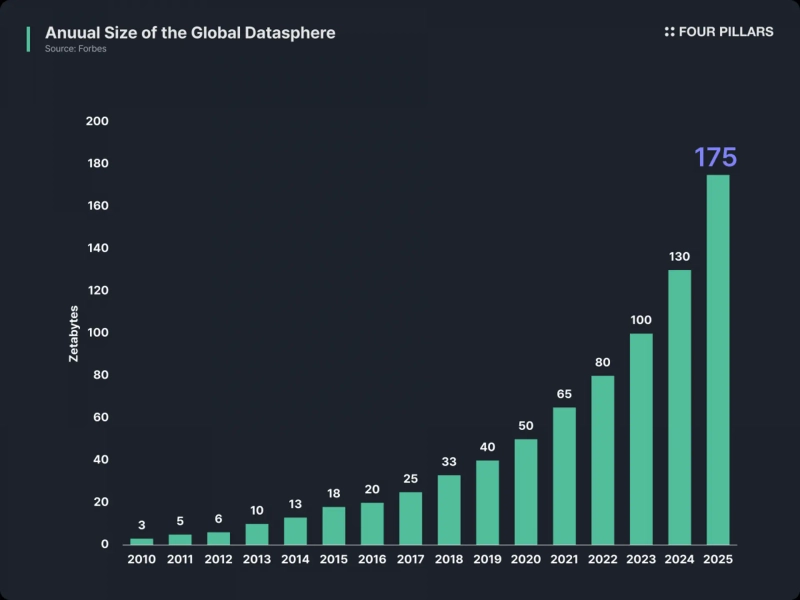
As the sheer volume of information became overwhelming, humanity faced two massive challenges: the daunting “Chaos of Discovery,” where it’s impossible to know what to look at first, and the great “Barrier to Learning,” which demands we master the use of what we find.
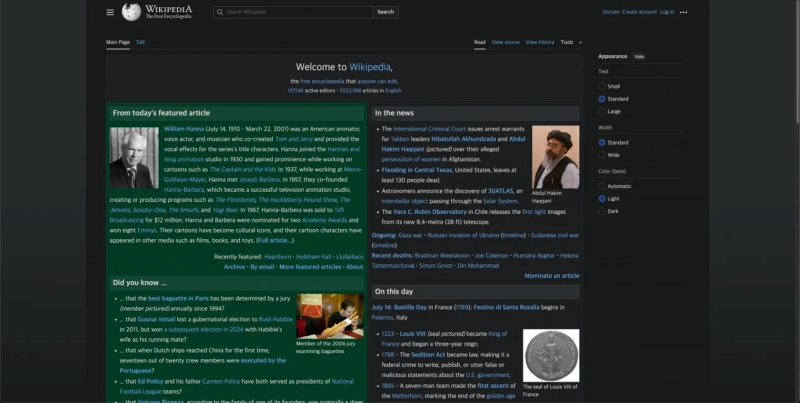
Web2 has long presented effective solutions to these issues. Powerful search engines like Google or Naver brought order out of chaos, while platforms and systematic online courses such as Youtube and Wikipedia enabled anyone to create and consume knowledge, greatly lowering the learning barriers for complex technologies and services. This allowed many technologies and services to expand into the public domain.
However, as we move into Web3, which stems from a value of decentralization, we are once again confronting these age-old problems. The world of Web3 resembles the early, uncharted days of the internet—full of disorganized and fragmented information, with no trustworthy guide or search engine. If you search for Web3 content on X (formerly Twitter), where information spreads fastest, you’re met with fragmented recommendations from dozens of influencers, each championing different projects. It is difficult to discern what information can actually be trusted, making it hard to acquire quality insights.
To make things worse, the early Web3 ecosystem relied on short-term, reward-based models like airdrops and liquidity mining, which exacerbated the problem. The competition for rewards turned into “noise” that hindered users’ efforts to find valuable “signals.” As a result, instead of enjoying true discovery, users were swept up in speculative hype, and projects wasted resources attracting “airdrop hunters” focused solely on short-term profit, rather than genuine community members.
For Web3 to reach mass adoption beyond a select few, it must offer users a new, trustworthy “guide” to navigate the informational deluge and reestablish the values of “discovery” and “learning.”
2. Two Keys to Mass Adoption: Discovery and Education
Restoring these values requires two solutions. First, solving for “trustworthy discovery” to help users avoid getting lost among countless projects. Second, “effective education” to guide them past technical barriers. Only by holding both keys can Web3 go beyond a niche user base to mainstream adoption.
2.1 The First Key: Trustworthy Discovery
Discovering new projects in Web3 is currently inefficient and risky. Users often rely on influencer tips on Twitter, unverified Telegram alpha groups, or short-term reward-driven airdrop campaigns. These methods make it easy to get swept up in hype and expose users to risks like rug pulls and reckless shilling.
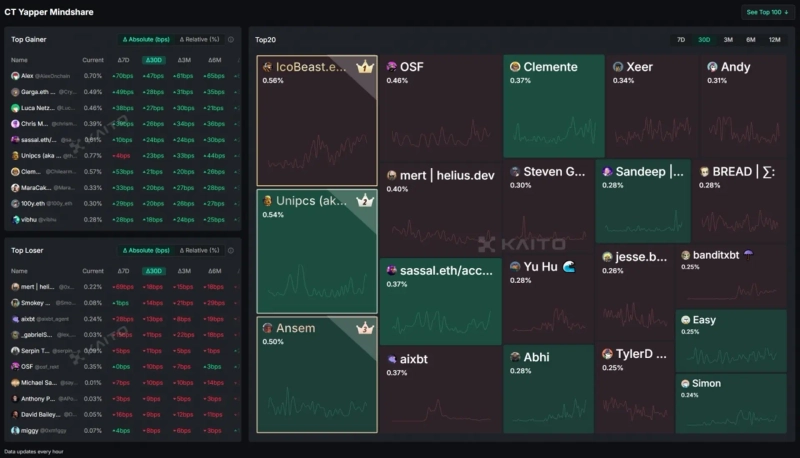
To address these discovery challenges, platforms like Kaito have gained attention by leveraging AI to analyze and rank project mindshare within the Crypto Twitter landscape. Kaito introduced a reward system that grants points for creating or sharing content to promote engagement.
However, this reward model has caused unintended side effects. As competition for points intensified, some users focused on repetitive posting and basic sharing rather than deep analysis of projects. This made it even harder to find quality information in X feeds, diluting the original value of discovery on the platform.
So while reward models have driven participation, they’ve also hurt information quality and distorted user behavior. Especially with short-term incentives, user focus has shifted away from intrinsic project interest toward maximizing point-earning actions.
This isn’t just a burden for users. Even projects with innovative technology risk being forgotten if they can’t spend big on marketing. Projects are forced to mint tokens for promotional rewards, attracting bots and airdrop hunters who care nothing for their vision.
To solve this “discovery problem,” Web3 needs a “Google of Web3”—a platform that does more than simply list projects. It must “discover,” “curate,” and directly “connect” valuable projects to users as a reliable gateway. It should act as a “value search engine” users can trust as they set out to explore.
2.2 The Second Key: Effective Education
Mindshare platforms like Kaito have made project discovery easier, but users often remain off-chain. While there was plenty of activity in writing and point earning, actual engagement—like connecting wallets or using dApps—remained low. That means users discovered projects but didn’t move on to actual participation.
For both users and projects to unlock true value, there needs to be a natural flow from discovery to direct engagement. Users should “land” after discovering—a process of not just gaining information but interacting directly with smart contracts and experiencing community ecosystems.
Many users, however, find the on-chain entry barrier too high. Connecting wallets, gas fees, swaps, staking, bridging—all these are intimidating and complex for beginners. Even hours of Youtube videos or scouring through whitepapers rarely help, with most users giving up before getting hands-on. The result is a disconnect between abundant information and real experience—a “gap between knowledge and action.”
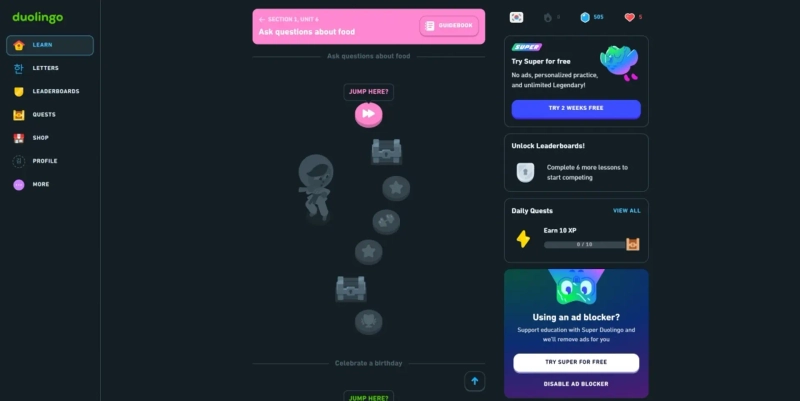
Addressing this gap requires effective, hands-on education and guidance for Web3 projects—not just documentation or lectures, but interactive, experiential learning. Just as Duolingo turned lofty goals of “language mastery” into engaging, bite-sized gamified activities, Web3 education must break down complex concepts into small, actionable steps.
For instance, the goal of “providing liquidity” can be split into quests like 1) Swapping specific tokens, 2) Depositing into a liquidity pool, 3) Staking LP tokens. By progressing through sequential missions, users actually experience transactions and learn through gamified rewards like XP and badges.
This learn-by-doing approach isn’t about information transfer, but helping users learn in live settings—executing transactions in a safe environment, gaining rewards, and building confidence in Web3. This becomes the starting point of meaningful interactions delivering true value for both projects and users.
2.3 Uniting Both Keys!
Ultimately, “trustworthy discovery” and “experiential, hands-on education” must work together to drive Web3 mass adoption. After discovering promising projects, users need immersive, quest-based educational experiences enabling real engagement. A good project is meaningless if left unexperienced, just as well-designed educational content is ineffective without real projects as targets.
A platform has tackled this challenge: Layer3 integrates both discovery and education into a single user experience. Users can browse curated, trustworthy projects and then instantly participate and learn through quest-driven missions—essentially Google plus Duolingo in one.
This approach goes beyond mere gamification and reward mechanisms—it fosters sustainable engagement. Instead of one-off incentives, meaningful participation based on real experiences and understanding delivers better users to projects and deeper experiences to users. This is the fundamental differentiator for Layer3.
3. Layer3: Infrastructure for Attention and Identity
Layer3 is one of Web3’s largest user onboarding and engagement platforms, unifying discovery and education in a single user journey. It offers a new way to convert fleeting attention into verifiable, sustained on-chain identity—combining three core elements: Quests, on-chain credential Cube (CUBE), and omnichain infrastructure for rich, immersive user experiences and robust identity systems.
3.1 Quests: From Simple Clicks to Narrative Experiences
At the heart of Layer3 are “Quests.” Gradually, the initial “Bounties”—one-time tasks—were replaced as they led only to fragmented participation rather than deep learning or ongoing relationships. Quests overcome these limitations by tying multiple tasks into an overarching narrative, immersing users in specific ecosystem storylines.
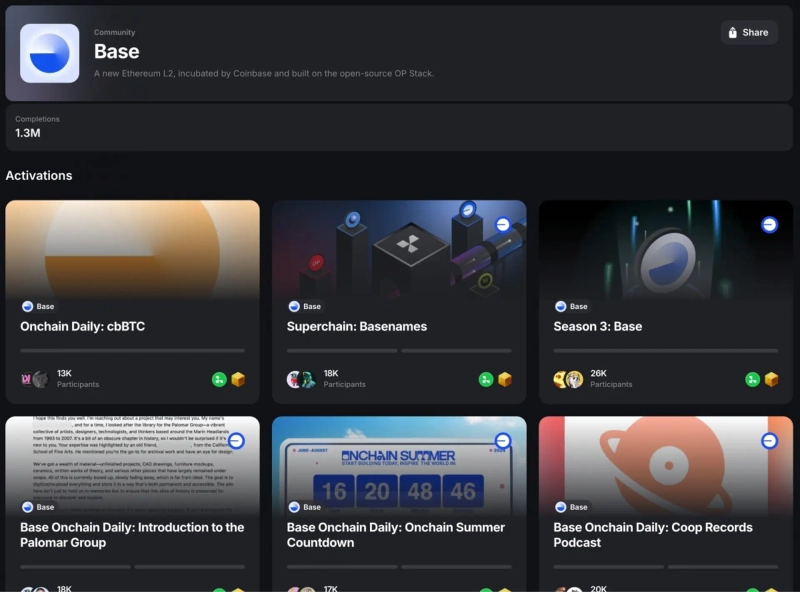
For example, a “Getting Started on Base Ecosystem” quest doesn’t just instruct users to try a certain dApp. Instead, it walks them through bridging assets to Base, swapping them at a major DEX, and minting NFTs at the platform’s leading marketplace—as a complete story. This gamified structure replaces monotony with a sense of “what comes next?” spiking revisits and engagement. Rather than merely acting for rewards, users become protagonists in the project’s story.
This approach solves the “cold start” dilemma new users face in the complex, fragmented Web3 world—helping them actionably explore and learn through gamified, rewarding experiences, fostering confidence to embark on their own adventures. It’s among the most effective onboarding tools in Web3.
This immersive experience is also a powerful advantage for projects. Quests let projects intuitively showcase their vision and philosophy, not just how-tos. Users not only learn features but understand the project’s very reason and direction.
These journeys foster genuine communities ready for long-term engagement, not just airdrop hunters. For projects confident in their product, Layer3 Quests are more than marketing tools—they’re the most effective way to acquire loyal fans and future power users.
3.2 Cube (CUBE): The On-chain Trophy Case
Layer3’s core infrastructure includes the Credential to Unify Blockchain Event (CUBE), converting user activity from fleeting events into lasting, composable on-chain data assets.
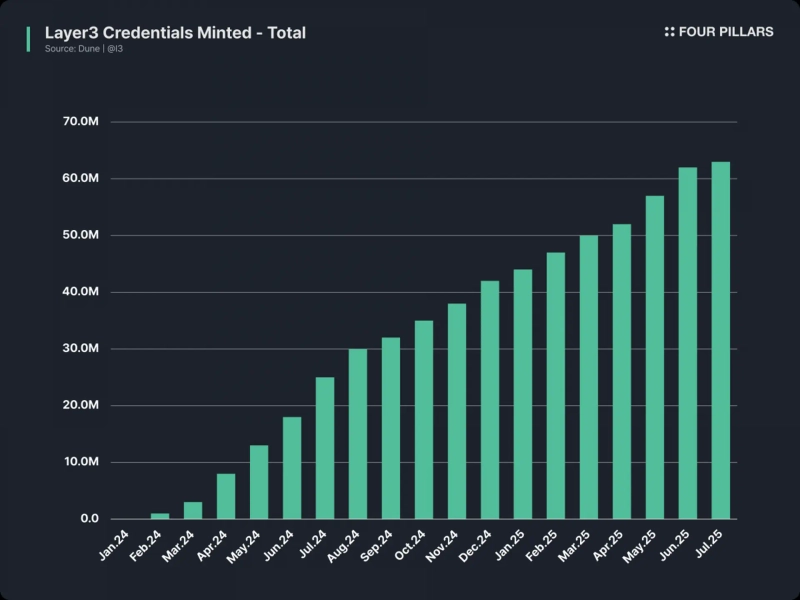
Technically, Cube is an ERC-721 NFT issued upon quest completion, first launched on the Base network and now supported on Polygon, Arbitrum, and many other EVM chains. Each Cube contains extensive metadata: wallet address, chains used, apps, quest completion time, etc., safely stored on decentralized IPFS. In just 4 months since launch, over 10 million Cubes have been issued, with cumulative issuance breaking 60 million by July 2025—one of Web3’s largest on-chain data sets.
Cubes serve as an on-chain “trophy case,” uniting activity fragmented across many chains into a foundational “omnichain identity.” Reputation is no longer platform-bound but universally valid activity history. Collecting Cubes offers rewards—XP boosts, fee discounts, access to higher-level quests—within the platform.
Cube’s true power lies in its permissionless and queryable nature. Any protocol, without a direct Layer3 partnership, can use Cube data to verify user histories. For example, a DeFi protocol could offer better loan rates to users holding Cubes proving activity across multiple DEXes, or a game might airdrop special items to holders of high-level Cubes from another P2E title.
The more external applications leverage Cube data, the more valuable it becomes for users to accumulate rich Cube histories—fueling a strong network effect flywheel drawing users back to Layer3 for more Cubes. Layer3 is thus evolving past a single app to become a primitive for omnichain reputation and identity.
For projects, Cubes offer new opportunities. The accumulated Cube data can be used as an on-chain CRM: for example, designing custom campaigns aimed only at users holding five or more DeFi Cubes—filtering out bots and irrelevant users preemptively. This offers highly efficient, targeted marketing.
Cube’s permissionless nature further reinforces Layer3’s network effect. Once a Cube issued by a particular project becomes widely used as a condition to join others’ campaigns, its utility and symbolism rise across the ecosystem, naturally spreading the original issuer’s brand and drawing users back in positive cycles.
3.3 Omnichain Infrastructure: Bridging a Fragmented World
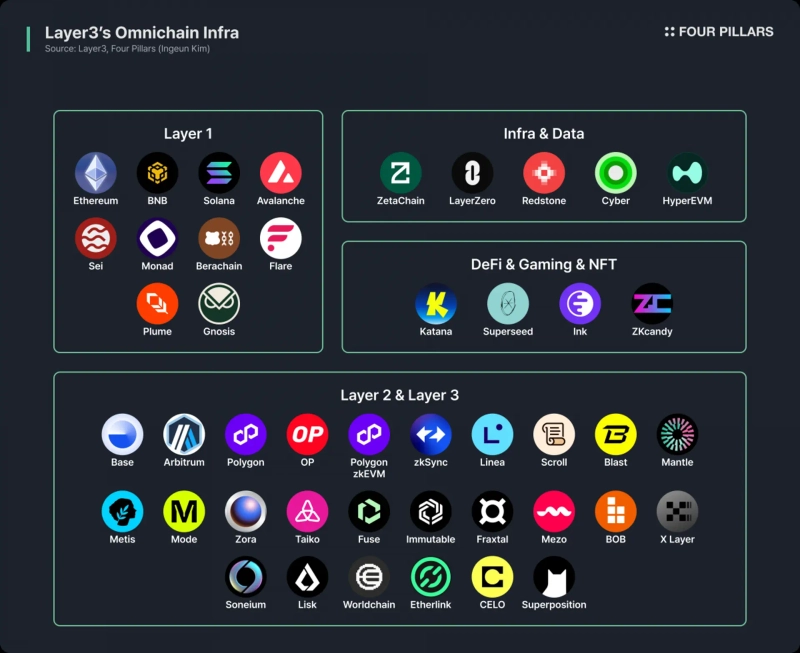
Another unique aspect of Layer3 is its “omnichain” approach, unconstrained by any single ecosystem. Supporting over 45 blockchains—including major Layer 1s like Ethereum and Solana, and Layer 2s like Base, Arbitrum, and Polygon—Layer3 lays the foundation to be a true aggregator in Web3’s fragmented landscape.
Users no longer need to hop between several apps to explore multiple chains. With a single unified Layer3 interface, they can traverse all of Web3, massively simplifying UX and letting Layer3 “soak up” market attention and users. Projects as well are no longer limited by their chain—Layer3 gives them an efficient channel to access proactive users across the entire Web3 realm.
This omnichain structure is a strategic growth lever for projects: even if based on a single chain, they can market across chains. Layer3 provides easy access to users already accustomed to on-chain activities across Ethereum, Solana, Base, and more.
This makes it highly efficient for new projects to build initial liquidity and communities or for established ones to expand into new chains—all via multi-chain campaigns, live analytics, and optimized user growth. As such, Layer3 has distinguished itself as the most agile, practical partner for ecosystem expansion.
4. Layer3 Tokenomics and Market Validation
Beyond philosophical vision and robust tech, Layer3’s concrete market results prove its value—through strong capital raises and a sustainable business model, Layer3 is now a key player in Web3 user acquisition.
In June 2024, Layer3 secured a $15 million Series A led jointly by ParaFi and Greenfield Capital.
"We see network effects in play that mirror those of Amazon or Shopify. As more sellers join, more buyers are attracted in, which in turn attracts new sellers, accelerating exponential growth in activity and value." — Greenfield Capital
According to a Greenfield Capital partner, “Layer3 has demonstrated its potential to be the Amazon of Web3 aggregators by onboarding millions of users on-chain.” The round was also joined by Electric Capital, Immutable, Amber, and more, bringing Layer3’s total raised to $21.2 million—a strong market endorsement of its vision and execution.
4.1 $L3 Tokenomics and a Sustainable Business Model
At the center of the Layer3 ecosystem sits its native token $L3. With a total supply of 3.33 billion, $L3 is more than a reward tool—it’s the economic engine aligning all participant interests and accelerating platform growth.
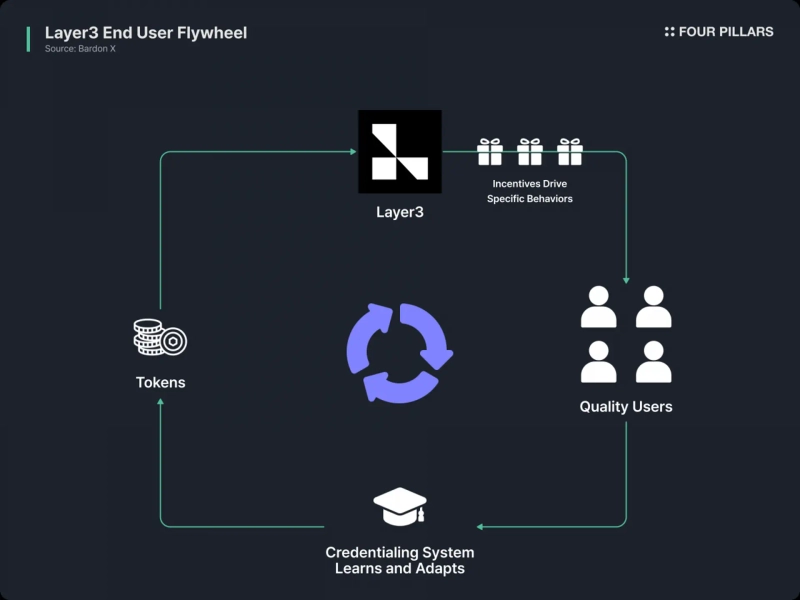
The tokenomics revolve around a “value-capturing flywheel.” Projects seeking new users must purchase and burn L3 tokens when posting quests and accessing the Cube credential network. This utility-coupled burn model directly ties the platform’s core goal—user acquisition—to token demand and value. As project demand rises, continuous buy-side pressure and deflationary effects drive long-term value for the token.

Since launch, Layer3 has recorded over $16.5 million in cumulative revenue, with a 10x increase in annual earnings in 2024 alone. Notably, about 40% of revenue comes from partner projects, and 60% from Cubes issued by users seeking reputation scores. This proves the strength of both B2B and B2C revenue models; user-driven income streams—including Cube issuance, swap and bridge fees—are used to buy L3 tokens on the market, strongly supporting token value.
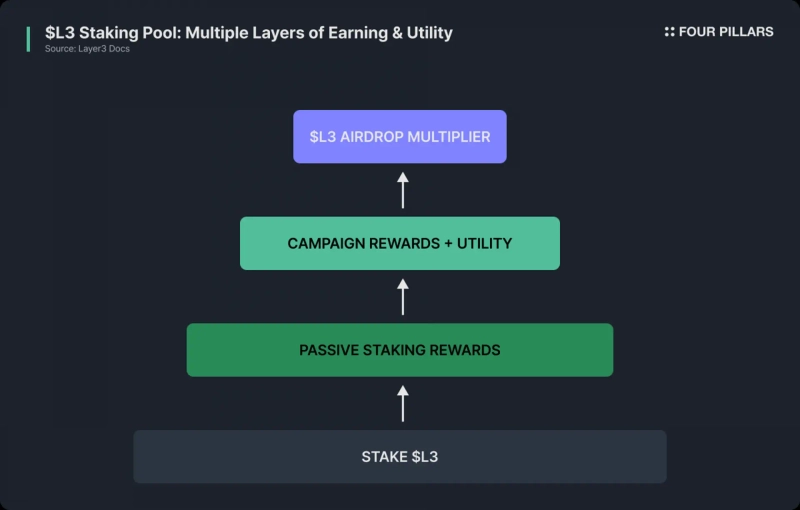
This flywheel is further fortified by the “layered staking” model: going beyond passive token staking, this system rewards users variably based on their contributions—a kind of “Proof-of-Engagement.”
-
Layer 1 (Getting Started): Stake $L3 for passive rewards or governance rights.
-
Layer 2 (Exclusive Opportunities): Users staking a minimum amount can access exclusive quests from partner projects, not just earning $L3, but also tokens like $OP or $ARB, as well as early launchpad access.
-
Layer 3 (Contribution-based Rewards): The core element multiplies rewards depending on platform activity; for example, completing 10 quests gets you 1.5x, 20 quests 2x the rewards. This ensures whales aren’t monopolizing rewards, encourages ongoing activity, and prevents sybil attacks.
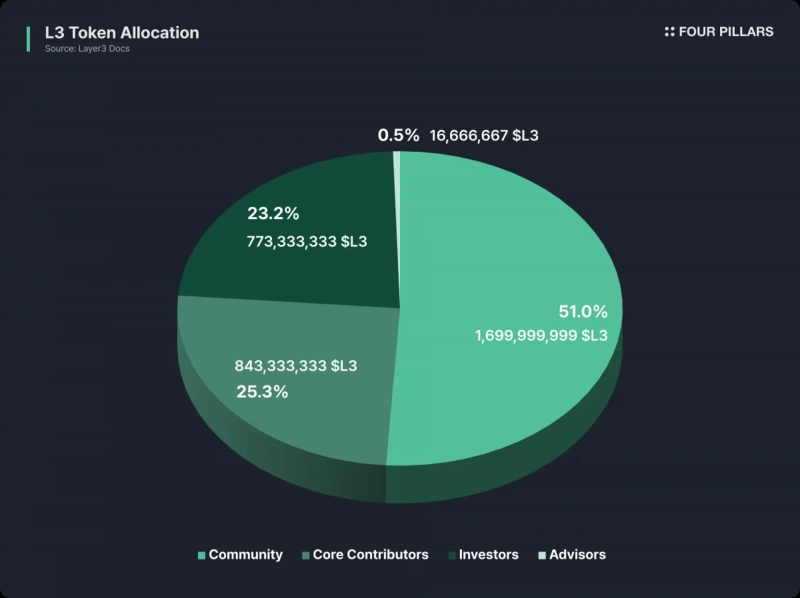
The token allocation also prioritizes long-term ecosystem growth: 51% goes to the community for airdrops and ongoing incentives; core contributors and investor shares have 1-year cliffs and 3-year linear vesting schedules to block sudden sell pressure and foster long-term project commitment.
4.2 Partnership Case Studies: Value Proven by Numbers
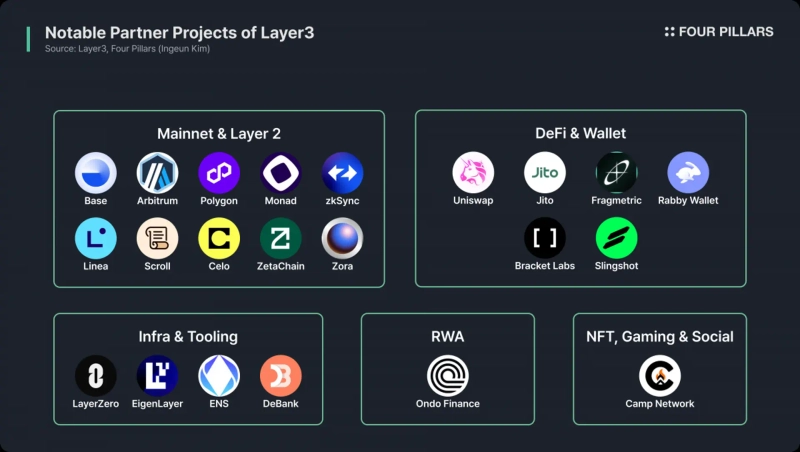
Layer3’s value is shown in concrete partnership results, proving it converts traffic not just into user acquisition but lasting, high-value participation.
-
Ondo Finance: A 30-day campaign to promote USDY, an RWA stablecoin, brought in $1.04 million in new TVL from 14,769 users. Critically, 92% ($960K) of TVL remained post-campaign, with a user retention rate of 33.4%. This shows Layer3-acquired users stayed for the product value, not just for rewards.
-
Jito: As Solana’s core liquid staking protocol, Jito held 3 quests via Layer3. 9,400 users participated, with 5,400 new to Jito. Astonishingly, over 70% of assets staked remained even one month after the campaign.
-
EigenLayer: Leading the “Liquid Restaking” narrative, EigenLayer ran a major educational campaign, “EigenLayer Unlocked,” via Layer3. Users interacted with multiple LRT protocols through quests, creating hundreds of thousands of on-chain transactions—proving Layer3’s power to educate and promote the most complex technical narratives in crypto.
-
Monad: This parallel EVM Layer 1 chose Layer3 as its core onboarding partner for its testnet, guiding developers and early users to experience Monad ecosystem dApps.
Beyond these, over 50 major Web3 projects—including Uniswap, Base, Arbitrum, and Optimism—have onboarded users via Layer3. Notably, Layer3 users claimed 20.4% of Arbitrum’s total airdrop and 29.7% of zkSync’s, proving Layer3 hosts one of Web3’s most active and influential userbases.
4.3 Metrics That Keep Growing
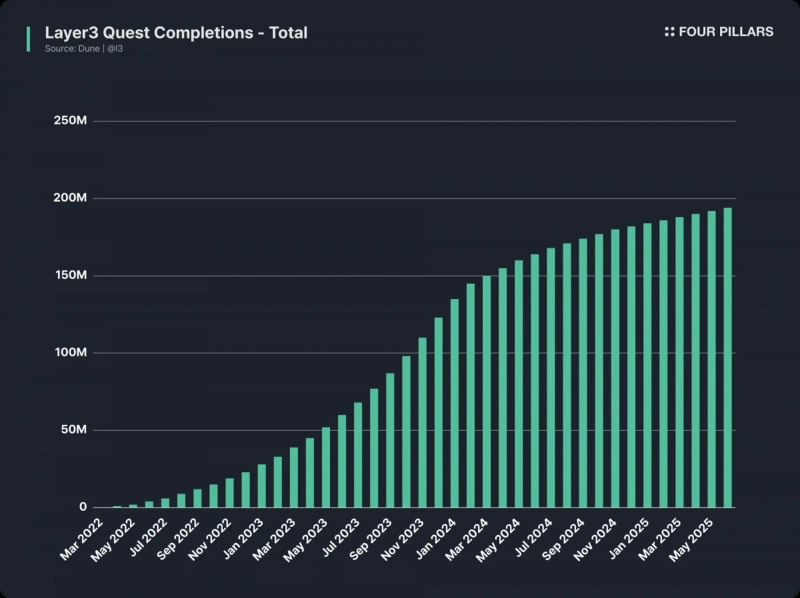
Layer3’s momentum is clear in the numbers. As of July 2025, cumulative users exceed 3.2 million (with about 8.2 million unique wallets); completed quests and transactions topped 167 million. Monthly web visitors reach 1.9 million, with average sessions exceeding 15 minutes—signs of deep engagement.
Layer3 is as strong in quality as quantity. On Base, users who touched Layer3 even once had a 30-day retention rate 6.1x, and a 120-day rate 11.3x, compared to all other Base users—indicating Layer3 draws sustained, not one-off, on-chain activity. High-quality engagement has made Layer3 a capital-efficient company, with industry-leading revenue per employee from a team of just 16.
Much of this growth is driven by a classic two-sided marketplace flywheel—mirroring Amazon and Shopify. More users draw more projects, which create more quests and rewards, looping in yet more new users. Layer3’s buy/burn mechanism for L3 tokens further links growth directly to token value, supercharging the flywheel.
4.4 Proving the Market—and the Next Step
Thus, Layer3 has proven the narrative of “discovery” and “learning” as a real business through robust capital raises, value-capturing tokenomics, and overwhelming market performance. Its $L3 token model ties platform performance to participant rewards in a strong flywheel; major protocol partnerships confirm its role as Web3’s most efficient, trusted user acquisition channel.

This dominance is demonstrated as Robinhood, America’s leading investment platform, expands into the RWA market as a core next business. Robinhood started by tokenizing US stocks and ETFs for the European market, selecting Arbitrum as its foundational technology partner. This move enables users to enjoy 24/7 asset trading and on-chain custody/utility, and aims to eventually tokenize even pre-IPO shares like OpenAI and launch an in-house RWA blockchain called “Robinhood Chain.”
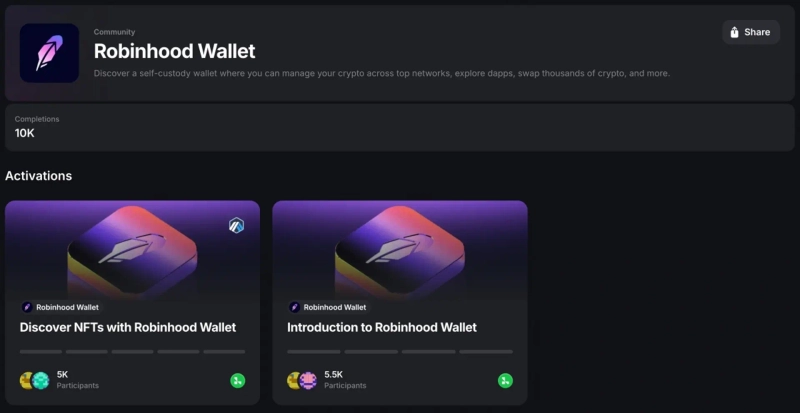
Along the way, Robinhood selected Layer3 as its exclusive user education and onboarding partner. Millions of users are guided to learn about RWA and try out Arbitrum-based real-world asset investing—all via the Layer3 Quest system and Robinhood Wallet. This highlights Layer3’s position, not just as a dApp marketing tool, but as the strategic partner of choice when major global financial firms launch new businesses.
Layer3 isn’t complacent. To further accelerate its growth, it unveiled Layer3 v3 in April 2025, a core update transforming it from a quest platform to an “Onchain Operating System.”
-
Seamless User Experience: Layer3 Wallet removes barriers around chains/gas and introduces one-click transactions and instant rewards—paving the way to onboard millions of Web2 users unfamiliar with Web3, like those at Robinhood.
-
Intelligent Campaign Automation: AI-based Intel lets partners automate and optimize campaigns for maximum ROI, while users receive highly relevant, personalized Quests for maximum engagement.
-
Strong Community Building: Layered staking ensures rewards depend on actual contributions—not just capital—fostering a powerful power-user community and close, long-term alignment.
In conclusion, Layer3 already combines a proven economic model, mainstream expansion potential, and next-gen tech infrastructure. All these aspects intricately unite toward Layer3’s single goal: to be the Web3 gateway that enables “Google-like discovery, Duolingo-like learning.”
5. Layer3: The Layer of Discovery and Learning for Mass Adoption
Layer3 is fast becoming the exemplar for breaking through Web3’s long-standing barriers: the “chaos of discovery” and the “barrier to learning.” By not just listing projects, but offering users an integrated, self-powered experience of discovery and learning, Layer3 pioneers a new way to convert fleeting interest into lasting on-chain identity.
This direction is realized through its narrative-driven Quests, on-chain credential Cube, and omnichain infrastructure. With an intricate $L3 tokenomics design and partnerships with companies like Robinhood, Layer3 has proven both market viability and sustainability—securing its place as the unrivaled leader in Web3 onboarding and user engagement.
Yet, Layer3’s journey won’t always be smooth. The biggest challenge is consistently proving the “authenticity of participation.” Layer3 efficiently filters out airdrop hunters seeking only short-term gains, but as long as rewards exist, skilled farming camouflaged as learning will emerge in parallel. It remains essential to determine if CUBE-based on-chain reputation truly reflects genuine understanding and loyalty—or merely optimized behaviors for maximizing rewards. Should this trust falter, so would the value of the ecosystem built atop it.
Nevertheless, Layer3’s positive impact on Web3 as a whole is evident. Where once the focus was massive token rewards and indiscriminate attention, Layer3 has shifted the paradigm toward education-driven onboarding. By bringing in users who have really experienced and understood a project’s value, projects gain more authentic users, and users themselves benefit with meaningful experiences—making the broader ecosystem healthier and more sustainable.
Moreover, Layer3 is planning to expand beyond onboarding to become a true “onchain superapp.” Users’ Quest history and Cubes may soon serve not just as proof of activity, but as an “onchain credit score.” With this, Layer3 could recommend tailored DeFi products, connect users with similar interests, or even build new SocialFi or InfoFi ecosystems—enabling discovery, learning, investment, and networking all on a single platform.
Especially important is Layer3’s connection to stablecoins, a major growth driver. Major fintechs like PayPal and Stripe are adopting stablecoins, and new types are launching rapidly. The “user education and adoption” market for these assets is expanding fast, and Layer3 is optimally positioned to lead. Stablecoin projects can use Layer3 to educate users on mechanics and onboard initial adopters, and integrating $USDC as a reward/payment mechanism increases platform convenience—potentially toppling the final barrier to Web3 mass adoption.
Ultimately, Layer3’s greatest potential is as the critical bridge linking Web3 and the masses. As seen with Robinhood, Layer3’s ability to abstract complex Web3 structures into user-friendly experiences is, for now, unmatched. With more Web2 companies set to enter blockchain, Layer3 is clearly poised to be the go-to onboarding and education partner. Its success won’t just represent one platform, but be the essential barometer for how far all of Web3 can go into the mainstream.
Four Pillars is a global blockchain research firm composed of experts with years of practical experience, offering research services to clients worldwide. Since its founding in 2023, Four Pillars has conducted over 100 research projects—including stablecoins, DeFi, infrastructure, and tokenomics—with protocols and companies, aiming to bridge information gaps and support real-world blockchain adoption and growth.
Disclaimer
This article is based on the independent research of the author, sponsored by Stable. It is intended solely for informational purposes and does not provide legal, business, investment, or tax advice. No investment decisions should be made based on this article, nor should it be used as accounting, legal, or tax guidance. Any reference to specific assets or securities is for informational purposes only and is not a recommendation to invest. The opinions expressed herein are those of the author and may not reflect the views of any related institutions, organizations, or individuals. Opinions are subject to change without prior notice.
This report is independent of the editorial stance of the publication and all responsibility resides with the information provider.

Bloomingbit Newsroom
news@bloomingbit.ioFor news reports, news@bloomingbit.io