

US-EU reach 15% tariff agreement... Automotive tariff rate unified at 15%
Summary
- The 15% tariff rate agreed upon by the US and EU is said to bring stability to major industries such as automobiles.
- With this tariff unification, EU cars exported to the US will face the same 15% tariff rate as Japanese cars, while South Korean automakers remain at a disadvantage with a 25% tariff.
- Mutual tariff elimination will apply to strategic items, and the EU has agreed to purchase large quantities of US energy and military equipment.
EU states pharmaceuticals included, US does not mention
Trump: "EU promises to purchase $750 billion worth of energy"
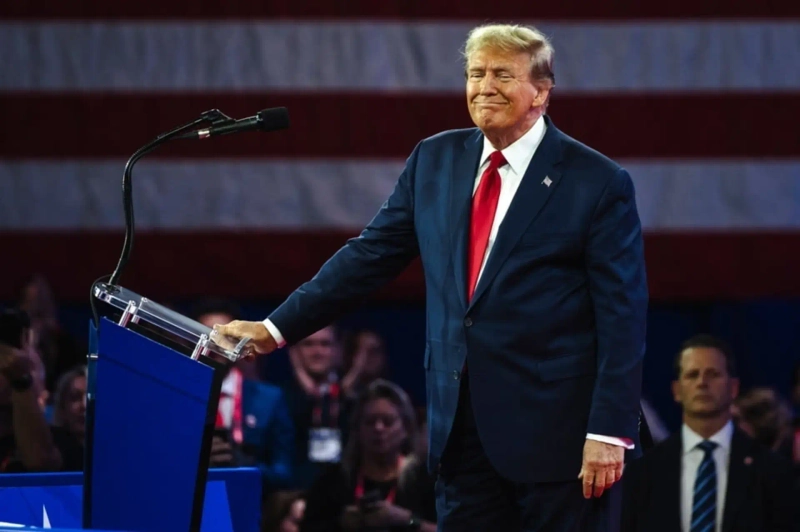
The European Union (EU) and the United States reached a trade agreement on the 27th (local time) to impose a 15% tariff on EU products.
US President Donald Trump announced the agreement after meeting with European Commission President Ursula von der Leyen at Turnberry, Scotland, United Kingdom. President von der Leyen also confirmed the 15% agreement, saying, "This deal brings stability."
The outcome of this agreement will also apply to automobiles. This means EU-made cars exported to the United States will be subject to a 15% tariff, the same rate applied to Japanese vehicles. For South Korean automakers competing in the same market as Japanese and European cars, this creates a disadvantage. Since South Korea has not reached a trade agreement, its automobiles and auto parts are still subject to a 25% product tariff.
However, President Trump stated that pharmaceuticals and steel/aluminum are not subject to the 15% tariff. He did not clarify whether pharmaceuticals and semiconductor product tariffs, which are to be imposed in the future, are included in the agreement.
In contrast, President von der Leyen said, "The tariff rate for the vast majority of EU exports has been stabilized at a single 15%," and "This will apply to most sectors including automobiles, semiconductors, and pharmaceuticals."
President von der Leyen was asked about President Trump's opening remark before the meeting indicating that pharmaceuticals would not be included in the agreement. She replied, "Regarding the EU, we have agreed on a 15% tariff for pharmaceuticals," and reiterated this point. She added, "Any overall future US presidential (tariff) decisions regarding pharmaceuticals globally are a different sheet of paper."
This is somewhat surprising, considering that the main target of President Trump's pharmaceutical product tariffs was Irish-made pharmaceuticals. President Trump has argued the pharmaceutical industry should return to the United States and has threatened to raise the pharmaceutical tariff rate to over 100% in the future.
The two leaders also agreed to mutual tariff elimination for 'strategic items.' President von der Leyen said, "All aircraft and related parts, certain chemicals, certain generics, semiconductor equipment, specific agricultural products and natural resources, and key raw materials are subject to (mutual tariff elimination)." She added, "We will continue working to add more items to this list."
President Trump said the EU agreed to purchase a total of $750 billion (about ₩1,038 trillion) worth of US energy and to make an additional $600 billion (about ₩830 trillion) in investments beyond existing investments. He also noted that the EU will purchase "a massive amount" of US military equipment. This is something the US has been persistently demanding from Europe regarding the war in Ukraine.
An EU spokesperson told reporters that the agreement included the EU's "annual commitment on energy purchases and investments in the US." The specific amount was not disclosed.
President Trump initially said he would impose a 30% tariff on the EU from the first of next month. The EU also planned to impose retaliatory tariffs on major US goods from early next month if negotiations failed. However, Trump staged an impromptu summit with the EU while visiting a golf course in Scotland, and a relatively simple agreement was reached, averting a trade war.
According to the Financial Times (FT), German Chancellor Friedrich Merz welcomed the agreement, saying it "prevents unnecessary economic damage from trade conflicts." Italian Prime Minister Giorgia Meloni also positively assessed it, stating, "Efforts to restrain trade war escalation have borne fruit."
However, an official from the German Industry Federation criticized the agreement as an 'insufficient compromise,' saying, "The EU accepted painful tariffs." The argument is that with US tariffs at 0% and EU tariffs at 15%, this is not a significant success.
Washington—Sangeun Lee, Correspondent selee@hankyung.com

Korea Economic Daily
hankyung@bloomingbit.ioThe Korea Economic Daily Global is a digital media where latest news on Korean companies, industries, and financial markets.