

PiCK
The most important week for the U.S. stock market... FOMC and economic data releases concentrated
Summary
- This week is highlighted as a crucial period with the FOMC meeting and the release of major U.S. economic indicators, potentially shaping the state of the U.S. stock market and economy.
- Uncertainty regarding tariff negotiations remains, so it is reported that tariff anxieties are unlikely to be resolved even by August 1.
- Leading corporate earnings releases from key S&P 500 companies will take place this week, and stock price volatility is expected to increase depending on economic indicators and earnings.
U.S.-EU Trade Agreement Drives U.S. Stock Futures Higher
"Tariff uncertainty will not disappear immediately on August 1"
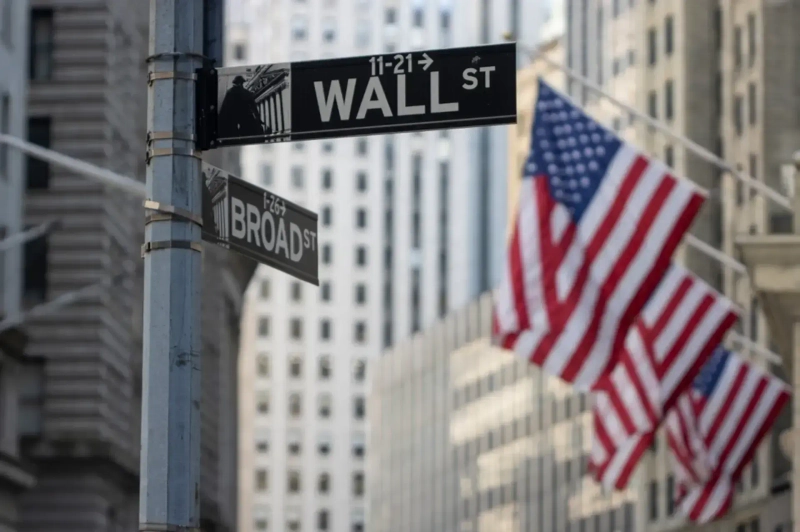
This week is considered the most important week that could determine the mood of the U.S. stock market and economy in the second half of this year.
On the 28th (local time), S&P 500 futures rose by 0.1%, Nasdaq futures increased by 0.3%, and Dow Jones futures went up by 0.05%.
The STOXX 600 for pan-European stocks rose by 0.4%. On news that the tariff rate was set at 15% in negotiations with the U.S., automotive stocks jumped across the board.
The Asia-Pacific markets were mixed. South Korea's KOSPI index closed up 0.42% at 3,209.52, while Japan's Nikkei 225 dropped 1.1%. Hong Kong’s Hang Seng Index closed up 0.68% at 25,562.13, and China’s CSI 300 finished up 0.21% at 4,135.82.
Wall Street expects this week to define the remaining period for the U.S. stock market and economic sentiment for the year.
In the midst of President Donald Trump's strong demand for rate cuts and pressure to fire Jerome Powell, the Chair of the Federal Reserve Board, the Federal Open Market Committee (FOMC) will convene, while Microsoft, Apple, Amazon, and Meta Platforms—four of the 'Magnificent Seven'—are set to announce earnings.
The market’s most closely watched U.S. economic indicators—including the national employment report, Personal Consumption Expenditures (PCE), manufacturing index, and Q2 Gross Domestic Product (GDP)—will be released in succession.
Although a broad trade agreement has been reached with Japan and the European Union (EU), tariff negotiations with South Korea, India, and others remain ahead of the end-of-July deadline. Ongoing trade talks with China are also being held in a third country, Stockholm.
Kevin Gordon, Chief Investment Strategist at Charles Schwab, noted, "The economic indicators this week may provide greater clarity on the resilience of the U.S. economy in the market, but uncertainty remains in the trade sector." He pointed out that tariff deadlines with countries like China are still ahead, and even finalized tariff deals carry many questions about the details. "August 1 will not be a magic day that lifts tariff concerns."
As the effects of the tariffs are just beginning to show, the reports to be announced this week are expected to signal an economic slowdown. Economists estimate that, considering inflation, consumer spending in June barely increased. Employment is also projected to have weakened, with the unemployment rate rising slightly from the previous month.
On Wednesday, the U.S. Department of Commerce will announce its estimate for the Q2 real GDP growth rate. According to a Dow Jones survey, the U.S. economy is expected to grow at an annualized rate of 2.3% from April to June, following a 0.5% decrease in Q1.
On Thursday, when June Personal Consumption Expenditures (PCE) inflation, the Fed’s preferred price index, is released, attention will focus on the impact on tariffs and prices. Dow Jones forecasts that the core inflation rate (excluding food and energy) will be maintained at 2.7%, while headline inflation is expected to rise to 2.5%. Both monthly inflation figures are estimated to have increased by 0.3%.
Numerous employment-related datasets will also be released. The Job Openings and Labor Turnover Survey (JOLTS) will be out Tuesday, the ADP private sector employment report on Wednesday, new unemployment claims on Thursday, and July’s national nonfarm payrolls report on Friday. According to this report, jobs in July are expected to decline to 102,000 from June’s 147,000, and the unemployment rate is projected to rise slightly from 4.1% to 4.2%.
More than 150 companies in the S&P 500 will announce quarterly earnings this week. Meta Platforms and Microsoft will report on Wednesday, while Amazon and Apple will report on Thursday.
According to Bloomberg Intelligence data, S&P 500 companies are overall outperforming expectations. Profits are up 4.5% year-on-year.
Guest reporter: Kim Jung-ah kja@hankyung.com

Korea Economic Daily
hankyung@bloomingbit.ioThe Korea Economic Daily Global is a digital media where latest news on Korean companies, industries, and financial markets.