

"Submit the Final Proposal" – U.S. Ultimatum... What Trump Ultimately Wants Is 'Investment Amount'
Summary
- The U.S. expressed dissatisfaction with South Korea's proposal of $100–200 billion in investment in the U.S., demanding a minimum total investment of $300 billion or more.
- What President Trump wants is clear results that can be presented in numbers, such as investment amounts and tariff rates, and Secretary Lutnick also emphasized a total-centric approach.
- If raising the total investment amount is difficult, there are opinions that bold additional cards should be used, such as opening the agricultural and livestock markets, suspending regulations on online platforms, or expanding purchases of U.S. weapons.
U.S. "Bring Everything"... Tariff Negotiation Pressure at Its Peak
$100 billion+α vs $400 billion
U.S. Indicates Dissatisfaction with Fourfold Difference in Investment Amount
Trump: "Negotiations Won't End Tomorrow"
Expert: "$300 billion is the Maginot Line"
Lee: "Negotiation Team, Approach with Confidence"
Negotiations with Lutnick on the 31st Are the Climax
Some Say "Don’t Rush a Conclusion
Play Your Final Hand Through a Summit"
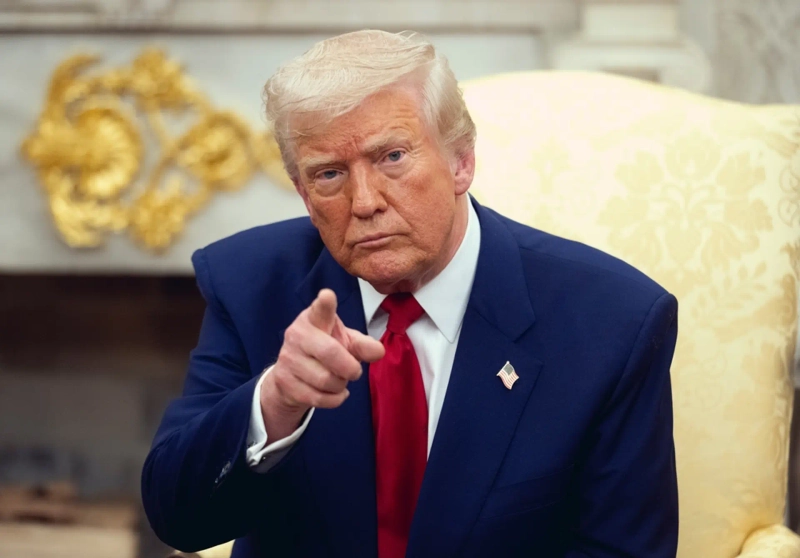
Howard Lutnick, U.S. Secretary of Commerce, demanding the Korean negotiating team "bring the final and best offer," is essentially interpreted as pressure to increase the investment amount in the U.S. It implies that the '100 billion+α' investment offered by the Korean team did not meet President Donald Trump's expectations. While the 'Korea–U.S. manufacturing cooperation' card is also important, analysts say what President Trump ultimately wants is a number that can be directly shown to the American public.
The Last Puzzle Piece in Negotiations Is 'The Number'
The Korean delegation has been presenting a cooperation package centered on 'MASGA' (Make American Shipbuilding Great Again) in areas such as shipbuilding, semiconductors, and automobiles. Business leaders have accompanied the team, directly explaining sector-specific investment plans and joint initiatives between Korea and the U.S. Kim Yong-beom, Chief Policy Secretary to the President's Office, stated on the 30th, "We are assembling a package focused on mutually beneficial outcomes in areas we can reasonably manage," adding, "We are also discussing not only shipbuilding but semiconductors, secondary batteries, and biotech."
Nevertheless, the U.S. response remains unsympathetic. Secretary Lutnick publicly pressured the Korean team, saying "bring everything," and emphasized they must "convince President Trump why a new agreement with Korea is necessary." This is interpreted as a signal that the Korean proposal falls short of U.S. expectations.
Previously, Japan announced a $550 billion investment plan and the European Union (EU) a $600 billion plan in the U.S., cutting reciprocal tariffs from 25~30% to 15%. They presented a 'big deal' package, also including domestic market opening and large-scale purchases in energy and defense. In comparison, Korea's proposal is known to be around $100~200 billion total investment.
Among trade experts, the prevailing view is that, considering Korea's economy and trade surplus with the U.S., the minimum line expected by the U.S. is about $300 billion.
Heo Jeong, head of the International Trade Association, commented, "What Secretary Lutnick wants is just two numbers to present to President Trump: total investment and the tariff rate," stressing, "The figure for final revision by President Trump must first clear Secretary Lutnick’s expectations." He went on, "The U.S. seems to prefer the approach of presenting the total first, then ironing out details later. If the government has so far put weight on explaining sector-specific plans, it is now time to shift focus to presenting the total investment first."
Negotiating with Lutnick for the Fifth Time Is a Must
Inside and outside of the government, there is consensus that a fifth round of negotiations with Secretary Lutnick must be held before Deputy Prime Minister Koo Yun-cheol meets with U.S. Treasury Secretary Scott Besant on the 31st (local time). This is because Lutnick is the main figure leading practical negotiation coordination and tariff structure design.
A diplomatic source said, "If the Korean side meets Besant with the message that ‘this is the best we can do’ but without a set total investment, the U.S. may consider the negotiations finished and report directly to President Trump." They added, "If so, the tariff rate could be settled not at 15% but at 20%." If raising the investment amount significantly is difficult, it is argued that Korea must boldly utilize additional cards like opening the agricultural/livestock market, suspending regulations on online platforms, permitting export of Google Maps data, and expanding purchases of U.S. weapons.
Another scenario is postponing the negotiations. Given that there has been less high-level coordination or summit contact compared to Japan and the EU, some say it would be more realistic to play for a decisive move by aiming for a presidential summit in August or September, rather than forcing a conclusion at this meeting.
President Lee Jae-myung told the negotiation team, "I know these talks are difficult, but you are there as representatives of all 52 million of our citizens—so please approach them with confidence," according to Presidential Spokesperson Kang Yoo-jung.
Ha Ji-eun/Kim Ri-an, reporters hazzys@hankyung.com

Korea Economic Daily
hankyung@bloomingbit.ioThe Korea Economic Daily Global is a digital media where latest news on Korean companies, industries, and financial markets.