

Changes in USFK Role, Increase in Defense Spending... Key Security Issues on the Agenda at the South Korea–United States Summit
Summary
- At the South Korea–United States summit, it was reported that USFK role changes and an increase in defense spending will be the main agenda items.
- The Trump administration may directly demand China containment participation and renegotiation of the Special Measures Agreement (SMA).
- Follow-up discussions after the tariff agreement and the specification of cooperation in advanced industries such as semiconductors and shipbuilding are also emerging as crucial investment agenda items.
President Lee's First Summit with Trump in 82 Days
'Modernization of the South Korea–US Alliance' Gains the Most Attention
US Demands South Korea’s Participation in China Containment Efforts
Possibility of Pressure to Increase Defense Cost-Sharing
Follow-up Discussions Expected After Tariff Negotiations
Potential Request for Further Opening of Agricultural Markets
Semiconductor and Shipbuilding Cooperation Expected to be Specified
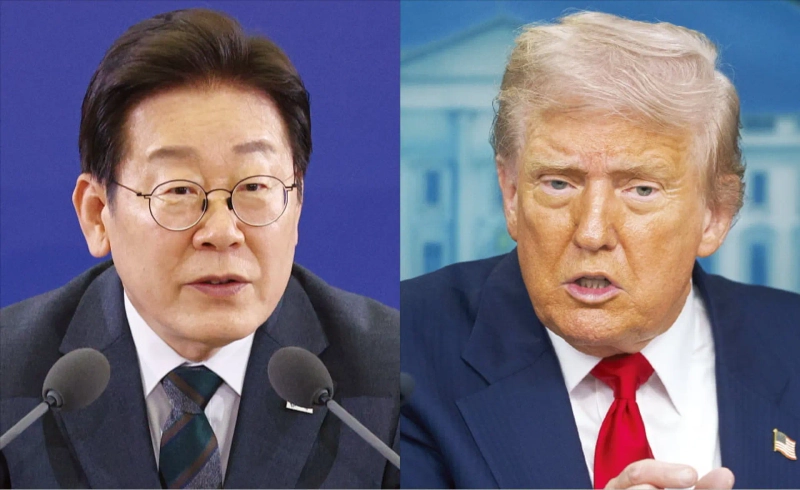
President Lee Jae-myung will meet US President Donald Trump for the first time on the 25th. Although this is the first South Korea–United States summit, sensitive issues directly related to our security, such as the reduction of US Forces Korea and an increase in the defense budget, are expected to be intensely discussed. Details of the tariff negotiations, for which no formal agreement has been drawn up, must also be finalized. Although the summit has the nature of a ‘get-acquainted’ meeting, taking place 82 days after President Lee’s inauguration, there is speculation that significant ‘bills’ in the field of security may be demanded.
Defense Budget Increase and Other Security Issues Likely to be on the Agenda
President Lee’s three-day visit to the United States will be conducted as a working visit. Kang Yoo-jung, the presidential spokesperson, stated, “This visit focuses on substantial and in-depth discussions on mutually interesting agenda items.” The two leaders will hold a working luncheon following the summit. They may adopt a joint statement containing specific content on advancing the South Korea–US alliance into a future-oriented comprehensive strategic partnership. Spokesperson Kang said, “There will be several rounds of consultations, and whether there will be a summit outcome announcement is still under discussion with the United States.”
At the summit, security issues are expected to be the main agenda. South Korea and the United States have maintained their alliance for over 70 years, based on the South Korea–US Mutual Defense Treaty signed in 1953. Within this framework, the focus of the USFK (United States Forces Korea) role has been on deterring North Korean military provocations. However, the second Trump administration is demanding a change in the role of USFK in the Indo-Pacific region and South Korea’s participation in containing China. This is known as the ‘modernization of the South Korea–US alliance’.

Having concluded the tariff negotiations, President Trump may deliver direct demands on these matters to President Lee during his visit to the United States. Previously, USFK Commander Javier Bronson strongly hinted at the possibility of a USFK reduction, stating, “US Forces Korea needs change, and change should focus on capabilities, not numbers.” He especially suggested that the new role of USFK could be containment of China rather than North Korea, saying, “No document related to the South Korea–US alliance specifies an 'enemy'.”
Meanwhile, reports by international media indicate that the Trump administration considered demanding an increase in South Korea's defense spending from 2.3% to 3.8% of GDP during tariff negotiations. There is speculation that the US could also require a renegotiation of the Special Measures Agreement (SMA) to raise South Korea's financial contribution. Reuters reported, “President Trump may quietly raise alliance-related issues, potentially pressing President Lee to increase defense spending.”
Shipbuilding, Semiconductors, and Battery Cooperation Also Discussed
Follow-up discussions after last month’s tariff agreement (finalized on the 31st) are also projected. It is necessary to agree on the details of the structure and operation of the $35 billion investment fund dedicated to the US market. As differences in perception regarding additional market openings for agricultural products such as rice and beef have surfaced after the negotiations, it will be interesting to see how this is resolved. These matters have only been recorded in a memo form by our negotiation team at the time of the tariff agreement and have not been formalized in a written agreement. An official from the ruling party stated, “We must be prepared for potential unexpected agenda items.”
There is also keen interest in how shipbuilding cooperation, which made a decisive contribution to the conclusion of the tariff negotiations, will be materialized. President Trump is seeking to revive the declining American shipbuilding industry to counter China’s expanding military influence in the Indo-Pacific region. Cooperation in advanced industries such as semiconductors and batteries between the two countries is also expected to be a key topic of discussion at this summit. When the tariff negotiations were finalized, President Trump said, “South Korea has pledged a massive investment,” and “President Lee will announce this during the bilateral meeting at the White House.”
Jae-young Han, Reporter jyhan@hankyung.com

Korea Economic Daily
hankyung@bloomingbit.ioThe Korea Economic Daily Global is a digital media where latest news on Korean companies, industries, and financial markets.