

"Exports Allowed if Performance Is Lowered"…Will NVIDIA's Latest AI Chips Be Sold in China?
Summary
- President Trump indicated the possibility of allowing sales of NVIDIA’s latest Blackwell chips to China, limited to versions with 30~50% lower performance.
- It was reported that NVIDIA concluded a separate agreement to remit 15% of the proceeds to the U.S. government if H20 chips are exported to China.
- NVIDIA and AMD share prices fell by 0.37% and 0.28% respectively; however, the report indicated the decline was not significant despite news of the 15% remittance of Chinese revenue.
Blackwell with 30%~50% Lower Performance
Trump Indicates Possibility of Deals with China
China Issues Guidelines Restricting H20 Chip Use
U.S. President Donald Trump stated that he would consider allowing the sale of the lower-performance version of NVIDIA’s latest artificial intelligence (AI) semiconductor Blackwell in China.
At a White House press briefing on the 11th (local time), President Trump said, “We will not trade the NVIDIA Blackwell chip,” but also added, “There is a possibility of dealing in a version of Blackwell with 30~50% lower performance.” Blackwell is a key component in high-performance computers for AI software development and operation. Due to U.S. export restrictions, its sale to China is currently prohibited. President Trump did not specify the timing of concrete negotiations with NVIDIA CEO Jensen Huang. However, he noted, “Jensen Huang is likely to come to see me about this issue soon,” and said, “It will likely be the lower-performance version, not the large model.”
President Trump also confirmed that in exchange for allowing the sale of the H20 AI chips, which have lower performance than Blackwell, to China, NVIDIA entered a separate agreement to remit 15% of the proceeds to the U.S. government. Regarding the approval for H20 chip exports to China, he commented, “It’s an outdated version that China already possesses.” The Trump administration had essentially banned exports of the H20 chip to China last April, citing national security concerns, but has recently allowed it again.
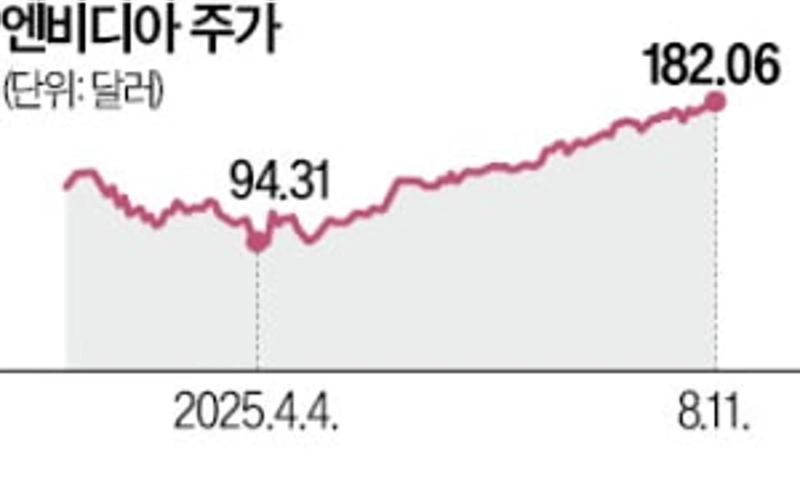
Shares of NVIDIA and AMD dropped by 0.37% and 0.28% respectively on that day. Despite the news of the requirement to pay 15% of Chinese sales to the U.S. government, the decline was not significant. Ben Barringer, an analyst at UK asset management firm Quilter Cheviot, said in an interview with CNBC, “From an investor’s perspective, 85% of sales is better than 0.”
Controversy is rising in U.S. political and industry circles over the agreement for private companies to remit 15% of China-related export sales to the U.S. government. John Moolenaar, Republican chairman of the House China Committee, stated, “Export controls are the front line of defense for protecting national security,” adding, “We should not set a precedent of allowing licenses for technologies that would enable China to bolster its AI capabilities.”
Bloomberg, citing informed sources, reported that Chinese authorities have issued instructions to multiple companies restricting the use of NVIDIA H20 chips. Both state-owned and private companies were strongly discouraged from using H20 in projects related to government or national security.
Kim Dong-hyun, Reporter 3code@hankyung.com

Korea Economic Daily
hankyung@bloomingbit.ioThe Korea Economic Daily Global is a digital media where latest news on Korean companies, industries, and financial markets.