

What will Powell say in what is effectively his last speech at the Jackson Hole Meeting?
Summary
- Investors are closely watching what stance Jerome Powell will present on monetary policy after September at this Jackson Hole Meeting.
- Currently, both markets and the Trump Administration are strongly expecting an interest rate cut at the September Fed meeting, but Chairman Powell's assessment and plans for the US economy are seen as more important.
- The Fed's data-driven approach to the slowing US labor market and persistent inflationary pressure is cited as a key variable for investment decisions.
Attention Focused on Direction Amid Deteriorating Labor Market and Latent Inflationary Pressure
Along with the Trump-Putin summit, the most anticipated event this week is the Jackson Hole meeting, held for three days starting on the 21st (local US time) at Jackson Hole inside Grand Teton National Park, Wyoming.
Held annually by the Federal Reserve Bank of Kansas City, the Jackson Hole meeting is an economic policy symposium where visions for the US economy and financial and monetary policy are presented.
The Jackson Hole meeting allows us to glean long-term forecasts for the US economy and visions for monetary policy from the perspective of the country's central bank. This year, the symposium's theme is "The Transformation of the Labor Market: Demographics, Productivity, and Macroeconomic Policy."
If the Federal Open Market Committee (FOMC) of the Federal Reserve provides its views on the economy and monetary policy based on monthly employment and inflation data when making rate decisions, the Jackson Hole meeting offers prospects that are even more long-term.
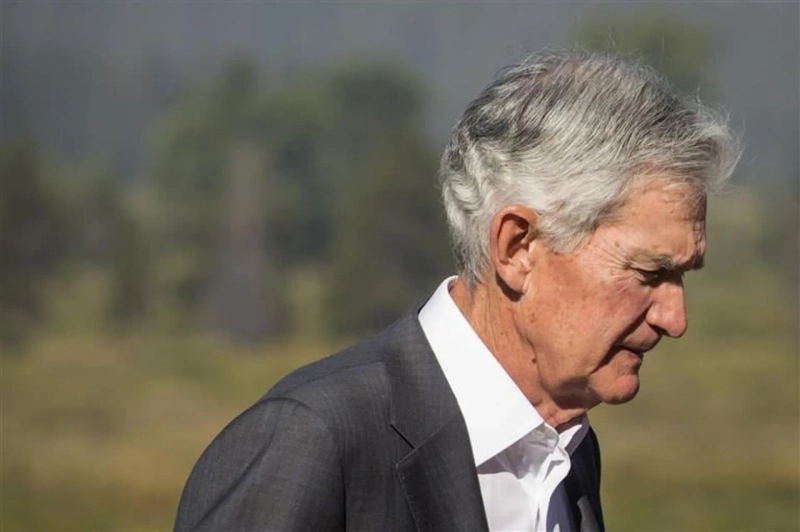
This year, particular attention is on what outlook Jerome Powell, who faces various threats from the Trump Administration for not lowering the rates, will present for monetary policy after September. Powell has faced unprecedented threats and insults from the Trump Administration for a Federal Reserve Chair. He’s been the target of a full-blown offensive from the Trump Administration for not cutting rates, and with his eight-year term ending next May, this is effectively considered his final Jackson Hole meeting.
At the 2022 Jackson Hole meeting, Chair Powell pledged a strict approach to curbing inflation. One year earlier, at the 2024 Jackson Hole meeting, due to the sudden deterioration in unemployment data in July and the yen carry trade earlier in August, he mentioned a shift towards rate cuts, aiming to support the job market.

Before that, during the 2020 pandemic, Powell announced the adoption of the Average Inflation Targeting (AIT) regime, saying that even if inflation exceeded 2% for some time, rate hikes would not be rushed. This led to a global bond and equity rally.
The 2021 Jackson Hole meeting remains a notorious episode for Powell, marked by a misjudgment on inflation. As US prices began to rise during the pandemic, Powell assessed that this was likely temporary, caused by supply-chain issues and surging demand. However, by 2022, US CPI approached an annualized rate of 10%, the highest in 40 years, forcing Powell at the following year's Jackson Hole meeting to state that combating inflation had become the top priority.
Of course, Powell’s keynote represents the collective judgment of the Federal Reserve, which comprises the best economists in the US. Still, as someone who respects Paul Volcker—the man who tamed runaway inflation during the Reagan era—this was a major blemish for Powell.
Earlier this year, the US market already showed a sharp decline in the labor market from May and June. Although the impact of tariffs was not as significantly reflected in inflation data as expected, there are persistent concerns among businesses that the tariff burden may ultimately be passed on to prices.
Traditionally, Federal Reserve Board members, who have typically made rate decisions unanimously at the FOMC, are now split on which is riskier—rising inflation or rising unemployment.
Christopher Waller, a Fed Governor seeking to be the next Federal Reserve Chair, and Michelle Bowman, the Fed Vice Chair, have both been advocating for rate cuts since the July meeting.
Currently, both markets and the Trump Administration strongly expect rates to be cut at the Fed’s September meeting.
According to the FedWatch Tool by CME Group, immediately after Treasury Secretary Scott Vencent mentioned last week that he expects a 0.5%p rate cut at the September meeting, the market forecast for a rate cut rose to 99%. As of the 18th (local time), the likelihood has retreated somewhat to 85%.
Despite market consensus, what matters more than whether rates will be cut in September is how Chair Powell will assess and outline the next phase for the US economy.
The US economy is clearly slowing regarding employment, but consumption remains robust, so inflationary pressure persists.
Richard Clarida, Global Economic Advisory Board member at PIMCO and former Fed Vice Chair, told Reuters, "Chair Powell is data-dependent and doesn’t decide until the data comes in."
Current US inflation stands about 1% point above the Fed’s target of 2%. The probability of it increasing is higher than of it falling.
Treasury Secretary Vencent said, "The Fed's data-driven approach is a mistake," citing that Alan Greenspan in the 1990s ignored his colleagues' calls for rate hikes, noting that increases in productivity amid rising prices helped moderate inflation.
At the start of his term, Chair Powell emphasized making decisions based on data rather than economic models and forecasts. However, as recently seen when the Bureau of Labor Statistics heavily revised down job growth estimates for May and June, such a data-driven approach may have limitations, particularly when past data are subject to significant revisions.
Trump continues to claim the US economy is strong while simultaneously making seemingly contradictory demands for deeper rate cuts. Vencent and other Trump Administration officials point out that US economic growth has slowed to around 1%, even weaker than last September, when the Fed cut rates by 0.5%p. That move followed a pledge made a month earlier at Jackson Hole to "do whatever it takes to support the job market."
Apart from the slowdown in jobs and economic growth, the situation is now different from a year ago. The benchmark interest rate currently stands at 4.25%~4.5%, lower than back then, and the stock market is booming. The unemployment rate has ticked up slightly due to temporary job market weakness, but at 4.2%, it is not above the average.
How Powell, who admires Paul Volcker, will blend his concerns into the Jackson Hole keynote—recalling how Volcker, during the Reagan administration, maintained high rates despite tensions with the government to rein in inflation—warrants close attention.
Kim Jung-ah, Guest Correspondent kja@hankyung.com

Korea Economic Daily
hankyung@bloomingbit.ioThe Korea Economic Daily Global is a digital media where latest news on Korean companies, industries, and financial markets.