

Bank of Korea Governor Lee Chang-yong: "For stablecoins, it should be bank-centered to prevent side effects"
Summary
- Governor Lee Chang-yong of the Bank of Korea said that the issuance of Korean won stablecoins should start with banks at the center.
- He stated that the issuance of Korean won stablecoins by non-bank financial institutions could have a large impact on monetary policy, requiring a cautious approach.
- The official stance is to gradually introduce stablecoins as a means of payment while monitoring the development of the domestic cryptoasset market.
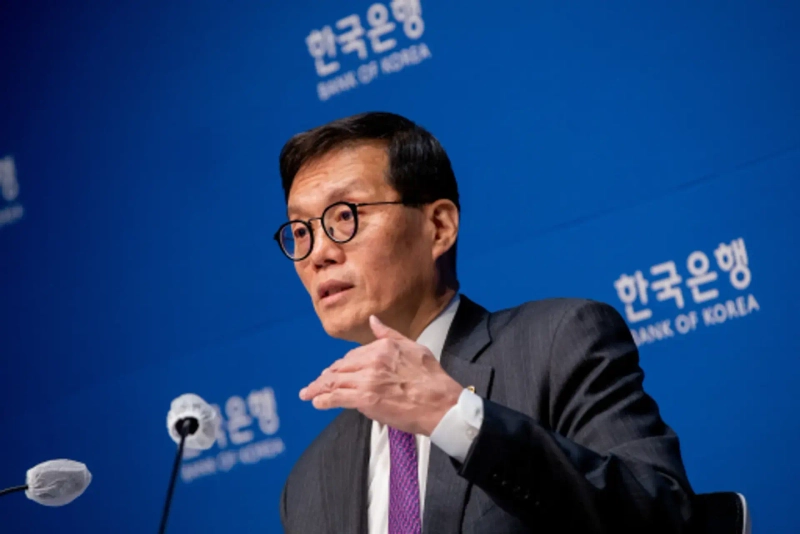
Bank of Korea Governor Lee Chang-yong stated that it is "preferable for Korean won stablecoins to proceed centering on banks first, then to gradually expand." According to industry sources on the 19th (Korea time), Governor Lee participated in the plenary session of the National Assembly Planning and Finance Committee and shared this view while responding to lawmakers’ questions.
Regarding the conditions for the stablecoin issuer, Governor Lee presented a rather conservative opinion. He said, "Issuance should only be allowed for large companies with certain scale that have systems such as KYC (Know Your Customer) to prevent money laundering. However, caution is needed, because allowing large non-bank companies could significantly alter the current bank-centric financial industry structure."
He further argued, "If Korean won stablecoins are issued before capital liberalization and wealthy Koreans deposit them with foreign institutions such as Binance, it would be similar to holding Korean won deposits overseas. Since this could completely bypass capital controls, this issue must be considered seriously."
Even considering monetary policy, he emphasized that stablecoins should start bank-centered. Governor Lee explained, "If non-bank financial institutions issue Korean won stablecoins, even if the total issuance is regulated, the shock to the market can be significant depending on economic conditions." He meant that even if the central bank instructs the non-bank issuer that launched the won stablecoin to sell government bonds held as collateral to reduce the money supply, prompt execution may not be feasible.
In response to Rep. Ahn Do-geol of the Democratic Party of Korea, who pointed out that "as a means of payment, stablecoins offer overwhelming efficiency and need to be implemented quickly," he answered, "I’m not saying we should delay (the introduction of Korean won stablecoins), but rather that banks can move swiftly at the center." He added, "As long as appropriate safeguards are in place for the issuer, quick implementation is also acceptable."
He further noted, "While stablecoins are mainly used for cryptoasset trading abroad, Korea still does not permit cryptoassets at all." He added, "Therefore, the Bank of Korea’s official stance is that adoption of stablecoins as a means of payment should be gradual as we monitor the development of the domestic cryptoasset market."

Uk Jin
wook9629@bloomingbit.ioH3LLO, World! I am Uk Jin.