

PiCK
[Interview] Circle President: "President Lee Presents Vision for Innovation in the Digital Asset Ecosystem"
Summary
- Heath Tarbert, President of Circle, stated that the introduction of a won-based stablecoin could help Korea lead the on-chain economy.
- With the passage of the U.S. Genius Act, USDC is expected to differentiate itself in institutional adoption based on regulatory compliance and transparency.
- Tarbert highlighted the growth of stablecoin transactions and Korea's sophisticated investor base, emphasizing the necessity for investor protection.
World's Second Largest USDC Issuer
Heath Tarbert, Chief Legal Officer, Visits Korea
Former Chairman of the U.S. CFTC
Recognized as the No. 2 at Circle
"Korea can play a leading role with the introduction of a won-based coin
We seek collaboration with domestic financial companies"
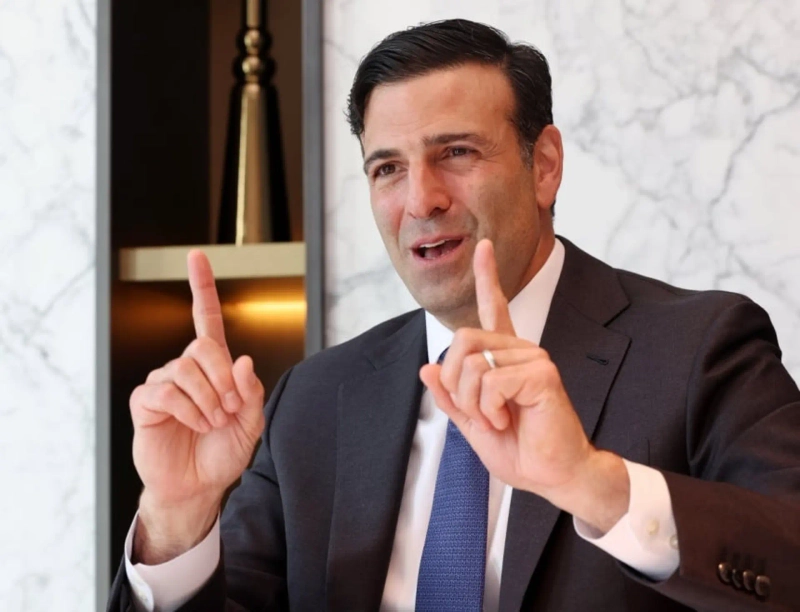
"I believe the vision presented by President Lee Jae-myung can lead Korea to become a dynamic, innovative, and secure digital asset ecosystem."
Heath Tarbert, President of Circle, said in an interview with Korea Economic Daily at Le Meridien Hotel in Myeong-dong, Seoul, on the 21st, "Although Korea's payment infrastructure is already world-class, through the introduction of a won-based stablecoin, it can also play a pioneering role in the on-chain economy," he said. The on-chain economy refers to all economic activities occurring on the blockchain network. During his presidential campaign, President Lee stated, "If we don't create a won-based stablecoin, we risk being left behind and losing national wealth."
Circle is the company that issues USD Coin (USDC), the world's second-largest dollar stablecoin after Tether. As a stablecoin issuer, it became the first in the world to be listed on the New York Stock Exchange in June of this year. Tarbert is Chief Legal Officer (CLO) and regarded as the No. 2 at Circle following CEO Jeremy Allaire. He previously served as Chairman of the U.S. Commodity Futures Trading Commission (CFTC) and as Assistant Secretary of the U.S. Department of the Treasury.
Responding to suggestions that Korea, with its well-developed electronic payment infrastructure, does not need a won-based stablecoin, Tarbert explained, "Blockchain transactions are separate from traditional payment systems," adding, "After much consideration, the U.S. also introduced a dollar-based stablecoin." He continued, "As more and more transactions move online and on-chain, the U.S. concluded that the dollar must also exist in that space." He added, "A digital version of the won—whether it’s a central bank digital currency (CBDC) or a stablecoin—is absolutely necessary."
Regarding the projection that allowing won-based stablecoins would encourage further usage of dollar stablecoins, Tarbert firmly disagreed. He argued, "If Koreans want to buy digital assets, they must use legal tender in some form," and "If the won does not exist on the blockchain as currency, they'll inevitably have to use dollars."
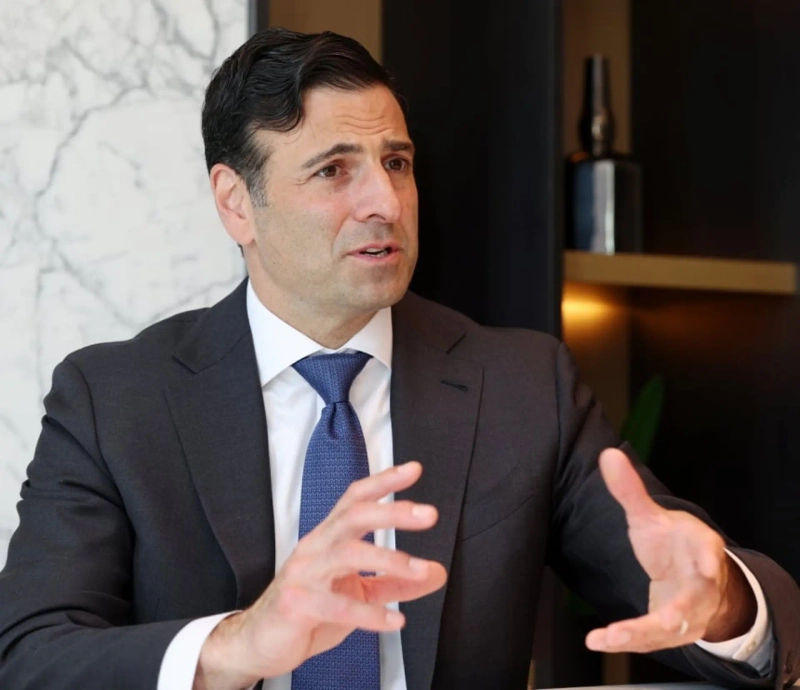
Arriving in Korea the previous day, Tarbert met with Rhee Chang-yong, Governor of the Bank of Korea. He is scheduled to meet with Jin Ok-dong, Chairman of Shinhan Financial Group, Ham Young-joo, Chairman of Hana Financial Group, Jeong Jin-wan, President of Woori Bank, and Lee Chang-kwon, Vice Chairman of KB Financial Group, among other high-ranking officials from major financial institutions. Tarbert emphasized that Korea’s fintech companies could also become potential partners.
He said, "Circle aims to collaborate with financial institutions to offer potential access to USDC," adding, "They could become Circle's clients, or Circle could become theirs." He continued, "Circle's strategy is to build the world’s largest and most widely used stablecoin network," and expressed hope that stablecoins issued by Korean institutions could potentially become part of that network.
According to Tarbert, the passage of the Genius Act, the U.S. law regulating stablecoins, has opened even greater opportunities for Circle. He said, "The Genius Act is legislation that institutionally reflects Circle’s operational philosophy," and, "Principles such as 1:1 reserves, transparency, and accounting verification—which are mandated by the Genius Act—are standards that Circle has already voluntarily implemented." He added, "Similar standards are being established globally," and projected, "not only Europe and Japan, but Korea as well, will legislate along the same lines."
Tarbert also predicts that the U.S. government will maintain its stablecoin policy even after the Trump administration. He said, "The Genius Act passed with broad bipartisan support," and, "because the bill was enacted with significant support from both Democratic and Republican lawmakers, it will likely remain in place for a long time."
For these reasons, Tarbert is confident that USDC can surpass competitors like Tether in the long run. He said, "Regulatory compliance, top-tier technology, and partnerships with global financial giants such as BlackRock and Fidelity differentiate USDC," adding, "Not only does USDC have high growth rates, but if institutional adoption accelerates, it could maintain an advantage in the long term." He went on to say, "The most important factor for institutions in adopting stablecoins is trust and regulation," and added, "Once transparency and legal status are secured, institutional adoption will accelerate."
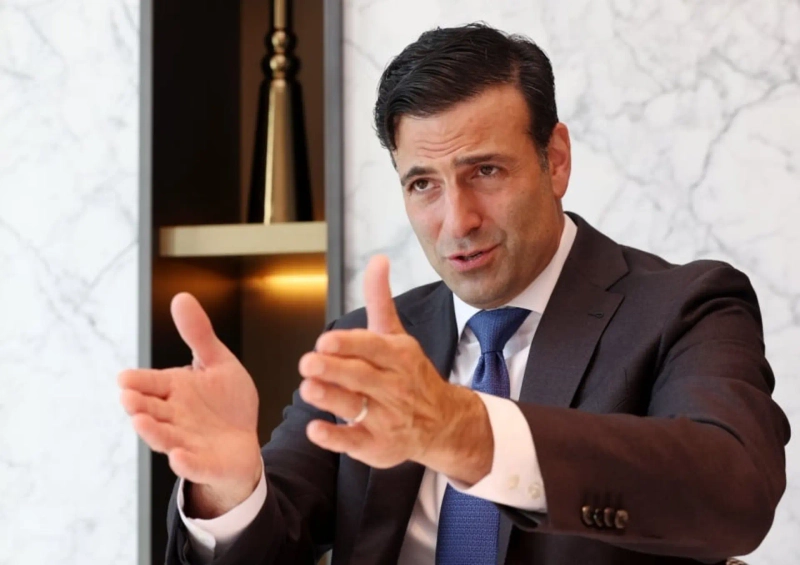
Some critics argue that since stablecoins do not create credit like banks do, their economic contribution is limited. In response, Tarbert stated, "Stablecoins are fundamentally not designed to create credit," and, "Stablecoin issuers do not compete with banks." He stressed, "This point is crucial and guarantees the stability of stablecoins," while also noting, "However, after issuance, stablecoins can be used for lending within both the banking and DeFi (DeFi, Decentralized Finance) ecosystems."
Tarbert predicted that the adoption of stablecoins will accelerate globally. He explained, "Corporations bear high spreads (exchange fees) in foreign exchange transactions," and, "By using stablecoins, foreign currencies can be exchanged almost instantly and at a fraction of the current costs." He shared, "Last year, stablecoin transactions grew 75% year-over-year," and, "This year alone, USDC transactions surpassed $6 trillion." He further stated, "Stablecoins currently make up only 1% compared to U.S. M2 (broad money, the total amount of easily liquidated money), but this is expected to grow significantly."
Tarbert also noted, "Korea, compared to countries like Japan or Singapore, has a very sophisticated retail investor base," pointing out that this is both an opportunity and a risk. He advised, "Because many more people in Korea invest in crypto assets relative to the population than in other countries, consumer protection is more important here than anywhere else."
Reporter: Jo Mihyun mwise@hankyung.com

Korea Economic Daily
hankyung@bloomingbit.ioThe Korea Economic Daily Global is a digital media where latest news on Korean companies, industries, and financial markets.