

PiCK
Democratic Party to propose 'Digital Asset Innovation Act' in October…"Will push forward swiftly"
Summary
- The Democratic Party has announced plans to formally propose the 'Digital Asset Innovation Act' in October and stated that it will push forward with strong momentum.
- Experts stressed that a sophisticated system design, testbeds, and inter-agency coordination are crucial to ensure the bill's effectiveness and market suitability.
- Industry and financial authorities noted that effective risk management, such as for money laundering, and clear policy directions are important for strengthening trust and fostering innovation in the industry.
Hosted by the National Assembly Political Affairs Committee
'National Assembly Forum for the Enactment of the Digital Asset Innovation Act'
"Bill to be proposed in October…Swift Progress Promised"
Industry voices: "Systematic legislation is necessary for ecosystem growth"

Ahead of the Democratic Party's push to enact the 'Digital Asset Innovation Act', there have been calls for effective supplementation to enhance the bill’s efficacy. There is consensus on the necessity of the legislation, but some point out the need for a well-crafted system design.
On the 22nd, the Democratic Party held a 'National Assembly Forum for the Enactment of the Digital Asset Innovation Act' at the National Assembly Members' Hall in Seoul. Organized by the Korea Fintech Industry Association, the event was prepared to gather input from industry and experts on the Digital Asset Innovation Act.
During his opening remarks, Kang Jun-hyun, a Democratic Party member, emphasized that "the Digital Asset Innovation Act will move forward with practicality and functionality." He added, "We plan to push ahead swiftly so that there are no unnecessary hurdles during the review process," and stated, "The bill will be formally proposed around October."
Experts: "Avoid repeating 'rushed legislation'"

Experts believe the government should create an environment that allows the market to prepare for the Digital Asset Innovation Act. Jeon Woo-young, a partner at PwC Consulting, said at the event, "The Digital Asset Innovation Act is a starting point," adding, "To vitalize the digital asset ecosystem, market readiness is essential." He continued, "Financial authorities need to have the capability to address real demand and resolve issues."
He pointed out that similar issues exist with Korean-won stablecoins, which have recently been actively discussed domestically. Jeon explained, "Korean-won stablecoins are essential as a solution to the U.S. dollar-related dilemma," but emphasized, "rather than just permitting stablecoins, it is more important to have testbeds and validated use cases through inter-agency collaboration." He added, "Overseas, various stablecoins are issued for different use cases," and "Korean-won stablecoins should draw on such examples to prevent market segmentation and support ecosystem development."
There were also calls for more systematic legislation. Kang Hyun-gu, a lawyer at Bae, Kim & Lee LLC, commented at the event, "The current Virtual Asset Basic Act, which is in effect, is a remnant of hastily enacted legislation following the 2022 Terra·Luna incident," and added, "While quick regulation of digital assets is important, a sophisticated system design reflecting market realities is also needed." He continued, "The current Digital Asset Basic Act and the Innovation Act, which have been proposed, positively reflect much of the European Union's MiCA regulation, introducing new businesses such as advisory and collective management, in addition to trading, brokerage, and custody." However, he said, "Digital asset lending and stablecoins require further, in-depth discussion."
Concerns raised about risks like money laundering
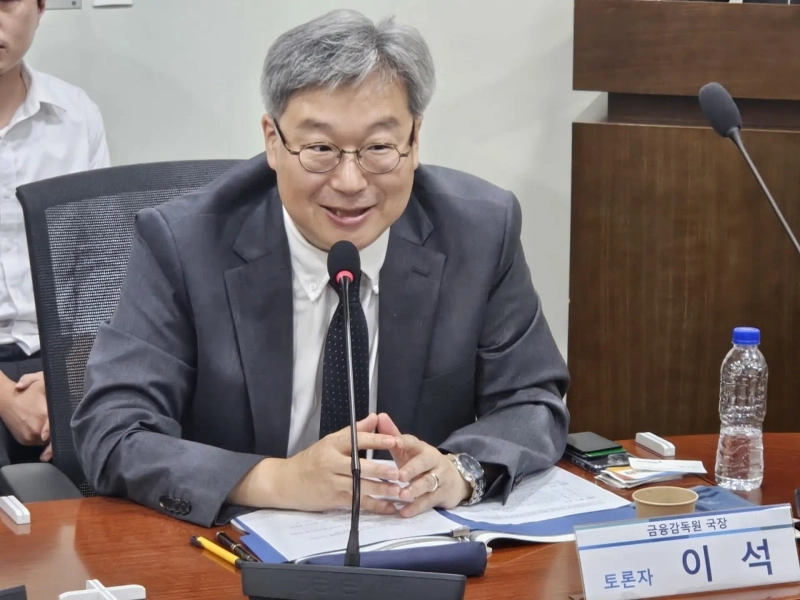
There were also voices calling for risk management measures regarding money laundering. Lee Seok, Director of the Virtual Asset Supervision Bureau at the Financial Supervisory Service, stated, "While the development of the digital asset industry is important, consumer protection must go hand in hand," warning, "Due to the unique properties of digital assets such as decentralization and anonymity, there are risks that they could be exploited for illegal activities like money laundering." He added, "If the industry and government do not address these risks, it could hinder industry advancement," and insisted, "The ecosystem must be fostered in a manner that guarantees user interests and enhances efficiency."
There were also comments underlining the need for genuine government engagement in the market. Kim Jong-hyeop, CEO of Parameta, said, "For innovation to be possible, the industry must be able to trust policy direction," and warned, "If even the regulatory sandbox is operated passively, ultimately, investors and companies will be driven overseas." He added, "The Innovation Act should be designed as a negative system (all-inclusive principle), and the financial regulatory sandbox should be opened up more boldly."
Jung Gu-tae, CEO of InfiniteBlock, also commented, "The digital asset industry can become a new driver for job creation and global enterprise development," and added, "The government should pursue industry promotion policies to foster the ecosystem, not just regulate for its own sake."

Uk Jin
wook9629@bloomingbit.ioH3LLO, World! I am Uk Jin.