

PiCK
[New York Stock Market Briefing] Trump "No reason to meet Xi Jinping"…US three major indices plunge
Summary
- It reported that President Trump’s hint that the meeting with Xi Jinping might be canceled and his warning of high tariffs led the US three major indices to record their largest decline in six months.
- It said that selling was heavy especially among AI and semiconductor and other technology stocks, with related names plunging.
- It reported that safe-haven demand increased while US Treasury yields and international oil prices fell, and the Volatility Index (VIX) hit a four-month high.
US-China tensions reignite…AI and semiconductor stocks collapse
Nasdaq and S&P 500 record largest drops in six months
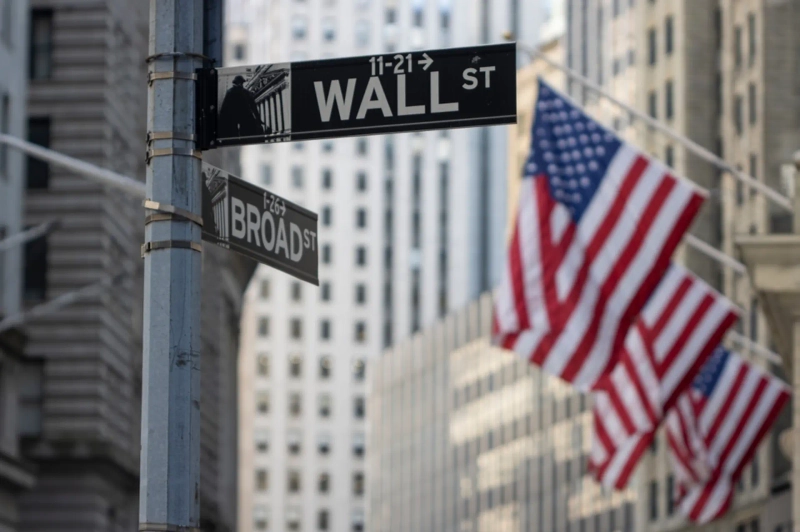
New York markets plunged across the board. U.S. President Donald Trump hinted at the possibility of the cancellation of a summit with Chinese President Xi Jinping and warned of high tariffs on China, which sharply froze investor sentiment toward the end of the session.
According to the New York Stock Exchange (NYSE) on the 10th (local time), the Dow Jones 30 Industrial Average closed at 45,479.60, down 878.82 points (1.90%) from the previous session.
The Standard & Poor's (S&P) 500 Index fell 182.60 points (2.71%) to 6,552.51, and the Nasdaq Composite Index plunged 820.20 points (3.56%) to 22,204.43.
Both the S&P 500 and the Nasdaq recorded their largest declines in six months since April 10, when the Trump administration announced its tariff policy.
On the day, President Trump said on the social network service (SNS) Truth Social, “Originally I was supposed to meet President Xi in Korea in two weeks at the APEC summit, but now there seems to be no reason to do so,” adding, “Depending on how China responds to the hostile ‘orders’ it has just issued, as U.S. president I may have to respond to their actions financially.”
He went on, “One of the policies we are reviewing at this moment is a large tariff increase on Chinese-made products entering the United States,” and “many other response measures are also being seriously considered.”
Before the president’s remarks, the Nasdaq had been climbing and even reached an intraday record high. But investor sentiment froze immediately after the remarks, triggering a wave of selling concentrated in technology stocks. The decline widened late in the session after President Trump warned that “starting next month on the 1st I will impose an additional 100% tariff on China.”
U.S. business broadcaster CNBC reported, “Before the president’s remarks the Nasdaq hit an intraday record. But after the remarks investor sentiment froze, the S&P 500 gave back all of this week’s gains, and the Nasdaq and Dow also fell about 1–2% respectively.”
This market shock is interpreted as a retaliatory response to the countermeasures China announced the day before to check the U.S.
China said it would impose separate port entry fees on U.S. vessels and launch an antitrust investigation related to U.S. semiconductor firm Qualcomm’s acquisition of automotive semiconductor designer Autotalks.
It also said it would require dual-use export permits for the export of certain rare earth products and include products manufactured overseas using Chinese technology under export control.
As a result, drops were pronounced among technology stocks. NVIDIA fell 4.91%, Tesla 5.06%, Amazon 4.99%, Apple 3.44%, and Meta 3.83%. Semiconductor companies such as Broadcom (-5.91%) and AMD (-7.8%) also plunged.
In particular, the Philadelphia Semiconductor Index, composed of AI and semiconductor themes, plunged 6.32%. This is the largest drop since April 10 (a 7.97% plunge).
Art Hogan, chief market strategist at B. Riley Wealth, said, “It’s not surprising that technology stocks fell the most that day. They were quite exposed to China in terms of manufacturing and major customers.”
As investor unease grew, safe-haven demand strengthened. The 10-year U.S. Treasury yield fell 8.8 basis points to 4.064% (1 bp = 0.01 percentage point), and the 2-year yield fell 7.1 bp to 3.529%.
The Chicago Board Options Exchange (CBOE) Volatility Index (VIX), known as the “fear index,” spiked to 22.44, its highest level in four months since June 19.
The government shutdown entered its 10th day, and the continued partisan standoff in Congress with no sign of resolution also worsened investor sentiment.
International oil prices also plunged. On the New York Mercantile Exchange, West Texas Intermediate (WTI) for November delivery fell $2.61 (4.24%) to $58.90 a barrel.
London ICE Futures’ Brent for December delivery fell $2.49 (3.82%) to $62.73 a barrel, both marking their lowest levels since May.
Analysts say the president’s threat of high tariffs raised concerns about an economic slowdown and reduced oil demand, and these worries were compounded by the easing of Middle East geopolitical risk after a first-phase ceasefire agreement in the Gaza Strip.
Meanwhile, gold futures prices, buoyed by safe-haven demand, once again recovered to the $4,000-per-ounce level.
Ji-hee Yu, Hankyung.com reporter keephee@hankyung.com

Korea Economic Daily
hankyung@bloomingbit.ioThe Korea Economic Daily Global is a digital media where latest news on Korean companies, industries, and financial markets.