

[Exclusive] Over 90% of Illegal Foreign Exchange Transactions Involve Virtual Assets… Fines Near 100 Billion Won
Summary
- The Korea Customs Service reported that over 90% of the illegal foreign exchange transactions it detected over the past five years were mediated by virtual assets.
- The amount of administrative fines imposed related to illegal foreign exchange transactions is approaching 100 billion won, but the collection rate remains in the 10% range.
- Rep. Choi Gi-sang urged adding a definition of virtual assets to the Foreign Exchange Transactions Act and stressed the need to devise measures to improve the fine collection rate.
Virtual asset hwanchigi and false documentation of purchase funds are common
Rep. Choi Gi-sang: "A definition of virtual assets should be added to the Foreign Exchange Transactions Act"
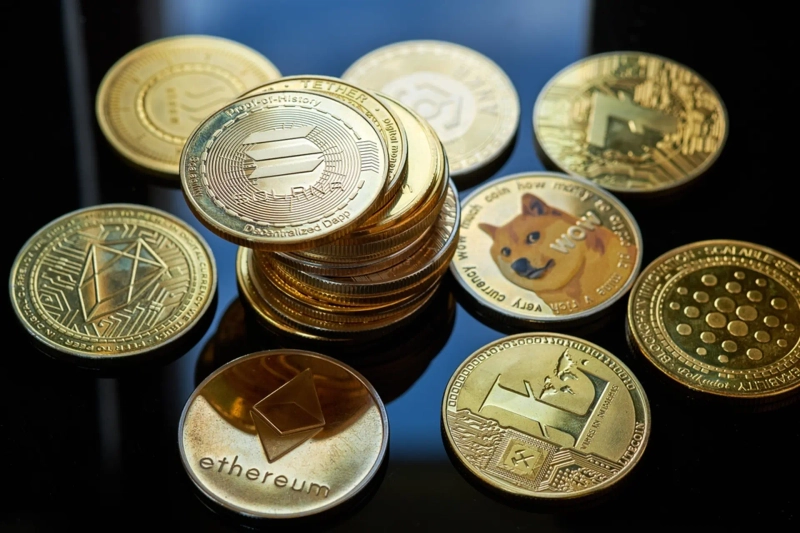
Over the past five years, more than 90% of illegal foreign exchange transactions detected by the Korea Customs Service have involved virtual assets. As enforcement has increased, the amount of fines imposed in addition to referrals to the prosecution has approached 100 billion won, but the collection rate remains in the 10% range.
According to data submitted by the Korea Customs Service to the office of Rep. Choi Gi-sang of the Democratic Party, a member of the National Assembly's Planning and Finance Committee, the illegal foreign exchange transactions detected by the Korea Customs Service over the past five years (2020–2024) totaled 830 cases, amounting to 12.4349 trillion won.
Virtual assets were the 'main culprit' in illegal foreign exchange transactions. The number of enforcement cases involving virtual assets (sum of prosecution referrals and fines imposed) was 162 cases, accounting for under 20% of the total in number, but by amount it reached 11.3724 trillion won, or 91.5% of the total. In 2022, the scale of detected crimes using virtual assets amounted to 6.5009 trillion won. The previous year saw a large 'kimchi premium' where domestic prices exceeded international prices, which is interpreted as having caused a surge in illegal foreign exchange transactions to realize arbitrage gains.
When the Korea Customs Service detects illegal foreign exchange transactions, it either imposes administrative fines or refers cases to the prosecution. By type, among the Korea Customs Service's enforcement records referred to the prosecution over five years, 'virtual asset-related hwanchigi' was the most frequent. The total scale of crimes using virtual assets referred to the prosecution by the Korea Customs Service over five years was 9.0392 trillion won, of which 89.7% (8.1037 trillion won) was virtual asset hwanchigi.
Among enforcement records where fines were imposed, the type 'false documentation for virtual asset purchase funds remittance' amounted to 1.5573 trillion won, accounting for 66.7% of the total (2.3332 trillion won). In situations where banks practically refuse remittances for virtual asset transactions, senders fabricate remittance reasons. A Korea Customs Service official said, "There are many cases where money was sent under the pretext of 'advance payment for trade imports' or 'service fees such as software purchase costs' and got caught," adding, "There are also cases where paper companies are set up overseas in places like Hong Kong or Japan and money is sent there."

Illegal foreign exchange transactions using virtual assets are increasing, but sanctions are not being properly enforced. The cumulative amount of collection decisions for administrative fines for violations of the Foreign Exchange Transactions Act rose rapidly from 13.064 billion won in 2020 to 38.033 billion won in 2021, 49.863 billion won in 2022, 60.781 billion won in 2023, and 83.962 billion won last year. This year, too, it reached 75.6 billion won through the first half, and is expected to exceed 100 billion won by year-end. The cumulative collection decision amount is the sum of the previous year's arrears and newly imposed amounts for the new year.
However, the payment rate for fines has declined from 21.6% in 2020 to 11.0% last year. The amount collected in the first half of this year was 14.3 billion won, raising the payment rate to about 19%, but it still falls far short of half. A Korea Customs Service official explained, "Since July 2023, the Enforcement Decree of the Foreign Exchange Transactions Act was amended to expand the scope of those subject to fines," adding, "As the cumulative collection decision amount grows, the payment rate inevitably falls, and even when fines are imposed, most are listed at unknown addresses or have no assets."
Rep. Choi Gi-sang of the Democratic Party said, "The Foreign Exchange Transactions Act should be amended to add a definition of virtual assets and virtual assets should be regulated akin to foreign exchange transactions," and added, "The Korea Customs Service should also prepare measures to maintain an appropriate collection rate for fines."
Reporter Lee Kwang-sik bumeran@hankyung.com

Korea Economic Daily
hankyung@bloomingbit.ioThe Korea Economic Daily Global is a digital media where latest news on Korean companies, industries, and financial markets.