

PiCK
With rising trade tensions… Asian currencies including the won see biggest weakness since May
Summary
- Reported that rising trade tensions between the United States and China caused Asian currencies such as the South Korean won and the New Taiwan dollar to record their weakest levels since May.
- Stated that risk-off sentiment in Asian markets strengthened, and both the MSCI emerging markets exchange rate and index continued to decline for five consecutive days.
- Said that the Federal Reserve's cautious stance on further rate cuts is driving dollar strength and increasing downward pressure on regional currencies.
Export-sensitive South Korean won and New Taiwan dollar post largest declines
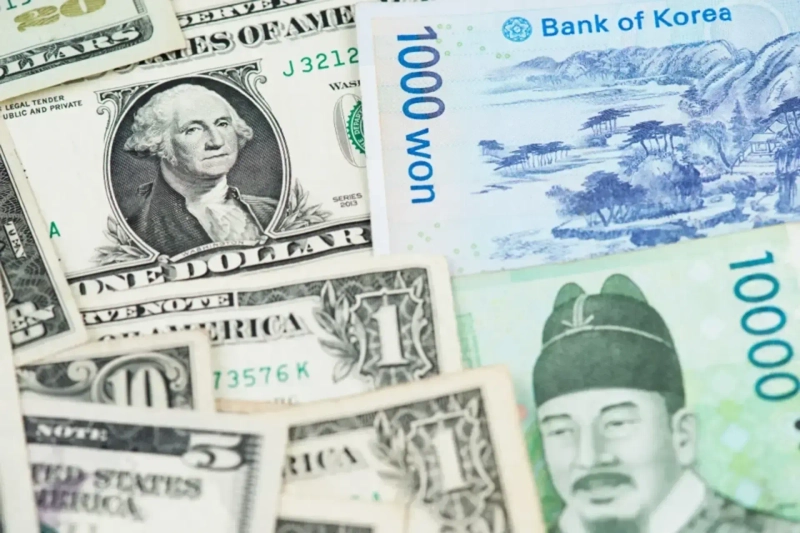
As trade tensions between the United States and China intensify, Asian currencies such as the South Korean won and the New Taiwan dollar fell to their weakest levels since May.
On the 13th (local time) in the Korean foreign exchange market, the won–dollar exchange rate surpassed 1,430 won intraday. The Ministry of Economy and Finance and the Bank of Korea, among foreign exchange authorities, officially intervened verbally for the first time in a year and a half.
On that day, the Bloomberg Asia Dollar Spot Index also fell as much as 0.2% to 91.51. This is the lowest level since May 9. Among emerging Asian currencies, the export-sensitive South Korean won and the New Taiwan dollar fell by the largest margins.
President Trump announced last Friday (the 10th) that from November 1 he would impose an additional 100% tariff on China and implement export controls on key software. However, on the 12th he also suggested an openness to negotiations with China.
Lloyd Chan, a strategist at MUFG Bank, said, "With Trump threatening to impose a 100% tariff on China, Asian markets slipped into a risk-off mood." He added, "Currencies closely tied to China’s economic outlook and global trade, such as the South Korean won, the New Taiwan dollar, and the Malaysian ringgit, came under some pressure."
The MSCI emerging markets (EM) exchange rate extended its five-day decline. Meanwhile, the onshore Chinese yuan recorded its highest exchange rate since November, and the offshore yuan rose.
Risk-off sentiment sent markets plunging beyond the foreign exchange market to regional stock markets as well. The MSCI emerging markets index fell 2%, marking its largest drop since April.
In addition to the trade dispute, surprise rate cuts in Indonesia and the Philippines have also weakened the currencies of other Asian countries. Meanwhile, Federal Reserve officials have taken a cautious stance on further rate cuts, which is leading to dollar strength and increasing downward pressure on regional currencies.
Kim Jeong-ah, guest reporter kja@hankyung.com

Korea Economic Daily
hankyung@bloomingbit.ioThe Korea Economic Daily Global is a digital media where latest news on Korean companies, industries, and financial markets.