

Despite Trump's Tariff Pressure…China's September Exports See Largest Monthly Increase
Summary
- China's September exports rose 8.3% year-on-year, marking the highest monthly figure of the year.
- Exports to the United States fell 27%, but exports to regions outside the U.S., such as the EU, Southeast Asia and Africa, rose sharply, offsetting the impact of the trade war.
- China's overall trade surplus increased 11% to $90.5 billion, and China's exports remained resilient despite tariff increases.
Exports to the EU, Southeast Asia, Africa and others rise sharply
Alternative exports and transshipment via third countries like Vietnam increase
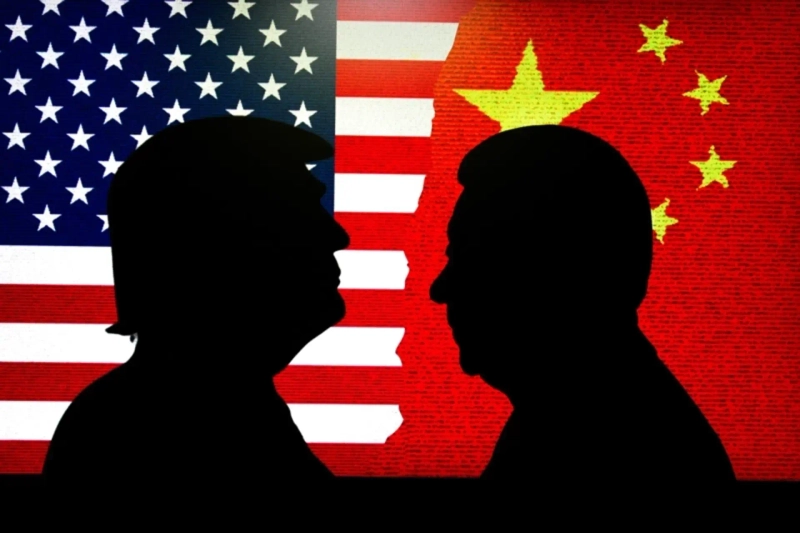
China's September exports rose 8.3% year-on-year to $328.6 billion (about 469 trillion won), marking the largest monthly figure this year. The increase shows little impact from U.S. President Trump's tariff pressure.
On the 13th (local time), according to a statement released that day by China's General Administration of Customs (GSA) cited by Bloomberg, China's September exports rose 8.3%, the fastest increase in six months. In a Bloomberg survey, economists had expected September exports to rise 6.6%. This export strength suggests China is finding resilience in the U.S.-China trade war.
Exports to the United States fell sharply by 27%, showing double-digit declines for six consecutive months, but exports to other regions surged and offset the decline. Exports to regions outside the United States rose 14.8% overall, the largest increase since March 2023.
In particular, exports to the European Union (EU) rose by more than 14%, the largest increase in three years. Exports to ASEAN countries in Southeast Asia increased by nearly 16%. Exports to Vietnam, known as a transshipment hub for Chinese goods, jumped 25%. Capital Economics analyzed that these figures "suggest Vietnam's re-exports remain a major offsetting mechanism for China against U.S. tariffs."
Last month, exports to Africa surged 56%, the largest increase since February 2021. Exports to Latin America rebounded 15.2% after declines in June and August.
China's strong export performance to regions outside the United States indicates that China would be less affected by additional tariffs even if Trump were to impose 100% tariffs. Michelle Lam, Greater China economist at Société Générale SA, noted, "Because U.S. tariffs had a limited impact on China's overall trade, China is likely to take a tough stance in U.S.-China trade negotiations."
Bloomberg pointed out that China's export strength appears to reflect both an expansion of exports to non-U.S. markets and increased transshipment through third countries such as Vietnam and Mexico.
Chinese companies have responded to U.S. tariff increases by seeking alternative markets or indirectly supplying the U.S. market through third countries. The 56% surge in exports to Africa last month and the sharp increase in exports to Latin America reflect this.
Imports in September rose 7.4%, driven by increased imports from Japan, South Korea, the Netherlands and Taiwan. Because import growth was smaller than export growth, China's overall trade surplus widened 11% year-on-year to $90.5 billion (129 trillion won).
Bloomberg Economics estimated that if the United States raises tariffs by 100%, the effective tariff rate on Chinese goods could rise to about 140%. Despite the current effective tariff rate on Chinese goods being 25 percentage points higher than the global average effective tariff, exports continue to rise.
Kim Jeong-ah, contributing reporter kja@hankyung.com

Korea Economic Daily
hankyung@bloomingbit.ioThe Korea Economic Daily Global is a digital media where latest news on Korean companies, industries, and financial markets.