

"Trump tariffs being absorbed by U.S. companies and consumer prices"
Summary
- According to research from Harvard and Yale, most of the costs from Trump tariffs are borne by U.S. companies, and are gradually being passed on to consumer prices.
- This increases inflationary pressure, and some companies said they plan additional price increases.
- The WTO and ING said they expect declines in global trade volume, EU exports to the U.S., and EU GDP growth due to tariff effects.
Harvard and Yale research teams report
"Companies plan future price increases, a factor in inflationary pressure"
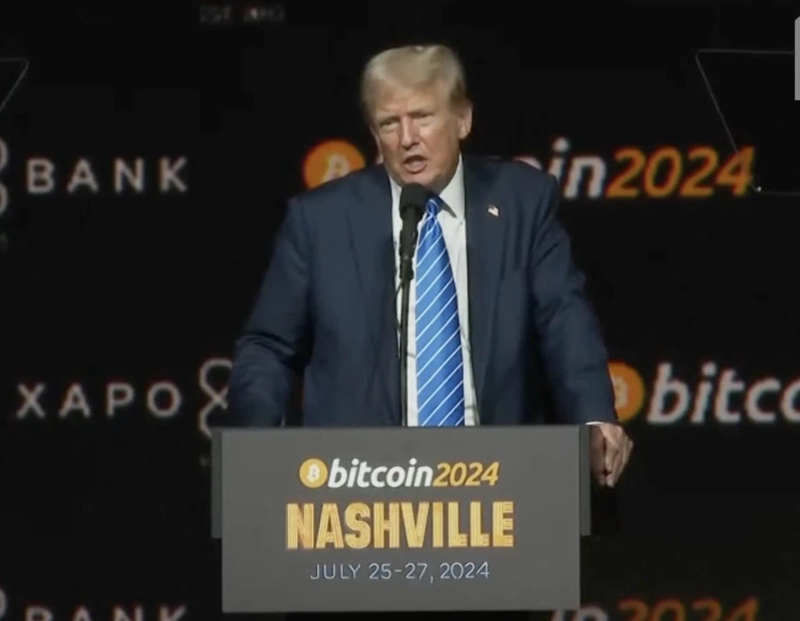
The burden of U.S. import tariffs has in practice fallen on U.S. companies and consumers. This contradicts President Trump's claim and makes the Federal Reserve's efforts to curb inflation more difficult.
According to research cited by Reuters on the 13th (local time) from Harvard University, Yale University and others, in the months after Trump's tariffs were imposed the costs were mainly borne by U.S. companies and some of them were passed on to consumers. Also, companies appear to plan further price increases.
Harvard University professor Alberto Cavallo said, "Most tariff costs are borne by U.S. companies, but we are seeing a gradual pass-through to consumer prices."
Professor Cavallo and researchers said this result came from tracking prices of 359,148 items, from carpets to coffee, at major online and offline retailers in the U.S.
The Trump administration has argued that U.S. tariffs are "ultimately borne by foreign exporters." Since President Trump imposed tariffs in early March, import prices rose 4% but domestic U.S. product prices rose 2%.
The items with the largest import increases were coffee, which cannot be produced domestically in the U.S., and items from countries that face high tariffs, like Turkey.
The prices of these products were usually much cheaper than the price that would include the product's tariff rate. In other words, sellers are also bearing part of the cost. However, import prices excluding tariffs showed that foreign exporters are passing on part of the dollar's depreciation to U.S. buyers.
Yale University's Budget Research Center also posted tariff-related research results on a blog. In the blog post they said, "Foreign producers are hardly absorbing U.S. tariffs, and this is consistent with previous research results."
Country export price indices showed the same pattern. Export prices from China, Germany, Mexico, Turkey, and India all rose. Japan was the only exception.
Dollar-denominated import prices excluding tariffs rose compared with the start of the year and were slightly above the pre-2025 trend.
Currently U.S. import tariffs have risen from an average of 2% before Trump's tariffs to about 17% on average. Exporters, importers, and consumers are competing over who will bear the roughly $30 billion in tariffs each month, so the adjustment process is expected to take several more months.
Cavallo said, "Companies are looking for ways to mitigate price increases, and this will not end as a one-off price increase."
Reuters tracked that about 72% of companies in Europe, the Middle East and Africa signaled price increases after President Trump's tariff offensive. However, only 18 companies warned of margin deterioration.
European car manufacturers have so far tried to absorb more of the tariff impact. By contrast, consumer goods company Procter & Gamble, Ray-Ban maker EssilorLuxottica, and Swiss watchmaker Swatch have raised prices.
Reuters' analysis of e-commerce sites Amazon and Shein found that prices of Chinese-made clothing and electronics sold in the U.S. have surged.
All of this is likely to form the backdrop to rising U.S. inflation. The Fed cut its policy rate last month amid concerns the labor market would weaken, but policymakers were divided over the likelihood that inflation from tariffs would abate.
Steven Myron, a new Fed board director who came from the Trump administration, argues that tariffs do not cause inflation. However, rough calculations by the Federal Reserve Bank of Boston estimated that tariffs would raise core inflation by 75 basis points (1 basis point = 0.01%, 0.75%).
Fed Chair Jerome Powell said tariffs account for about 30~40 basis points of the recent core inflation figure of 2.9%, but that the effect will be "relatively short-lived."
That does not mean foreign exporters are unaffected.
As price increases are likely to damp U.S. consumer demand, export demand is also expected to slow.
An S&P Global survey of purchasing managers at companies worldwide found that new export orders have gradually declined since June.
EU exports to the U.S. fell 4.4% year-on-year in July, and Germany fell 20.1% in August.
The World Trade Organization (WTO) also sharply lowered its projection for next year's growth in world merchandise trade to 0.5%, citing delayed effects of U.S. tariffs.
ING expects EU goods exports to the U.S. to decline by 17% over the next two years. This would reduce the EU's GDP growth rate by 30 basis points, it projected. ING economist Ruben de Wit said, "The effects of U.S. tariffs will become clearer in the coming months."
Guest reporter Kim Jung-ah kja@hankyung.com

Korea Economic Daily
hankyung@bloomingbit.ioThe Korea Economic Daily Global is a digital media where latest news on Korean companies, industries, and financial markets.