

PiCK
Rate cut expectations outweigh U.S.-China trade tensions, U.S. stocks rise
Summary
- The U.S. Federal Reserve's rate cut expectations drove U.S. stock gains despite U.S.-China trade tensions.
- Strong earnings from major U.S. banks and strength in semiconductor stocks including ASML had a positive effect on the market.
- Experts said the Fed's rate cut expectations and a weaker dollar are the background factors supporting U.S. stock strength.
Following the previous day, banks reported solid earnings
ASML's improved chip outlook also led semiconductor stocks higher
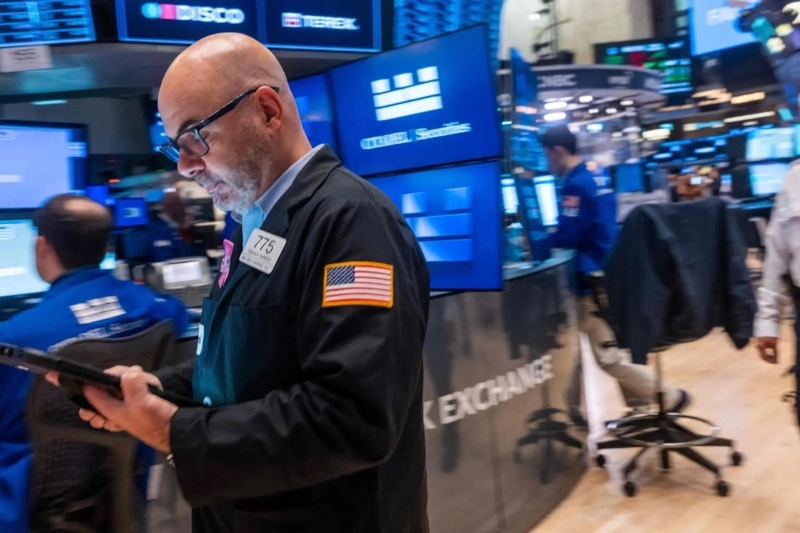
Despite trade tensions with China, expectations of an interest rate cut by the Federal Reserve and strong U.S. corporate results drove U.S. markets higher on the 15th (local time).
At the open, the S&P 500 and the Nasdaq started with gains around 0.7% but widened their gains by 10 a.m. Eastern Time to record a 1.06% rise for the S&P 500 and a 1.2% rise for the Nasdaq. The Dow Jones Industrial Average also rose 0.8%.
The 10-year U.S. Treasury yield fell 1 basis point (1bp = 0.01%) from the previous day to 4.02%. The spot gold price also rose nearly 1% that day, trading around $4,185 and setting a new record high.
Bitcoin fell 1.3% to $111,638, and Ether fell 0.9% to $4,082.
Before the open that day, Morgan Stanley and Bank of America reported solid quarterly results, and large banks showed strength. The KBW bank index rose 1.4%.
ASML's stock rose 2.5% after it presented a positive outlook for artificial intelligence (AI) demand. Semiconductor companies also saw their stocks rise.
NVIDIA rose 1.2%, and AMD traded above $225 after rising more than 3% that day. Broadcom and Micron each rose more than 1.5%.
Federal Reserve Chair Jerome Powell hinted at the possibility of another 0.25 percentage point rate cut at the end of this month. In a speech at the American Economic Association's annual meeting the previous day, Powell noted a slowdown in the pace of hiring and said the Fed's economic outlook as expected at the September meeting has not changed.
Wall Street appeared largely unconcerned about the U.S.-China trade war.
Pawad Razakzada of City Index and Forex.com noted, "Investors are largely ignoring the resumption of U.S.-China trade tensions and are focusing more on expectations of Fed rate cuts." Following the previous day, strong U.S. bank results also reinforced the market's confidence in the resilience of U.S. companies.
That day, Treasury Secretary Scott Bessent said in an interview with CNBC that President Trump may meet with President Xi Jinping at the end of the month.
Max Kettner of HSBC said, "Despite recent tariff-related noise, fundamentals remain strong," and "a weaker dollar also helps the U.S. stock market." Kettner also said he will continue to maintain a "risk-on stance" into 2026.
A day earlier, the New York market was volatile amid concerns of an escalation in U.S.-China trade tensions. China announced sanctions on five U.S. subsidiaries of South Korea's shipbuilder Hanwha Ocean and imposed port fees, and President Trump suggested a ban on edible oil from China, leading to a decline.
Contributing reporter Jeong-a Kim kja@hankyung.com

Korea Economic Daily
hankyung@bloomingbit.ioThe Korea Economic Daily Global is a digital media where latest news on Korean companies, industries, and financial markets.