

No 'big deal' between Trump and Xi?…Why a 'small deal' is more likely [Sang-eun Lee's Washington Now]
Summary
- It reported that at this U.S.-China summit the prospect of a 'small deal' rather than a 'big deal' was raised.
- It said that remarks by President Trump and President Xi Jinping are mainly interpreted as domestic political messages, and do not appear intended to derail talks.
- It assessed that it is more likely to remain in limited agreements confined to individual issues such as TikTok, rather than major progress to resolve the U.S.-China trade dispute.
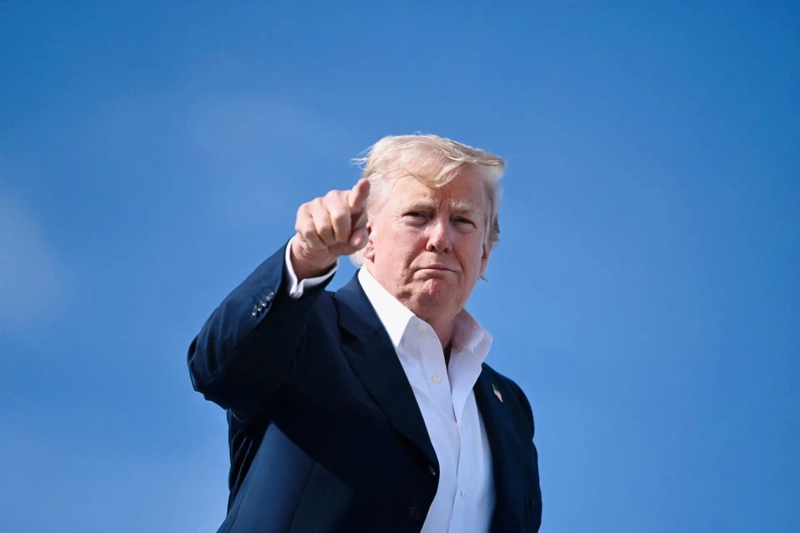
With U.S. President Donald Trump and Chinese President Xi Jinping expected to meet later this month in Gyeongju, North Gyeongsang Province, projections are emerging that this summit is more likely to produce a 'small deal' rather than a 'big deal.'
Messages from President Trump and the Chinese side have been swinging between cold and warm almost daily, raising concerns about 'no deal,' but such a possibility does not appear to be large.
Yesterday President Trump suddenly said he might halt edible oil imports or take other trade measures, which alarmed markets. But fundamentally, the moves by both sides do not seem intended to break the talks; rather they appear to be actions aimed at securing a better position assuming a summit. Some messages also seem not targeted at the other side but intended for domestic politics.
For example, the talk about edible oil yesterday refers to the fact that the U.S. has recently been importing a lot of waste cooking oil from China, which is used as a raw material for biodiesel. If imports of edible oil for biodiesel increase, demand for soybeans in the U.S. could decline, and soybean farmers have opposed this. Therefore, this appears less a message directed at President Xi and more a signal that efforts are being made to protect U.S. soybean farmers.
It is interpreted that more of Trump's true intention is contained in remarks that he is not trying to harm China. Yesterday Jamison Greer, a representative of the U.S. Trade Representative's office, also explained in an interview with CNBC that time is still being allocated for the U.S.-China summit during Trump's travel schedule. Given that the U.S. and China are conducting high-level negotiations daily, one can understand that the two sides are engaging in significant jockeying ahead of the summit.
There is interest in whether a big deal that would settle the U.S.-China trade dispute might emerge at the summit. The mood in Washington generally favors a higher likelihood of a small deal rather than a big deal. Today the International Institute of Finance (IIF) annual meeting was held in Washington, where Hal Brands, a professor at Johns Hopkins University, pointed out that there are structural conflicts between the U.S. and China and that President Trump's transaction-centered approach has limits in fundamentally easing such conflicts.
For example, risks of military clash or competition over technological hegemony are intrinsic systemic competition issues that cannot be resolved by President Trump's give-and-take trading approach. Therefore he evaluated that this meeting is likely to remain at limited agreements such as on the TikTok issue.
Earlier this month the Washington think tank CSIS made a similar assessment, noting that within the Trump administration discussions are limited to economic issues with China and exchanges in multiple areas such as security are not frequent. Therefore it concluded that it is difficult to expect a big deal in these respects. The explanation that a big deal would require a decision such as President Xi visiting the United States or President Trump going to China sounded interesting.
Washington — Correspondent Sang-eun Lee selee@hankyung.com

Korea Economic Daily
hankyung@bloomingbit.ioThe Korea Economic Daily Global is a digital media where latest news on Korean companies, industries, and financial markets.