

PiCK
Ripple Global Policy Head "Korea to Become a Key Market for Stablecoins" [Coin Interview]
Summary
- The Ripple Global Policy Head said he is focusing on expanding stablecoin businesses such as RLUSD and highlighted Korea's market potential.
- He emphasized that the Asian market, especially Korea, can play a pivotal role in the commercialization of virtual assets and cross-border remittance efficiency.
- He said Korea's high digital literacy, digital payment infrastructure, and establishment of clear regulatory standards are key factors for stablecoin market growth.
Rahul Advani, Ripple Global Policy Head
Expanding businesses including RLUSD
"Asia, Ripple's core target"
Also mentions Korea's market potential
"Strengths such as digital literacy"
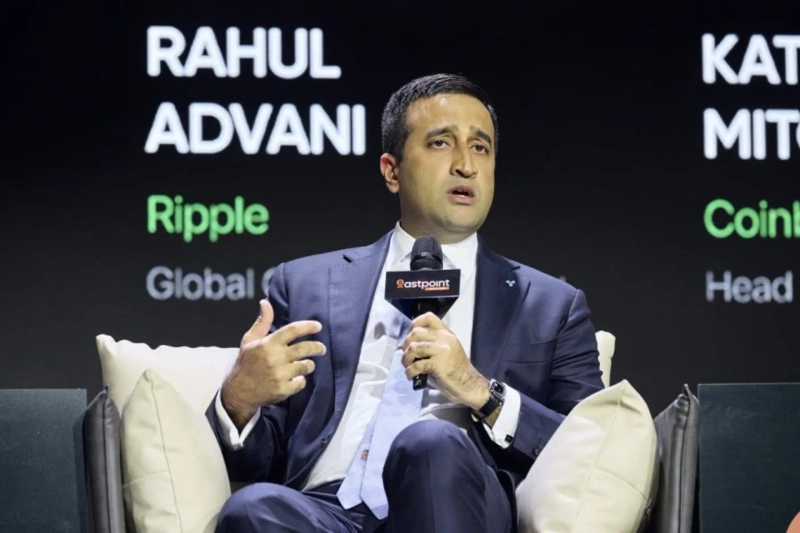
"Korea is one of the key countries that will lead the era of virtual assets (cryptocurrencies). I hope that when the commercialization of virtual assets progresses in Korea, Ripple's stablecoin 'RLUSD' can play an important role."
Rahul Advani, Ripple's Global Policy Head (photo), said this in an interview with Bloomingbit on the 6th.
Advani is a global financial policy expert who worked at Bloomberg and handled derivatives and business development at the International Swaps and Derivatives Association (ISDA). Based on this experience, since 2021 he has been engaged in policy cooperation activities at Ripple to shape the regulatory environment for digital assets in the Asia-Pacific (APAC) region.
We asked Advani about the opportunities he has identified in the virtual asset market in Asia and Korea's market potential.
"A framework for cooperation between authorities must be established"
Ripple is a company aiming to maximize the efficiency of international remittances using virtual assets. Advani said, "International remittances conducted by traditional finance encounter frictions in many areas and are inefficient," and added, "I joined because I learned that Ripple aims to realize an 'Internet of Value' where money moves as fast and transparently as information."
The core product is Ripple Payments. Ripple Payments is Ripple's international remittance system that provides corporate remittance services. Recently, the company has integrated its stablecoin RLUSD into the system and is undertaking full-scale service expansion. RLUSD is a dollar-based stablecoin launched by Ripple last year and currently has a market capitalization of 1 billion dollars (about 1.45 trillion won).
Advani explained, "Using digital assets like RLUSD or XRP can resolve bottlenecks in international remittances," and added, "If institutions and companies simplify complex overseas remittance processes, they can gain additional benefits from this."
He identified Asia as Ripple's main target market. Ripple is indeed aggressively expanding operations in several Asian countries. A representative example is the partnership formed in August with Japanese financial group SBI Holdings for RLUSD's business in Japan.
Advani said, "The biggest characteristic of the Asia-Pacific region is that trade is well-developed," and added, "The larger the transaction volume, the more important low-cost payment solutions become, which aligns with Ripple's vision." He went on to say, "The collaboration with SBI will show that RLUSD can establish itself as a trusted and regulation-compliant asset even in institution-centered markets."
Regulatory fragmentation is a challenge to be resolved. Advani explained that Asia has many countries and each has different financial systems and regulatory frameworks. He said, "For the institutional spread of stablecoins, it is necessary to harmonize differing national standards," diagnosing that, "Under the principle of 'same activity, same risk, same regulation', functional classification systems, minimum issuance and custody standards, and frameworks for cooperation between authorities should be harmoniously established."
"Korea can lead the commercialization of virtual assets"
Regarding Korea, he said it is "a country that can lead next-generation commercialization of virtual assets." He explained, "Korea is a trade-advanced country with an export economy centered on large corporations," and added, "It is a country where cross-border remittance efficiency is directly linked to competitiveness." He also said, "Not only RLUSD but various virtual assets will be used in Korea."
He cited Korea's high digital literacy as a strength. Digital literacy refers to the ability to effectively find and use information in a digital environment. He said, "Korea is a market with tech-friendly consumers and digital payment infrastructure, an environment where new payment methods can be rapidly adopted," and added, "This is a key factor that can accelerate the commercialization of stablecoins."
He also offered suggestions for domestic virtual asset legislation. He said, "I hope that the Digital Asset Basic Act being promoted in Korea will establish clear standards for stablecoin redemption rights, capital requirements, and reserve quality," and emphasized, "If the system design is made with global consistency in mind, Korea can build the most exemplary stablecoin regulatory framework in Asia."

Uk Jin
wook9629@bloomingbit.ioH3LLO, World! I am Uk Jin.