

PiCK
New lawsuit one month after pardon…Binance founder accused of aiding Hamas financing
Summary
- Binance founder Changpeng Zhao has been sued in a U.S. federal court on charges of aiding the financing of Hamas and other terrorist organizations.
- Plaintiffs say Binance maintained a structure vulnerable to money laundering for an extended period and that hundreds of millions of dollars moved through related wallets.
- Binance previously paid fines to U.S. authorities for anti–money laundering (AML) violations, and the lawsuit could affect investor confidence.
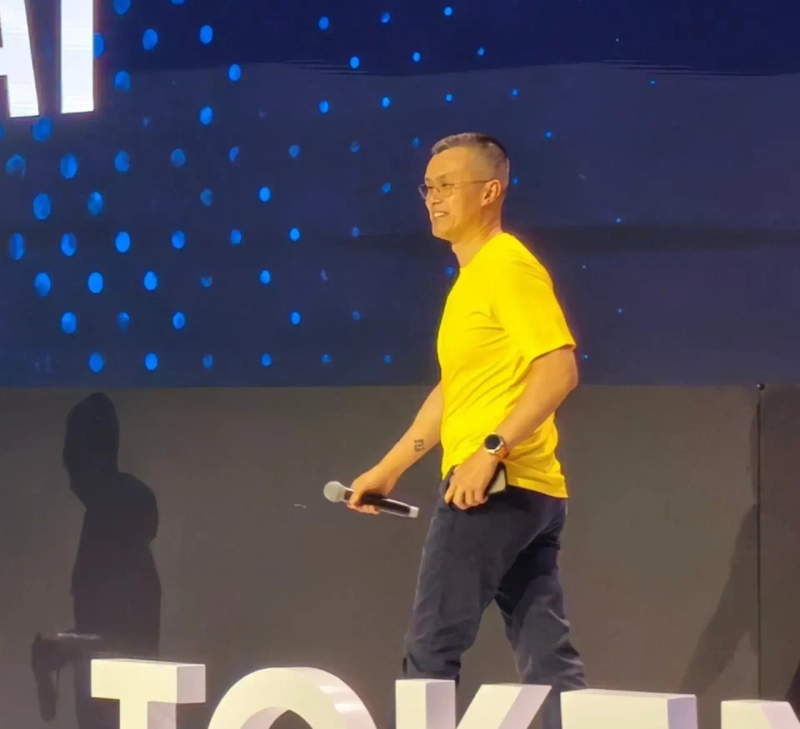
Binance founder Changpeng Zhao has been sued in a U.S. federal court on allegations of aiding Hamas's financing. The new charges were filed just one month after he was pardoned by President Trump.
On the 25th (local time), the Financial Times (FT) reported that about 300 Americans harmed by Hamas's attack filed a civil lawsuit against Zhao and Binance in the U.S. District Court in North Dakota. The complaint alleges that Binance concealed the flow of funds related to U.S.-designated Foreign Terrorist Organizations (FTOs) such as Hamas, Hezbollah, the Islamic Revolutionary Guard Corps (IRGC), and Palestinian Islamic Jihad (PIJ), providing 'substantial assistance.'
The plaintiffs contend that Binance maintained a structure vulnerable to money laundering for a long time and that flows to certain wallets amounted to hundreds of millions of dollars before and after the attack. According to the complaint, based on public blockchain data, since the 7th of last month at least $50 million in transactions linked to Hamas, the IRGC, Hezbollah and others were routed through Binance. The complaint also alleges that wallets believed to have been directly operated by Binance transferred more than $300 million to certain wallets before the attack and more than $115 million after the attack.
A plaintiffs' lawyer said, "Binance effectively left it possible for terrorist groups to store and move large sums of money while evading detection," and claimed some related accounts remain active. He added, "There is currently no evidence that Binance has materially improved its anti–money laundering systems."
Zhao admitted last year to violating anti–money laundering (AML) obligations imposed by U.S. authorities and was sentenced to four months in prison. Binance also agreed in 2023 to settle U.S. government allegations of money laundering and sanctions violations, paying a $4.3 billion fine.
President Trump pardoned Zhao last month, describing the case as "a prosecution brought amid overzealous regulatory enforcement by the prior Biden administration," but the pardon was controversial. The controversy intensified when it emerged shortly before the pardon that Binance had secured a $2 billion investment from a UAE-based fund that uses a stablecoin issued by a Trump family company.

Minseung Kang
minriver@bloomingbit.ioBlockchain journalist | Writer of Trade Now & Altcoin Now, must-read content for investors.