

U.S. Treasury: "Trump tariffs can be reinstated regardless of Supreme Court ruling"
Summary
- U.S. Treasury Secretary Scott Bessent said Trump tariffs can be reinstated under various statutory provisions such as Sections 301, 232, and 122 regardless of the Supreme Court ruling.
- He said these three provisions all grant the president the authority to impose tariffs without prior congressional approval, thereby ensuring the continuity of tariff policy.
- Secretary Bessent highlighted the results and effectiveness of the tariff policy and emphasized that it could be applied permanently going forward.
Even if the Supreme Court rules reciprocal tariffs illegal
Tariffs can continue to be imposed under other statutory provisions
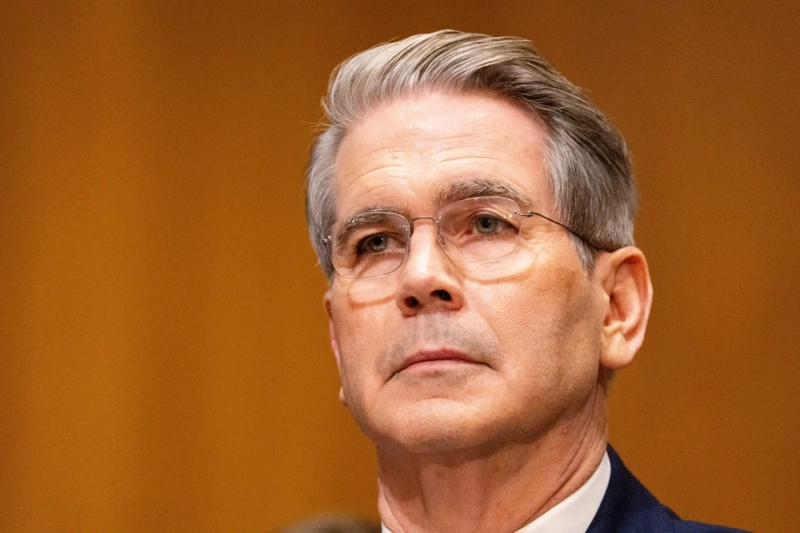
U.S. Treasury Secretary Scott Bessent emphasized on the 3rd (local time) that the current tariff structure can be maintained and reinstated regardless of the Supreme Court ruling surrounding the Trump administration's tariff policy.
At the New York Times DealBook Summit in New York that day, Secretary Bessent said, "We can use Sections 301, 232, and 122 to recreate the current tariff structure as is." He had expressed a similar view before the Supreme Court's oral arguments last month.
The three provisions Bessent mentioned differ in nature, but share the commonality of broadly granting the president the authority to impose tariffs on imports. Section 301 served as the basis for retaliatory tariffs on China as a remedy for unfair trade. It allows the United States to investigate a foreign country's 'unfair trade practices' and, if necessary, unilaterally impose tariffs or retaliatory measures.
Section 232 is a national security–based import regulation and provided the basis for tariffs on steel and aluminum. If imported goods are judged to threaten 'national security,' it allows the president to directly impose tariffs or import restrictions. There is virtually no statutory time limit.
Section 122 is an emergency tariff authority that allows for emergency tariffs for up to 150 days. It permits the president to take tariff or import restriction measures for up to 150 days when a 'significant threat to the national economy' occurs. The period is relatively short, but it can allow tariffs to be imposed immediately.
Although each of these provisions has different purposes, they have been used as policy tools by the Trump administration in that they allow the president to impose tariffs without prior congressional approval.
Secretary Bessent also emphasized the 'results' of the Trump tariff policy. He said, "Thanks to tariffs related to fentanyl, China showed a meaningful change in attitude for the first time," adding, "China has become much more active in blocking fentanyl headed to the United States."
Since taking office, President Trump effectively imposed tariffs on nearly all imports and later relaxed some measures. Secretary Bessent highlighted that such policies remain effective and sustainable.
When the moderator asked, "Can these measures be applied permanently?" Bessent replied firmly, "Permanently." This means that even if reciprocal tariffs are limited by a Supreme Court ruling, Trump tariffs can be maintained by using other legal bases such as Sections 301 and 232.
Secretary Bessent declined to answer a question about candidates for the next chairman of the U.S. central bank (Fed). Kevin Hassett, director of the National Economic Council, is currently being mentioned as a leading candidate.
He said, "The Fed chair can start discussions, but ultimately is one of the voting members," emphasizing the Federal Reserve Board's collective decision-making over individual influence.
New York=Shin-young Park, correspondent nyusos@hankyung.com

Korea Economic Daily
hankyung@bloomingbit.ioThe Korea Economic Daily Global is a digital media where latest news on Korean companies, industries, and financial markets.