

Earned less than expected, spent more… Oracle becomes Wall Street's 'troublemaker'
Summary
- Oracle made large-scale investments in cloud and AI, but said revenue and profit growth did not meet market expectations.
- Second-quarter capital expenditures were nearly 50% higher than expected, resulting in a 10,000,000,000 dollar free cash flow deficit, raising concerns about rising debt and falling credit ratings.
- After the earnings announcement, Oracle's stock plunged 11.53%, and investors are highly concerned about the uncertainty of the company's financing plans and cloud business growth.
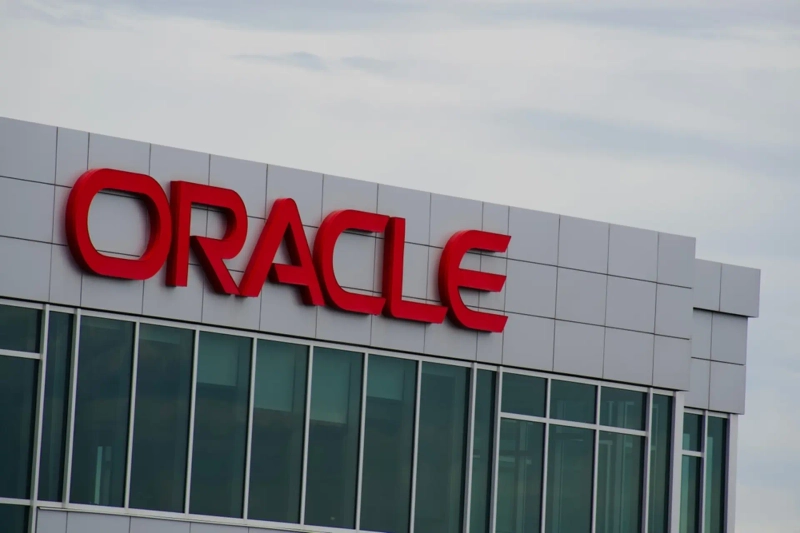
AI cloud company Oracle has once again become the center of the 'AI bubble' controversy. Despite quarterly results that improved from last year, analysts said the company did not show profit growth fast enough to alleviate concerns over its massive investment burden.
Cloud growth 'below expectations'
Oracle announced after the market closed on the 10th (local time) that for fiscal year 2026 second quarter (September–November) it recorded revenue of 16,060,000,000 dollars and adjusted operating income of 6,720,000,000 dollars. Both figures rose 14% and 10% respectively compared with the same period last year, but fell short of market expectations of around 1%.
The cloud business driving growth also reported results within expectations. Oracle Cloud revenue increased 34% year-over-year to 7,980,000,000 dollars. Of that, the cloud infrastructure business providing compute data centers contributed 4,080,000,000 dollars, up 68%.
Earnings per share rose 53.7% year-over-year to 2.26 dollars, far exceeding the market estimate (1.64 dollars). A large one-time gain occurred this quarter from the payment received from the sale of semiconductor design firm Ampere to SoftBank Group in March.
Oracle is a giant in the B2B software industry, having been the first in the world to sell a commercial database program. However, it has been criticized for falling behind market trends while Amazon and Microsoft rapidly grew through their cloud businesses.
Accordingly, Oracle announced a transformation into an AI cloud company last year and launched large-scale investments. The plan is to sell their market-dominant database software and data centers equipped with the latest graphics processing units (GPUs) as cloud products to seek synergies.
Rising debt while revenue 'lags'
Experts warned that Oracle's plan has so far been only a 'half success.' Although cloud revenue is progressing beyond the company's guidance, the cost of building data centers exceeded expectations due to rising GPU and memory prices. Capital expenditures in the second quarter were 12,000,000,000 dollars, nearly 50% above the market's expected 8,250,000,000 dollars. Free cash flow also recorded a deficit of 10,000,000,000 dollars.
There were also criticisms that Oracle failed to control costs and debt. Its credit rating fell to BBB, the lowest investment-grade level, and the five-year credit default swap (CDS) premium stood at 1.246% percentage points. In the earnings release the company said it raised its capital expenditure outlook for this fiscal year from 35,000,000,000 dollars to 50,000,000,000 dollars.
Lindsey Tyler, a Morgan Stanley analyst, warned, "Oracle's total debt could rise to 290,000,000,000 dollars within three years," adding, "If it cannot present a clearer financing plan, the CDS premium could rise to 2% percentage points."
Critics also pointed out that the contract backlog management touted by management as a 'growth guarantee' is concentrated with certain customers and converts to revenue slowly. As of the end of the second quarter, Oracle's contract backlog stood at 523,000,000,000 dollars. The 300,000,000,000 dollar contract with OpenAI signed last September accounts for the majority, but revenue will begin in 2027.
Kirk Matten, an Evercore analyst, said, "The market's view of OpenAI's competitiveness has completely changed between September and now," adding, "The market is concerned about whether Oracle can smoothly handle a scenario where OpenAI-driven demand falls short of expectations the year after next."
Doug Kehring, Oracle's executive vice president and chief financial officer, emphasized, "We have various financing options such as corporate bond issuance and bank loans, and there are ways like leasing semiconductors instead of purchasing them or having customers install them directly in data centers," adding, "(Expanding data centers) is possible with far less borrowing than the market expects." Kehring also said, "We will work to maintain an investment-grade credit rating."
In after-hours trading following the earnings release, Oracle shares plunged 11.53% to 197.3 dollars.
Reporter Jeon Beom-jin forward@hankyung.com

Korea Economic Daily
hankyung@bloomingbit.ioThe Korea Economic Daily Global is a digital media where latest news on Korean companies, industries, and financial markets.