

QE or not... Fed begins short-term Treasury purchases
Summary
- The U.S. central bank (Fed) announced it will begin purchasing short-term Treasury securities to alleviate short-term funding liquidity pressures.
- Markets interpret the move as a 'mini quantitative easing (QE),' and expectations are growing for expanded liquidity supply.
- The Fed emphasized that the purchases are separate from monetary policy, but said attention is needed to the short-term liquidity effects on the market.
"To ease short-term funding liquidity pressures"
Powell draws a line on linking it to monetary policy
Markets call it "effectively a mini QE"
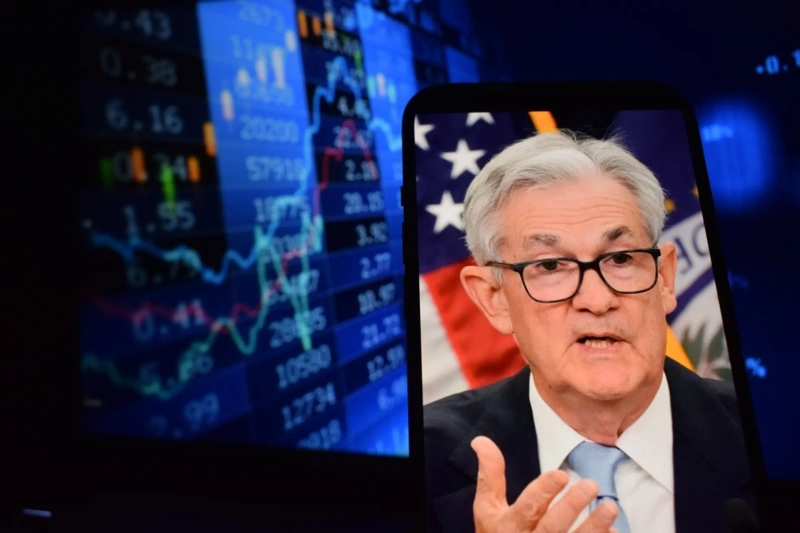
The U.S. central bank (Fed) on the 10th (local time) announced a plan to buy short-term Treasury securities along with a benchmark rate cut. It is a measure to ease liquidity pressures in the short-term funding market. The Fed, however, drew a line, saying it is not quantitative easing (QE) that would supply liquidity to the market in earnest. Nevertheless, the market has also evaluated it as a 'mini QE.'
The Fed said that through its 'reserve management program' it will begin purchasing Treasury bills maturing in 4 weeks to 1 year starting on the 12th. The initial purchase size is about $40 billion in the first month. Fed Chair Jerome Powell said, "Short-term funding market rates continue to be under upward pressure relative to the policy rate," and "considering other indicators that show conditions in the reserve market, we judge that reserve balances have fallen below a 'sufficient' level." According to the Federal Reserve Bank of New York, the pace of Treasury purchases is expected to remain rapid for the next few months, through next April when liquidity typically declines due to federal income tax payments.
Some Fed officials had been concerned about the repo (repurchase agreement) rate — applied when financial institutions obtain ultra-short-term funds — repeatedly deviating from the policy rate range set by the central bank. Bloomberg News reported, "Wall Street had been preparing for the Fed to take this step, but the actual announcement came sooner than expected and was larger in scale." TD Securities had expected the announcement in January and estimated the purchase size at $15–20 billion, and Evercore ISI also estimated the size at $20 billion per month.
Powell drew a line, saying the measure is solely for reserve management and not QE. Powell emphasized, "It is separate from the stance of monetary policy and does not have any effect on monetary policy." Wall Street viewed the measure as similar to the Fed's response after the 2019 repo turmoil. In September 2019, amid large-scale Treasury issuance by the federal government and surging cash demand from corporate quarter-end tax payments, the repo rate jumped from the low 2% range to 10%. The Fed actively intervened in the repo market and injected $500 billion in cash.
Some view this short-term Treasury buying as 'effectively supplying liquidity.' There is expectation that a 'light quantitative easing' may begin. In particular, this short-term Treasury buying comes just ten days after the Fed on the 1st ended quantitative tightening (QT) that involved selling bonds held in the market. Reuters, citing experts, explained, "The pace of these purchases is faster than the pace of the reduction of the Fed's holdings of mortgage-backed securities (MBS)," adding, "It means liquidity is being injected into the market."
Reporter Han Kyung hankyung@hankyung.com

Korea Economic Daily
hankyung@bloomingbit.ioThe Korea Economic Daily Global is a digital media where latest news on Korean companies, industries, and financial markets.