

"It costs over 800,000 won?"…Shocked when trying to buy a 1-don stone ring
Summary
- It reported that major metal commodities such as gold, silver, and copper have risen sharply year-to-date.
- Global investment banks forecast further increases in gold and commodity prices next year.
- It conveyed that for individual investors, commodity investment via ETFs is advantageous in terms of liquidity, trading volume, and taxation.
Cover Story
How to Invest in Metal Raw Materials
Gold, Silver, and Copper All Rising
Holding commodities bolsters the asset portfolio
International gold price up 58.6% year-to-date
Central banks, institutions, and individuals buying heavily
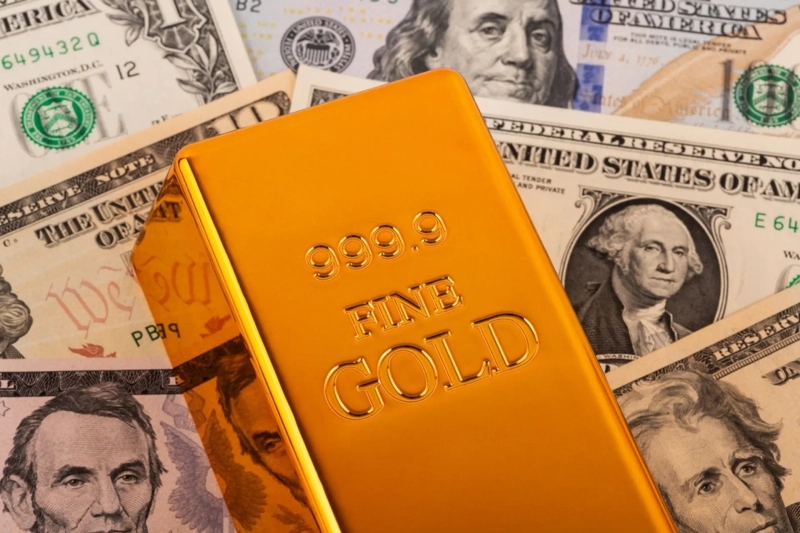
"A 1-don (3.75g) stone ring costs over 800,000 won? It was in the 500,000-won range earlier this year…"
Prices of major metal commodities such as gold, silver, and copper are rising sharply. International silver prices have surged nearly 100% year-to-date, and gold and copper are also recording double-digit gains. Experts advise diversifying asset portfolios through commodity investments as the global economy and industrial structure are undergoing structural changes.
Central banks and individuals both 'hoarding gold'
On the 14th, according to the New York Mercantile Exchange (COMEX), gold futures prices rose 58.57% year-to-date through the 12th. International gold, which was below $2,800 per troy ounce in early January, has surpassed $4,300. Silver jumped 98.80% over the same period. Copper also rose 25.21%.
Gold, a representative safe-haven asset, has seen prices surge as demand has poured in from central banks as well as institutional and individual investors. According to the World Gold Council (WGC), net gold purchases by central banks worldwide totaled 1,045 t last year, exceeding 1,000 t for the third consecutive year. This is more than twice the 2010–2021 average (475 t). Non-Western countries such as China, Russia, and the Middle East are expanding safe-haven assets in preparation for a decline in the dollar's value and geopolitical instability. The WGC expects central bank gold buying this year to be at last year's level or higher.
This trend is spilling over into the stock market. According to the WGC, global gold holdings via exchange-traded funds (ETFs) increased by 222 t year-on-year in the third quarter. This is comparable to the amount of gold purchased by central banks over the same period.

Industrial demand is driving prices
Silver and copper continue to climb as surging industrial demand coincides with supply bottlenecks. About half of global silver demand comes from industry. As the metal with the highest electrical conductivity, silver is essential for high-precision components such as electronic boards, sensors, and solar cells. Recently, the expansion of the artificial intelligence (AI) market has boosted demand for AI data centers, optical communication infrastructure, and sensor fusion devices, further driving up prices.
More than 85% of global copper production is used for industrial purposes. It is required across a wide range of industries including power transmission and communication cables, semiconductors, automobiles, shipbuilding, construction, and equipment. When interest rates fall, corporate investment expands and copper demand increases. Recently, copper prices have risen further due to the expansion of AI infrastructure and the defense industry. The problem is that supply cannot keep up with demand. Demand has surged sharply in the past two to three years, but mine development takes an average of 7~10 years. If unexpected shutdowns of major mines occur due to government regulations and other factors, supply disruptions will worsen.
Global IBs: "Gold will rise next year too"
Experts expect commodity prices such as gold, silver, and copper to continue their upward trend next year. Global investment bank Goldman Sachs projected on the 11th that gold will reach $4,900 per troy ounce by the end of next year. Goldman Sachs analyzed that "the factors that drove this year's rise in gold prices are likely to persist next year, and ordinary investors' demand to diversify portfolios will also stimulate gold demand." Bank of America (BoA) predicted that gold could rise to $5,000 next year, citing expanded U.S. fiscal spending, a decline in currency value, and increased demand for gold.
Many observers expect a similar structure for silver and copper. The Silver Institute analyzed that global silver supply was about 15% short of demand last year. This year, an excess demand of about 100 million troy ounces is also expected. Goldman Sachs said, "From next year the copper market could enter a structural supply shortage," adding, "Demand for power infrastructure is surging while supply remains stagnant."
Various investment methods: physical, ETFs, futures, etc.
There are various ways to invest in commodities, including physical assets, ETFs, and futures. For individual investors, investing physically in commodities other than gold is often not practical due to low liquidity and storage costs. Directly trading commodity futures contracts is also difficult. Investors must manage complex factors in real time, such as the basis between spot and contract prices, price differences between contract months, and maturity rollovers. In addition, they must bear taxes and exchange rate risks.
A more practical investment method is ETFs and exchange-traded notes (ETNs). Among these, ETFs have the edge in liquidity and trading volume. There are more gold ETF varieties than silver or copper ETFs. Domestic listed ETFs that track international gold prices include 'KODEX Gold Active', 'SOL International Gold', and products that track the Korea Exchange (KRX) gold spot price such as 'ACE KRX Gold Spot'. Domestic products that follow local gold prices generally have lower fees but can sometimes be more expensive than international prices, creating the so-called 'kimchi premium' and increasing price volatility.
If you want to invest in both gold and silver, there are products like 'TIGER Gold & Silver Futures (H)'. To invest in gold and dollar assets together, you can also use U.S.-listed ETFs. In that case, a strong dollar can yield currency gains, but even if gold prices rise, a weaker exchange rate could reduce returns. On the KRX gold spot market, gold can be bought and sold like stocks in 1 g units. Unlike physical gold, trading on the KRX is exempt from value-added tax and capital gains tax, offering tax advantages.
Reporter Seon Han-gyeol always@hankyung.com

Korea Economic Daily
hankyung@bloomingbit.ioThe Korea Economic Daily Global is a digital media where latest news on Korean companies, industries, and financial markets.