

Is the exchange rate on the 30th the year-end closing price?…Why does the foreign exchange market close on the 31st? [Hankyung Foreign Exchange Market Watch]
Summary
- According to the tradition of year-end closure of the Seoul foreign exchange market, the daytime trading closing price of 1439 won on the 30th was recorded as the year-end closing price.
- The reason the foreign exchange market takes one day off at year-end is a measure to ensure consistency with the securities market, the report said.
- It reported that since the early 2000s, an important change for investors has been the continuous alignment of the opening and closing times of the foreign exchange market and the stock market.
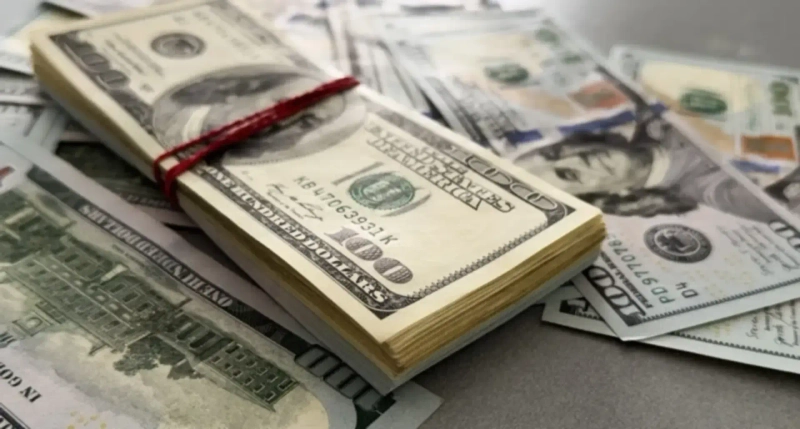
On the 31st, the last day of the year, the Seoul foreign exchange market was closed. The daytime trading closing price of 1439 won recorded on the previous day, the 30th, was recorded as the year-end closing price. After weekly trading ended, the exchange rate rose again to 1450 won per dollar, but the overnight trading close that ended at 2 a.m. on the 31st closed at 1439 won 50 jeon. After aligning with the weekly closing price, it was closed until the 1st.
That the foreign exchange market takes one day off at year-end is a 'tradition' that has continued for 20 years. In March 2005, the Seoul Foreign Exchange Market Operation Council designated the last business day of the year as a non-trading day through the "Measures to change foreign exchange trading hours through foreign exchange brokerage firms." If the 31st is a weekday, it closes that day; if it is a weekend, it closes on the previous business day.
A year earlier, in 2004, the market was open on December 31 and the closing price was recorded as 1035 won 10 jeon, but in 2005 the closing price for that year was determined to be 1011 won 60 jeon, recorded on December 29 rather than on the last business day, December 30.
The Foreign Exchange Market Council's decision to take a year-end break was a measure to align with the securities market. At that time, the stock market was already closed at year-end. The council explained it was "a measure to correct the lack of linkage with the capital market."
The practice of the stock market taking a year-end break dates back to 1977 when the KOSPI started. Until 1985, trading was conducted manually, so it was not possible to close the year while the market was open. At that time, the stock market stopped for seven trading days at year-end to carry out settlements. From 1985 to 1992 it was closed for five days, and afterwards it was closed for three days. It was reduced to one day starting in 2001.
It was not only the year-end closure that was aligned. In the early 2000s, the foreign exchange market continued efforts to match opening hours with the stock market. In 2003, the opening hours, which had been from 9:30 a.m. to 4:30 p.m., were changed to 9 a.m. to 4 p.m. to match the start time with the stock market. Around that time, the lunch break was also abolished. The stock market had already removed its lunch break in 1997, but the foreign exchange market was about six years late.
In 2005, the closing time was moved up to 3 p.m. to fully align trading hours with the stock market. When the stock market pushed its closing time back to 3:30 p.m. in 2016, the foreign exchange market followed suit.
Reporter Kang Jin-gyu josep@hankyung.com

Korea Economic Daily
hankyung@bloomingbit.ioThe Korea Economic Daily Global is a digital media where latest news on Korean companies, industries, and financial markets.