

PiCK
Min Byung-deok unveils draft of 'Digital Asset Basic Act'... "Final version to be proposed after gathering industry opinions"
Summary
- Min Byung-deok unveiled the draft of the Digital Asset Basic Act, stating that he would actively gather industry opinions through a 'propose first, review later' approach.
- Concerns were raised that the introduction of the stablecoin authorization system and the Listing Review Committee could raise entry barriers for private companies.
- The need for allowing ICOs and clarifying the scope of regulatory authority of financial authorities was emphasized, with specific improvements for industry development discussed.
Min Byung-deok, Member of the Democratic Party of Korea
Held a seminar to review the draft of the Digital Asset Basic Act
Welcoming the swift introduction of industry-specific laws... expressing concerns over certain provisions
Need for allowing ICOs and establishing regulatory authority of the Financial Services Commission
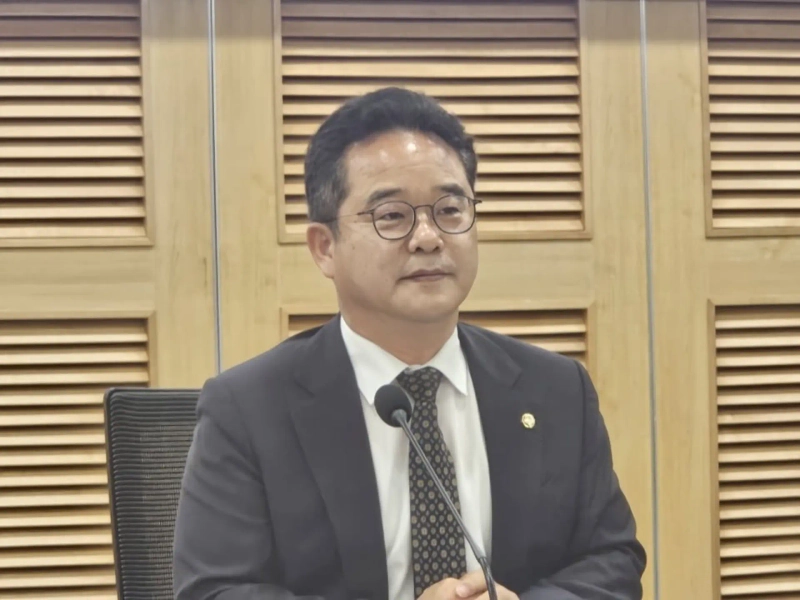
Ahead of the proposal of the first industry-specific law for the promotion of the virtual asset (cryptocurrency) industry, the 'Digital Asset Basic Act', industry and academic experts gathered to review the details of the bill. While many experts expressed positivity about the direction and speed of the bill, there were also suggestions for improvements on some of its core issues.
On the 24th, the 'Digital Asset Basic Act Draft Review' seminar was held at the 1st Seminar Room of the National Assembly Members' Office Building in Yeouido, Seoul. This seminar, hosted by Min Byung-deok, a member of the Democratic Party of Korea, was organized to disclose the draft of the Digital Asset Basic Act, which Min plans to propose next month, and to gather opinions from industry experts on the draft.
The expert panel for the seminar included △Yoon Min-seop, Director of the Digital Consumer Research Institute △Lee Sang-young, Lawyer at YK Law Firm △Lee Jung-min, Researcher at the Financial Consumer Protection Foundation △Kang Hyung-gu, Professor at Hanyang University △Won Eun-seok, Chairman of the International Digital Asset Committee △Lee Ho-sung, Chief Tax Accountant at Ichon Tax Accounting.
Min Byung-deok explained the reason for proposing the Digital Asset Basic Act, stating, "While the United States, European Union, and Japan are already rapidly institutionalizing, Korea is still maintaining a cautious approach," and "I thought it was necessary to propose a bill with speed to alleviate the inconvenience of the industry."
Therefore, Min adopted a 'propose first, review later' approach for the proposal of the Digital Asset Basic Act. He said, "I thought it would be fine to propose something preemptively and then review it to announce the final version," and "I will listen to many opinions from the industry."
The Digital Asset Basic Act proposed by Min includes provisions for the authorization system for stablecoins, the definition and promotion of the digital asset industry, the establishment of the Digital Asset Committee, the issuance report system, and the separation of issuance and distribution disclosure regulations, aiming for clear industry regulation and promotion.
Welcoming the swift introduction of industry-specific laws... expressing concerns over certain provisions
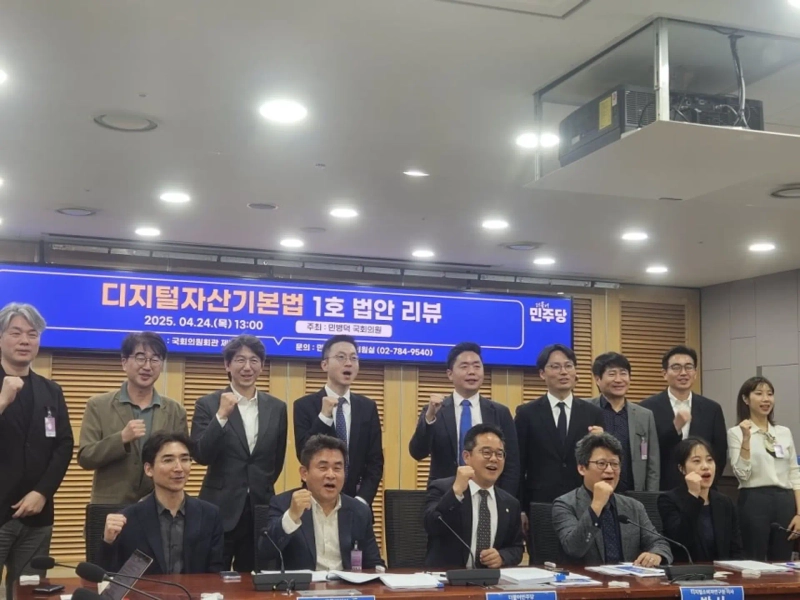
All seminar attendees agreed on the need for a speedy proposal of the bill and the direction for fostering the digital asset industry.
Lee Sang-young, a lawyer at YK Law Firm, said, "This Digital Asset Basic Act seems to incorporate most of the supplementary opinions from the previous Virtual Asset User Protection Act," and "It has a solid structure referencing the Capital Markets Act while flexibly applying and excluding considering the uniqueness of virtual assets."
Lee Jung-min, a researcher at the Financial Consumer Protection Foundation, also stated, "While the Virtual Asset User Protection Act focused on investor protection, this Digital Asset Basic Act seems to consider both industry fostering and user protection," and "I think previously marginalized virtual asset operators can gain clarity with this regulation, and it's positive that a regulatory framework for stablecoins has been prepared."
However, there were opinions that the establishment of the Digital Asset Committee under the Financial Services Commission (FSC) included in the Digital Asset Basic Act needs improvement. According to the draft, the Digital Asset Committee is a deliberative decision-making body for fostering and promoting the digital asset industry, consisting of 20 members, including the Chairman of the Financial Services Commission and two civilian chairpersons.
Concerns were raised about the authorization system for stablecoins and the unification of exchange listing provisions included in the Digital Asset Basic Act. The authorization system for stablecoins included in the draft requires obtaining approval from the FSC to issue stablecoins. The reserve is set at 5 billion won. While this is a measure considering the issuer's stability and monetary sovereignty, some panelists expressed concerns that it could significantly raise the entry barriers for private companies.
Kang Hyung-gu, a professor at Hanyang University, said, "The pre-authorization system for stablecoins fundamentally restricts the market entry of private stablecoins, hindering currency competition and the provision of payment benefits," and "It is necessary to consider introducing a passport-type registration system centered on disclosure and reserve transparency as a more flexible regulatory measure."
Concerns about the Listing Review Committee were also pointed out. The Listing Review Committee is an organization under the Digital Asset Industry Association that reviews exchange listings. If the bill is proposed, virtual asset exchanges must apply for a review to the Listing Review Committee for the virtual assets they wish to list.
Professor Kang expressed concern, "It is true that the current listing structure is causing many problems, but if the Listing Review Committee is introduced, it could significantly undermine the competitiveness of domestic exchanges." He explained that if the cost and time required for domestic listing increase due to the introduction of the Listing Review Committee, promising overseas projects might consider listing abroad instead of in Korea.
Professor Kang added, "The virtual asset exchange industry has been fiercely competitive in a multi-exchange system," and "Some exchanges have made significant efforts, such as implementing a zero-fee policy. In this situation, I don't think there's a need to hinder the positive competitive market with listing unification."
Need for allowing ICOs and establishing regulatory authority of the Financial Services Commission
In the final session of the seminar, detailed questions were raised about the industry-specific law, including the Initial Coin Offering (ICO), which has been banned in the domestic market since 2017, and the scope of regulatory authority of financial authorities.
Yoon Min-seop, Director of the Digital Consumer Research Institute, responded to a reporter's question, "Will ICOs be allowed if the Digital Asset Basic Act is implemented?" by saying, "If the industry-specific law is implemented, ICOs will naturally be allowed."
There were also criticisms about the ambiguous scope of regulatory authority of financial authorities and their attitude towards the virtual asset industry. Choi Han-gyeol, Vice President of Gopax, pointed out, "What I've felt while being in the industry for a long time is that bureaucrats having too much power is a problem," and "When Gopax's major shareholder changed, we reported the change of executives, but even after two years, the matter has not been processed." Vice President Park added, "I would appreciate it if the new bill could add clarity to these parts."
There was also an opinion that the existence of the FSC could negatively impact the industry. Park Hye-jin, a professor at Seoul School of Integrated Sciences & Technologies, said, "The part about not adding other rules for digital asset issuance is something the industry will welcome," but "It is discouraging that issuance reports must be approved by the FSC." Professor Park said, "Since the industry has already experienced a lot with the FSC, there are concerns about the FSC's approval."

Uk Jin
wook9629@bloomingbit.ioH3LLO, World! I am Uk Jin.