

Belarusian President "Banks should expand use of virtual assets to overcome economic sanctions"
Summary
- President Alexander Lukashenko reportedly ordered Belarusian banks to actively implement the expansion of virtual asset use and digital token usage.
- The volume of virtual asset-based external payments in the first seven months of this year reached $1.7 billion and could expand to $3.0 billion by the end of the year.
- Global virtual asset exchanges are actively operating in Belarus, and related users are expected to exceed 855,000 by 2026.
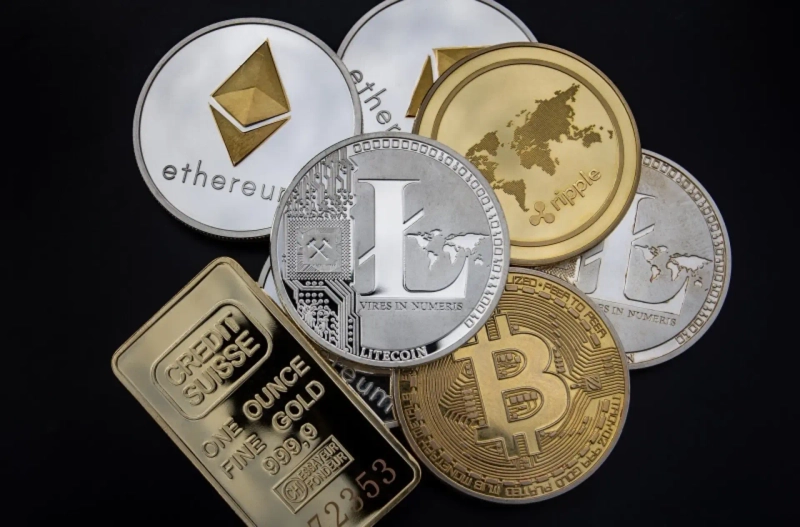
With Belarus under economic pressure from Western sanctions, President Alexander Lukashenko ordered the banking sector to expand the use of virtual assets (cryptocurrencies). According to Cointelegraph on the 10th (local time), Lukashenko told a meeting with heads of the central bank and commercial banks that "the use of digital tokens must be expanded," and demanded active implementation.
He emphasized, "Over the past five years, the Belarusian economy and financial sector have faced unprecedented challenges," and said, "Now is the time to act." Earlier he had also ordered the parliament to establish a transparent regulatory framework for virtual assets. This coincides with an economic downturn caused by reduced exports due to European Union (EU) and United States sanctions linked to support for Russia.
Lukashenko claimed that virtual asset-based payments are rapidly increasing. He said, "Over the first seven months of this year, the volume of external payments through virtual asset exchanges reached $1.7 billion, and experts believe it could reach $3.0 billion by the end of the year." Currently global exchanges such as Binance, OKX, and KuCoin are operating in Belarus, and related users are expected to exceed 855,000 by 2026.
He also instructed the banking sector to strengthen digital strategies such as QR code payments, the introduction of real-time payment systems, the use of biometric technology, and the expansion of artificial intelligence (AI)-based financial services. Lukashenko added, "Digitization is not an end but a means, and it must lead to tangible economic results."
Belarus legalized virtual asset trading and mining in 2018, but in 2023 it showed an uncertain stance by pursuing restrictions on peer-to-peer (P2P) transactions. At the same time, Lukashenko has shown contradictory policy tendencies, such as ordering the development of the virtual asset mining industry to address energy surplus issues.

YM Lee
20min@bloomingbit.ioCrypto Chatterbox_ tlg@Bloomingbit_YMLEE