

PiCK
Speeding up stablecoin institutionalization... Democratic Party of Korea "Will become South Korea's growth engine"
Summary
- Political circles and financial authorities are accelerating the institutionalization of won-denominated stablecoins, saying they could become a new growth engine.
- The market said corporate use and impacts on the foreign exchange market are among the practical ripple effects, and that risks can be managed with institutional measures.
- Foreign exchange authorities and the Bank of Korea raised concerns about capital outflows and exchange rate volatility, while also saying that increased real use could contribute to won internationalization.
Won-denominated Stablecoin National Assembly Forum
Ahn Do-geol "We must not miss the opportunity due to concerns"
"Risks can be managed with institutional measures"
People Power Party also agrees on the need for introduction
Foreign exchange authorities are "closely monitoring" institutionalization
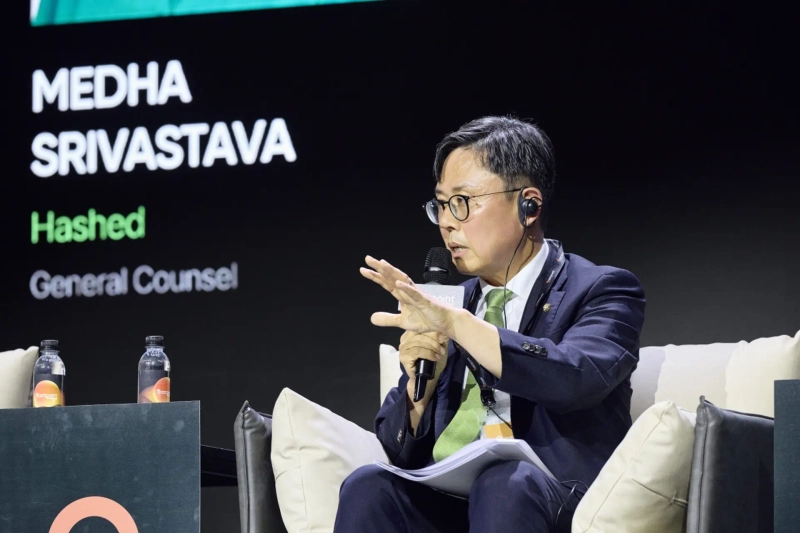
The political circle is accelerating the institutionalization of won-denominated stablecoins. The ruling Democratic Party of Korea says stablecoins can become a new growth engine for the South Korean economy.
Ahn Do-geol, a Democratic Party lawmaker, attended a forum titled 'Corporate Use of Won Stablecoins and Foreign Exchange Policy' held at the National Assembly Members' Office Building in Yeouido, Seoul on the 30th, and said, "Stablecoins will be a new growth engine for our economy beyond financial innovation." Ahn said, "Innovation in stablecoins is already underway in the global market," and added, "We must not miss the opportunity due to excessive concerns about stablecoins."
Ahn reiterated the importance of stablecoins. He said, "Stablecoins provide various opportunities to companies," and "they will also expand transaction volumes by providing users with a convenient payment experience." He added, "If we hesitate further, dollar-denominated stablecoins will solidify their market dominance and countries ahead of us will encroach on the market," and "quickly bringing won stablecoins into the institutional framework and establishing them is the way to protect national competitiveness and monetary sovereignty."
Regarding concerns such as weakening monetary policy, he said, "We can respond sufficiently." Ahn said, "There are concerns that won stablecoins could expand capital outflows and weaken the enforcement of foreign exchange policy," and "these issues can be adequately addressed through institutional measures and technical means." He continued, "By using blockchain to build a transparent monitoring system and by preparing mechanisms such as pre-detection of abnormal transactions and the travel rule, risks can be sufficiently managed."
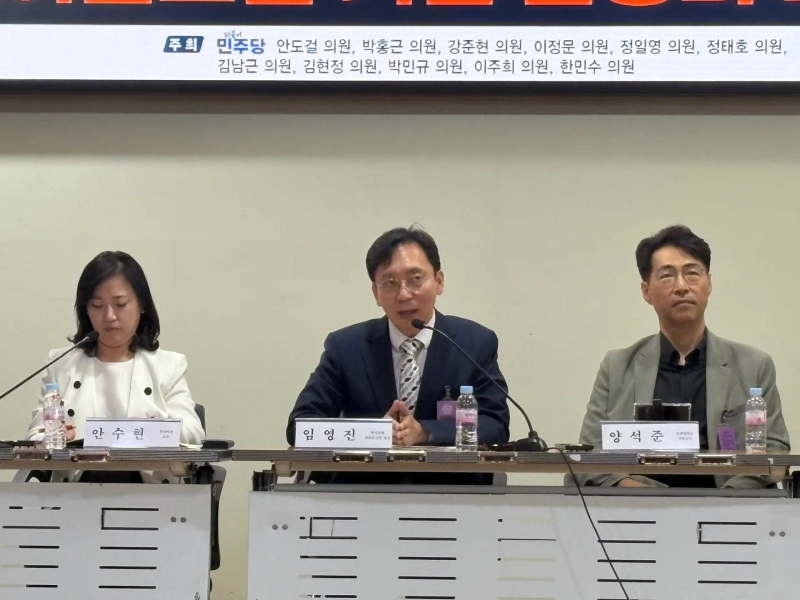
Ruling and opposition share consensus on stablecoin introduction
The institutionalization of won stablecoins was also mentioned. Ahn said, "There is a broad consensus on the need to introduce stablecoins," and "within the Democratic Party, a digital asset task force (TF) is currently being formed to publicize and prepare legislation." He added, "Fortunately, the People Power Party is also showing high interest in stablecoin bills," and said, "There is a consensus (in the opposition) that a swift establishment of a won stablecoin ecosystem is necessary."
In fact, the People Power Party issued an official position that day saying, "The legalization of stablecoins is an unstoppable trend." Jang Dong-hyeok of the People Power Party said at another forum held at the National Assembly Members' Office Building that day, "It has become difficult to reach a consensus internationally to block stablecoins," and "stablecoins already seem to be an era-defining trend that we cannot reject." The People Power Party also formed the 'Special Committee on Equity and Digital Asset Value-up' on the previous day (the 29th) to design policies for virtual assets such as stablecoins.
Financial authorities plan to submit the second-stage virtual asset bill to the National Assembly as early as this month. Kim Seong-jin, director of the Virtual Assets Division at the Financial Services Commission, said at the forum that "the policy objective of the Financial Services Commission is to establish grounds for issuing won stablecoins and to prepare regulatory measures for dollar-denominated stablecoins circulating domestically," and "we will consider various institutional matters so as not to fall behind market trends." Kim added, "Alongside institutional efforts, it is necessary to consider what real-use cases might exist for won stablecoins to be smoothly adopted when they are actually introduced."
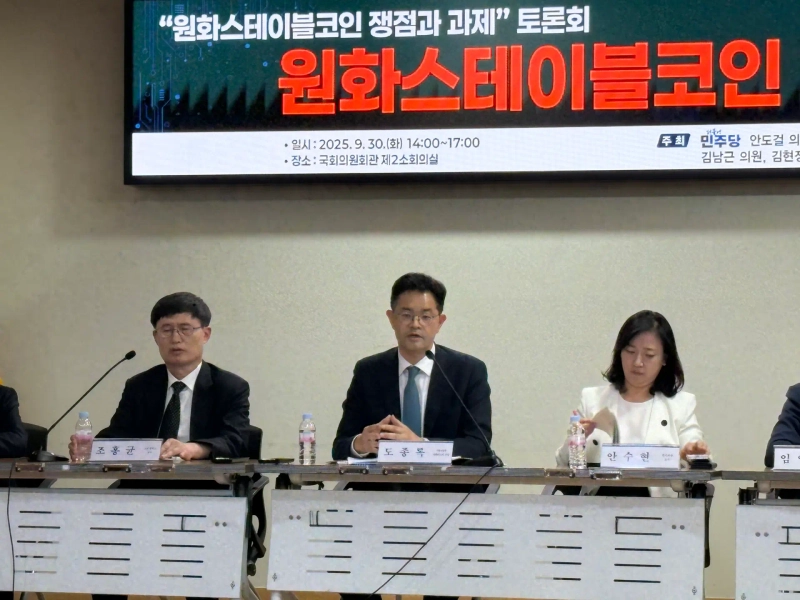
Bank of Korea expresses concern over "potential channel for capital outflows"
Monetary authorities expressed concerns about national wealth outflows. Im Young-jin, head of the Foreign Exchange Review Team at the Bank of Korea, attended the forum and analyzed, "It cannot be ruled out that stablecoins could serve as a channel for sudden capital outflows in national emergencies," and "with the cross-border nature of won stablecoins, capital could more easily flow out through exchanges with dollar-denominated stablecoins if won stablecoins are introduced." Im said, "It is necessary to examine whether inflows and outflows of stablecoins can be detected under existing laws and systems," and "international cooperation may be required, so authorities should put their heads together during the legislative process."
The foreign exchange authority, the Ministry of Economy and Finance, is also closely monitoring the situation to understand the impact that won stablecoin institutionalization may have on the foreign exchange market. Do Jong-rok, director of the Foreign Exchange System Division at the Ministry of Economy and Finance, said, "Current average daily stablecoin trading volume in Korea is US$220 million (about 300 billion won)," and explained, "Depending on how widely stablecoins are used in the future, their impact on the foreign exchange market could vary." Do added, "Depending on how much stablecoins replace the dollar, the volatility of the existing won–dollar exchange rate could increase," and "however, if won stablecoins are widely used in cross-border transactions, they could interact with the foreign exchange market and potentially lead to won internationalization."

JOON HYOUNG LEE
gilson@bloomingbit.ioCrypto Journalist based in Seoul