

PiCK
U.S. stocks rise on strong corporate earnings and hopes of eased trade tensions
Summary
- U.S. stocks opened higher thanks to strong corporate earnings and hopes for eased U.S.-China trade tensions.
- Among S&P500 companies, 76% beat expectations, and earnings reports from large tech stocks were cited as the next major test for market direction.
- The 10-year Treasury yield fell, and bitcoin and gold rose, indicating increased investor interest in safe-haven and alternative assets.
S&P500 passes 6,700 points
10-year Treasury yield falls below 4% to 3.99%
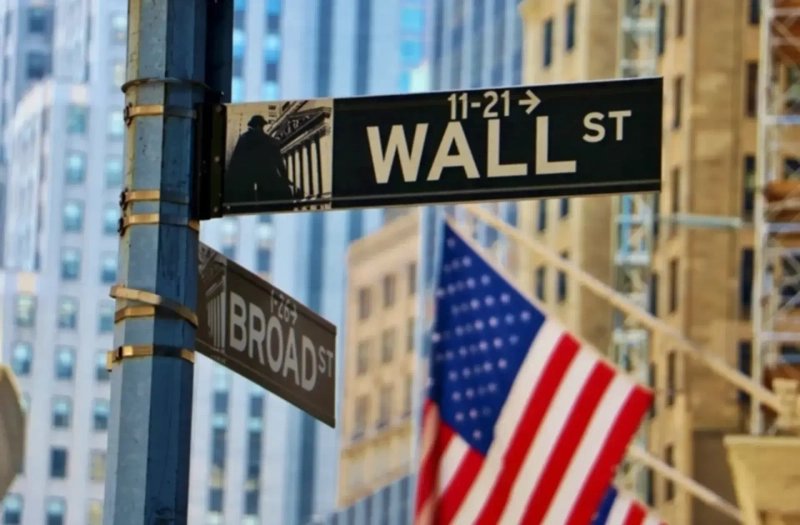
U.S. stocks opened higher on the 20th (local time) on hopes of strong corporate earnings and an easing of trade tensions between the U.S. and China. The possibility that a federal government shutdown could end this week also supported the rise in stocks.
Shortly after the open, the S&P500 was up 0.6%, the Nasdaq Composite was up 0.7%, and the Dow Jones Industrial Average was up 0.4%. Later, around 10:10 a.m. Eastern Standard Time, gains widened: the S&P500 rose 0.8% to 6,717 points, the Nasdaq was up 1.2%, and the Dow Jones Industrial Average rose 0.6%.
The CBOE Volatility Index (VIX), which had surged to 28 on the 17th, fell below 20 at the market open that day.
The 10-year Treasury yield fell 2 basis points (1bp = 0.01%) to 3.99%, remaining below 4%. The 2-year Treasury yield was virtually unchanged at 3.46%.
Spot gold also rose that day, trading at $4,315.60 per ounce, up 1.5%. Bitcoin reached $110,787.69, up 1.7%.
Apple's shares rose 2.4% after Loop Capital Markets upgraded its rating to 'buy', amid improving iPhone sales trends in the U.S. and Chinese markets.
Although a major Amazon Web Services (AWS) outage that day caused failures at many companies' sites using the cloud, such as Disney+, Snapchat, and Coinbase, Amazon's shares did not fall; they rose 1.9%.
Kevin Hassett, chair of the White House National Economic Council (NEC), said in an interview with CNBC, "It is likely that the shutdown will end this week." He added, "I believe we will reach an agreement with moderate Democratic lawmakers this week."
U.S. stocks were volatile last week. Prices swung on heightened tensions between the U.S. and China, concerns over losses at regional banks, and declines in some high-flying artificial intelligence (AI) companies.
However, remarks by Chair Powell raised expectations of a 0.25% point rate cut at the October Federal Reserve Board meeting, and with U.S. companies showing strong third-quarter results, stocks finished higher.
According to Bank of America, of the 58 S&P 500 companies that have reported so far since the first week of this earnings season, 76% have beaten expectations, well above the first-week average of 68%. That is slightly higher than last quarter's 73%.
U.S. stocks rose after President Trump expressed optimism about reaching a trade deal with China ahead of his meeting with Chinese President Xi Jinping in Korea later this month. Treasury Secretary Scott Bessent said on the 17th that "the situation has calmed" regarding China and that a meeting with China's Vice Premier He Lifeng is likely soon.
Rick Gardner of RGA Investment said, "October is typically a seasonally volatile month, but the recent volatility is relatively modest by historical standards." He added that when the market falls, "a buy-the-dip mentality seems to be at work." He said the next major test will be "the earnings of large technology companies."
One of the notable earnings reports this week is Tesla. Results from Netflix, Intel, and Coca-Cola will also be announced. China's tightened rare earth export controls are expected to be mentioned on Intel's and Texas Instruments' earnings conference calls.
Kim Jeong-ah, guest reporter kja@hankyung.com

Korea Economic Daily
hankyung@bloomingbit.ioThe Korea Economic Daily Global is a digital media where latest news on Korean companies, industries, and financial markets.