

"'Seohak ants' pointed to as the culprits of the high exchange rate'... surprised by Bank of Korea announcement"
Summary
- It reported that the outstanding balance of domestic institutional investors' third-quarter foreign securities investments increased by US$24.67 billion.
- It said that overseas investment increased across all sectors, and in particular the investment amount of asset management companies rose significantly.
- Stocks and foreign bonds investments both increased, and it stated that major countries' stock price rises and the decline in U.S. Treasury yields affected valuation gains.
Bank of Korea 'Trends in Foreign Currency Securities Investment' announcement
Institutions also increased overseas investment by US$24.7 billion
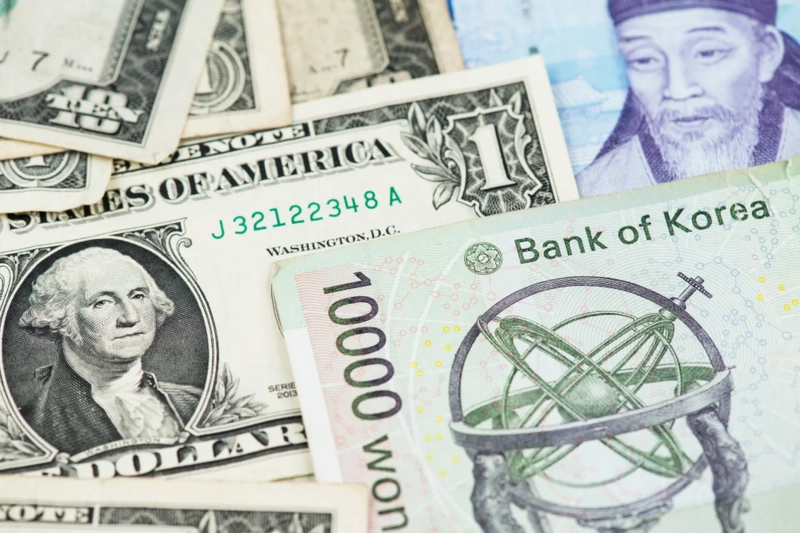
As the exchange rate rose sharply, the outstanding balance of domestic institutional investors' overseas securities investments increased by about US$25 billion in the third quarter. In addition to individual investors, who the government has pointed to as the cause of the high exchange rate, increases in overseas investment by other sectors such as institutions were also notable.
According to the Bank of Korea's "Trends in Foreign Currency Securities Investment of Major Institutional Investors in the Third Quarter" announced on the 1st, the outstanding balance of foreign currency securities investments (at market value) by major domestic institutional investors was US$490.21 billion as of the end of September. This was an increase of US$24.67 billion from US$465.53 billion at the end of the second quarter. Compared with the end of the third quarter last year (US$427.68 billion), it grew by about US$62.5 billion over one year.
The institutional investors counted by the Bank of Korea include asset management companies, foreign exchange banks, insurers, and securities firms. The investment trends are examined based on their proprietary accounts (for asset managers, including entrusted accounts) that they operate themselves rather than funds entrusted by clients.
Asset managers' overseas securities investments were the largest, rising by US$17.85 billion from the end of the second quarter to US$342.96 billion. Insurers followed with an increase of US$3.36 billion to US$75.95 billion. Foreign exchange banks (US$47.93 billion) and securities firms (US$23.36 billion) increased by US$1.46 billion and US$2.01 billion, respectively. Investment amounts increased across all industry groups following the second quarter.
By product, equities increased by US$19.13 billion to reach US$276.29 billion. A Bank of Korea official explained the background, saying, "Valuation gains rose as major countries' stock indices, such as the U.S. S&P, rose 7.8% and Japan's Nikkei 225 also rose 11.0%, and net investment centered on asset managers was added."
Foreign bonds, which totaled US$180.69 billion, also increased by US$4.66 billion from the previous quarter. Valuation gains appeared due to the decline in U.S. Treasury yields following the Federal Reserve's interest rate cuts, and insurers and securities firms made net investments. KP (Korean Paper), bonds issued overseas by residents, increased mainly among foreign exchange banks and securities firms.
Reporter Kang Jin-kyu josep@hankyung.com

Korea Economic Daily
hankyung@bloomingbit.ioThe Korea Economic Daily Global is a digital media where latest news on Korean companies, industries, and financial markets.