South Korea to Consider Ending Fuel Price Cap if Crude Falls Below $100
Summary
- The Ministry of Trade, Industry and Energy said it would consider ending the price cap on fuel if international crude prices fall below $100 a barrel.
- Yang said the price cap would be lifted if international crude prices fall into the $90 range and the situation in the Strait of Hormuz stabilizes.
- The ministry reaffirmed that it plans to end the price cap, introduced to support price stability, as soon as possible after the war ends and oil prices stabilize.
Forecast Trend Report by Period


Government for the first time spells out specific conditions for lifting the price cap
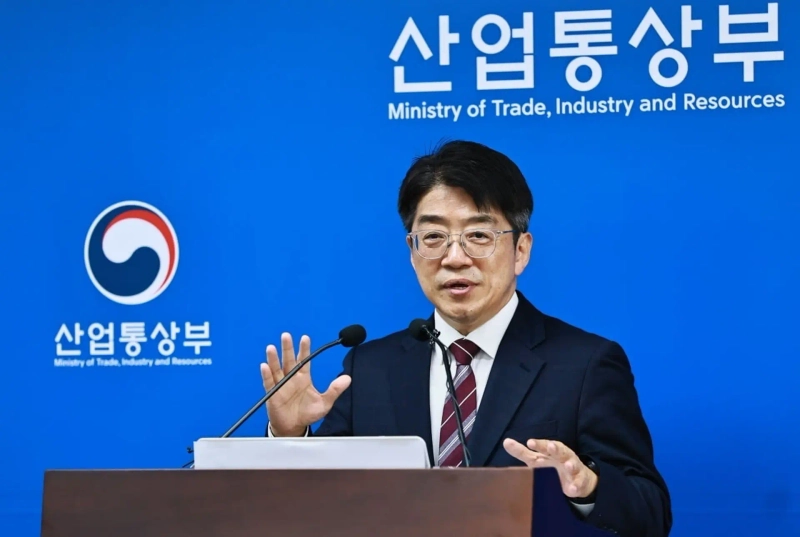
South Korea’s Ministry of Trade, Industry and Energy said it would consider ending the fuel price cap if international crude prices fall below $100 a barrel. It is the first time the ministry, which oversees the measure, has specified conditions for lifting the cap.
Yang Ki-wook, head of industrial resource security at the ministry, told a daily briefing of the government’s Middle East response headquarters in Sejong on May 14 that the price cap would end before gas station supply prices drop below the ceiling if the situation in the Strait of Hormuz stabilizes and international oil prices become more predictable. While saying the outlook remains uncertain, he added that crude would likely need to fall below $100 a barrel, and probably into the $90 range, even if it does not return to prewar levels.
International crude, which traded at about $60 to $70 a barrel before the war, surged after the Strait of Hormuz was closed during the Middle East conflict. As of May 13, Brent crude traded at $105.63 a barrel and West Texas Intermediate at $101.02.
The ministry has consistently signaled that it intends to end the price cap, introduced to stabilize inflation, as soon as possible. Industry Minister Kim Jung-kwan told reporters on April 27 that the cap was not a desirable system but had become unavoidable because oil prices needed to be stabilized. He said the government would end the measure as early as possible once the war ends and oil prices stabilize. Yang said on May 14 that the government does not plan to keep the price cap in place for an extended period.
Park Jong-gwan, Hankyung.com reporter pjk@hankyung.com

Korea Economic Daily
hankyung@bloomingbit.ioThe Korea Economic Daily Global is a digital media where latest news on Korean companies, industries, and financial markets.