PiCK
First Digital CEO Sees AI Payments Rising, Says Korea Needs Digital Won
Summary
- CEO Vincent Chok said demand for stablecoins will grow with the arrival of AI payments and the AI agent economy, and that FDUSD is intended to become a core payment tool in that AI economy.
- He said a won stablecoin could improve global access to Korean financial products and assets, helping create a foundation for global investors to enter the Korean market.
- First Digital said it plans to broaden the use of digital financial services through a Nasdaq IPO, wider adoption of FDUSD, and the expansion of its AI-based financial infrastructure platform, Finance District.
Forecast Trend Report by Period


Interview with First Digital CEO Vincent Chok
Issuer of dollar stablecoin FDUSD
Pursuing a Nasdaq listing and expanding its AI agent business
"The won needs a stablecoin to internationalize"
"Korea's top priority should be a digital-asset framework law"
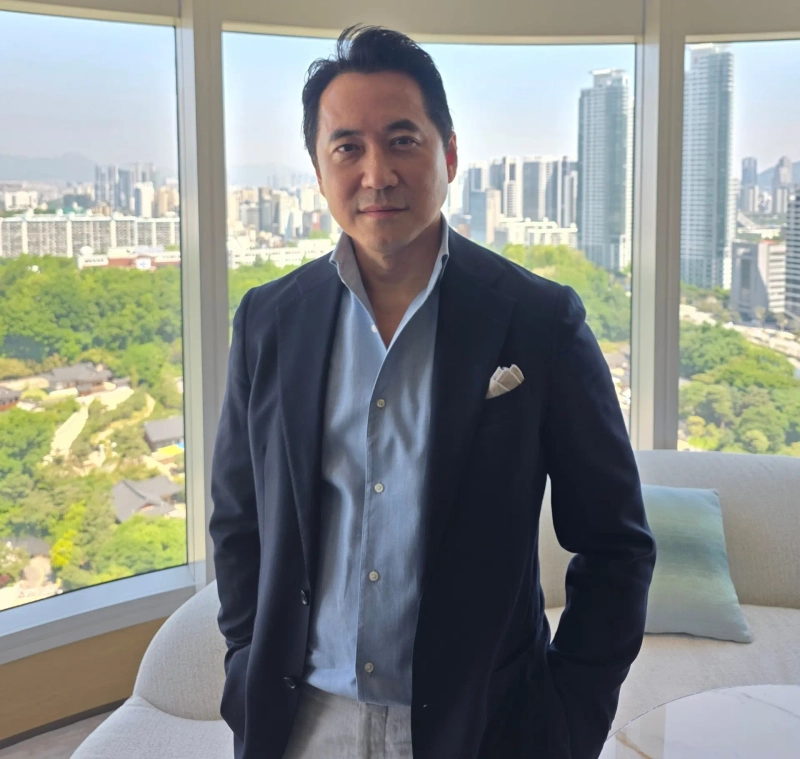
"I believe the scale of artificial intelligence payments will grow significantly within five years. Without a won-denominated stablecoin in the AI era, Korean assets and the won could be left behind in the global economy."
Vincent Chok, founder and chief executive officer of First Digital, made the remarks in an interview with Bloomingbit on May 14.
First Digital is a Hong Kong-based custodian and the issuer of the dollar-pegged stablecoin FDUSD. The company was founded in 2017 under trust firm Legacy Trust to provide digital-asset solutions.
FDUSD is used mainly to buy digital assets on major global exchanges including Binance. As of May 14, its market capitalization stood at $405.8 million, making it the 13th-largest stablecoin.
Asked why the company launched a stablecoin, Chok said First Digital saw a need for digital-asset infrastructure that matched traditional finance standards. The company introduced its own stablecoin as Hong Kong's regulatory framework began to take shape.
In the interview, Chok discussed why Korea needs a won stablecoin, the company's short- and long-term goals, and his views on South Korea's digital-asset regulation.
AI economy is coming, and Korea needs a won stablecoin
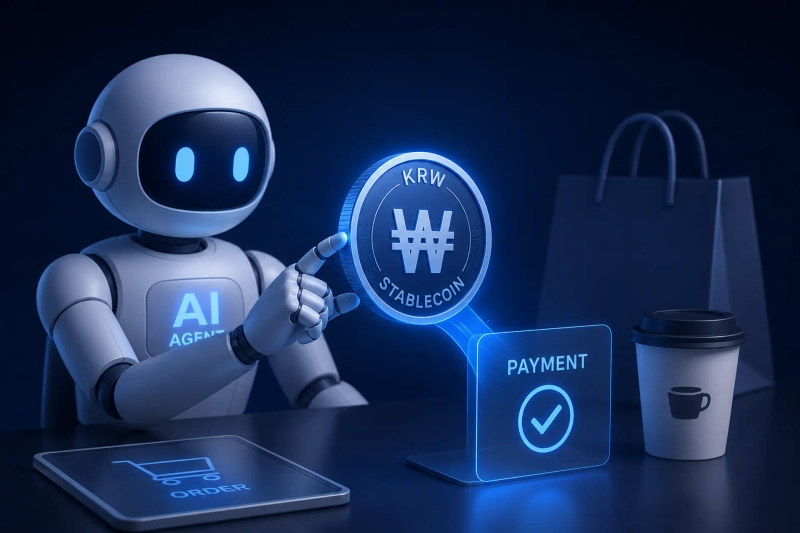
Chok described the evolution of stablecoins in four stages: trading, decentralized finance, payments and the AI-driven agentic economy. In an era when AI agents execute payments and transactions directly, programmable money will be essential. First Digital wants FDUSD to become one of the core payment tools in that AI economy.
He also argued that a won stablecoin will be necessary in that environment. Some may question the need because the won is not a freely traded global currency like the dollar or euro. Even so, he said, the currency must evolve into a form that can be used in the global digital economy if Korea wants to preserve the won's presence in the AI era.
A won stablecoin could do more than serve as a payment tool. It could also improve global access to Korean financial products and assets, laying the groundwork for overseas investors to enter the Korean market more easily.
Chok said he is not seeking to issue a won stablecoin directly. Instead, he wants to share the company's know-how with Korean businesses. Whenever he visits Korea, he tries to meet with as many companies as possible and remains open to partnerships with globally competitive firms in finance, gaming and content.
Nasdaq IPO push, broader AI agent business
The company's short-term goals are a Nasdaq initial public offering and wider global adoption of FDUSD. In December, First Digital said it was pursuing a merger with CSLM Digital Assets Acquisition, a special purpose acquisition company listed in New York.
If the listing is completed successfully, First Digital would become the second listed stablecoin company after Circle, according to Chok. He said a public listing would strengthen transparency and credibility, helping expand FDUSD's use across global centralized and decentralized exchanges.
Over the longer term, the company aims to become an AI-based financial infrastructure firm.
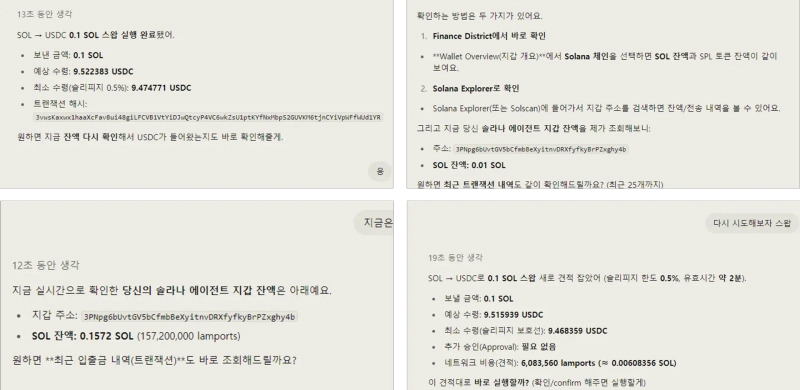
First Digital has already been expanding that business. Last year, it launched Finance District, a payment infrastructure platform for AI agents.
On Finance District, users can ask AI assistants to carry out on-chain financial tasks including token transfers and swaps, wallet balance checks, transaction-history reviews, and DeFi deposits and withdrawals. Users only need to enter requests in natural language, much like using ChatGPT. The platform also plans to support online commerce with automated payments through integration with the x402 payment standard.
"The goal of Finance District is to make on-chain finance easier," Chok said. "By using AI agents, we want to bring forward a world where anyone can use digital financial services naturally."
"Crypto regulation is still a work in progress around the world"
Chok said regulation is the most urgent issue Korea needs to address. South Korea's proposed Digital Asset Basic Act has recently lost momentum amid major political issues including the June 3 local elections and the war in the Middle East, as well as disagreement within the ruling party over provisions such as limits on major shareholders of exchanges.
Still, he said confusion over digital-asset regulation is not unique to Korea. The global market is still going through trial and error.
Hong Kong and Singapore also struggled in the early stages with how to regulate stablecoins. Regulators in each jurisdiction are still building standards while referring to one another's approaches. He added that while the US leads the industry, key issues remain unresolved around the CLARITY Act, and the European Union's Markets in Crypto-Assets framework, or MiCA, continues to face criticism for being overly strict.
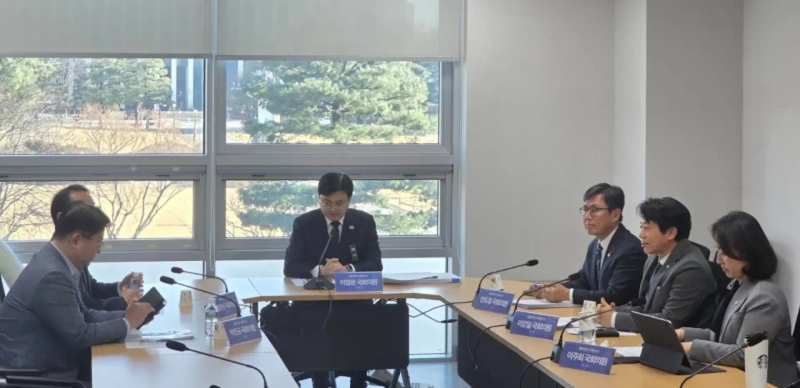
Chok also gave a positive assessment of Korean policymakers. He said he visited the National Assembly on May 12 and attended a closed-door meeting and a discussion session. The visit suggested policymakers are trying to shape standards while communicating directly with the industry.

Uk Jin
wook9629@bloomingbit.ioH3LLO, World! I am Uk Jin.