

Will China's Big Tech Attempt to Issue Stablecoins? Hong Kong Stablecoin Legislation Imminent
Summary
- It is analyzed that Chinese big tech companies could participate in stablecoin issuance following the enforcement of Hong Kong's stablecoin bill.
- China is fostering Hong Kong as a 'digital asset hub' while maintaining its regulatory stance on virtual assets on the mainland and simultaneously pursuing strategies to attract global investors.
- Given that Chinese big tech companies such as JD.com and Alibaba Group are pushing to acquire stablecoin issuance licenses, investors should pay close attention.
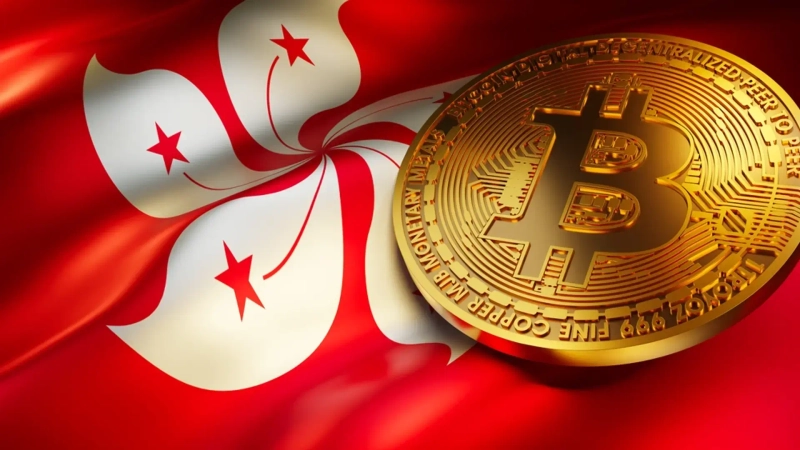
An analysis has suggested that Chinese big tech companies may be able to issue stablecoins (virtual assets pegged to legal tender) through Hong Kong. Strategic moves by Chinese big tech under strict virtual asset regulations are drawing attention.
According to industry sources on the 29th, iM Securities Research Department stated, "The 'decentralized' nature of virtual assets is in conflict with China's 'centralized governance,' so China is unlikely to completely abandon virtual asset regulation," but added, "For national goals such as the US-China hegemony competition, China could anytime use Hong Kong as leverage to ease virtual asset regulations."
Hong Kong passed the stablecoin bill on May 21, with its enforcement scheduled for August 1.
The Hong Kong stablecoin bill stipulates that entities wishing to issue fiat-backed stablecoins in Hong Kong must obtain approval from the Hong Kong Monetary Authority (HKMA).
To obtain a license to issue stablecoins, one must establish a corporation in Hong Kong or be an accredited overseas financial institution with a branch in Hong Kong, and the minimum paid-up capital must meet 25 million Hong Kong dollars (about 3.18 million dollars). In addition, the bill specifies that stablecoin issuers must ensure customer asset segregation, proper redemption under appropriate conditions, reserve asset management, and compliance with required situational conditions. Strict adherence to anti-money laundering (AML), disclosure, and audit requirements is also necessary.
iM Securities assessed, "China utilizes a 'one country, two systems' strategy for virtual assets, strictly banning virtual asset circulation and mining in mainland China under severe regulations while fostering Hong Kong as a 'digital asset hub' to attract global investors and nurture blockchain technology and talent." They further predicted, "Due to the Hong Kong stablecoin bill, Chinese big tech firms will also participate in stablecoin issuance."
This is interpreted as China's strategy to minimize virtual asset-related risks while maintaining capital outflow prevention and monetary sovereignty.
In fact, JD.com and Alibaba Group are reported to be attempting to obtain stablecoin issuance licenses through their subsidiaries. iM Securities emphasized, "JD.com aims to reduce settlement times with stablecoins to under 10 seconds and cut settlement costs by up to 90% compared to credit cards," and added, "Additionally, Ant International, a financial company under Alibaba Group, is also planning to apply for a stablecoin issuance license."

Uk Jin
wook9629@bloomingbit.ioH3LLO, World! I am Uk Jin.