Moody’s Says Shift to Tokenized Finance May Start Slowly, Then Accelerate Rapidly
Summary
- Moody’s said the shift to asset tokenization will be slow at first but spread rapidly after passing a tipping point.
- Moody’s said the market for tokenized real-world assets (RWA) has grown about 420% since the start of this year to about $31.6 billion.
- Moody’s said broad adoption of stablecoins for on-chain payments could hurt the revenue structures of some payment companies and correspondent banks.
Forecast Trend Report by Period


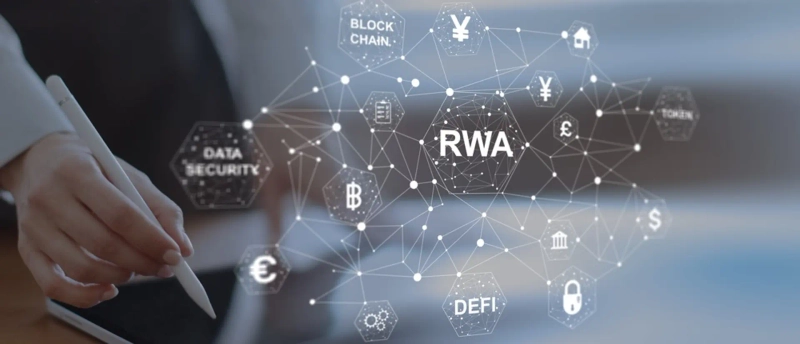
Major US banks and financial institutions view a shift to a digital financial system built on asset tokenization as inevitable, according to a Moody’s Ratings analysis.
Cointelegraph reported on May 14 that Moody’s said in a report large banks and financial-market participants expect the transition to tokenization to begin slowly but spread rapidly once it passes a tipping point.
Based on interviews with major financial institutions, Moody’s said market participants broadly agree that asset tokenization will eventually be adopted widely. The key questions are the pace of adoption and the sequence in which it spreads.
The report said tokenization is likely to expand gradually in the near term in relatively simple areas such as funds and short-term financial products. It added that the number of market participants, asset classes and use cases could then rise quickly, ushering in a broader adoption phase.
The tokenization market is already growing rapidly. Data from RWA.xyz show the market for tokenized real-world assets, or RWAs, has surged about 420% since the start of this year to about $31.6 billion.
Most large banks and financial institutions have established dedicated digital-asset teams and are participating in experiments involving new infrastructure, Moody’s said. It described those efforts as a strategic move to prepare for a sharp increase in future market demand.
Morgan Stanley, for example, launched a new digital-assets group earlier this year and announced plans to expand its crypto exchange-traded fund offerings and wallet services.
Moody’s also outlined scenarios for how the financial system could evolve.
The most likely scenario is gradual growth. Under that outcome, stablecoins and tokenized deposits would gain traction in some areas, while traditional banks and asset managers would retain their core roles.
If regulatory uncertainty and weak demand limit tokenization adoption, changes to the financial system would also remain limited.
The biggest shift would come if stablecoins are widely adopted for on-chain payments. In that scenario, some payment companies and correspondent banks could face pressure on their existing revenue structures.
Separately, the International Monetary Fund said in April that tokenization could improve financial efficiency and transparency while also posing risks to financial stability.

Suehyeon Lee
shlee@bloomingbit.ioI'm reporter Suehyeon Lee, your Web3 Moderator.